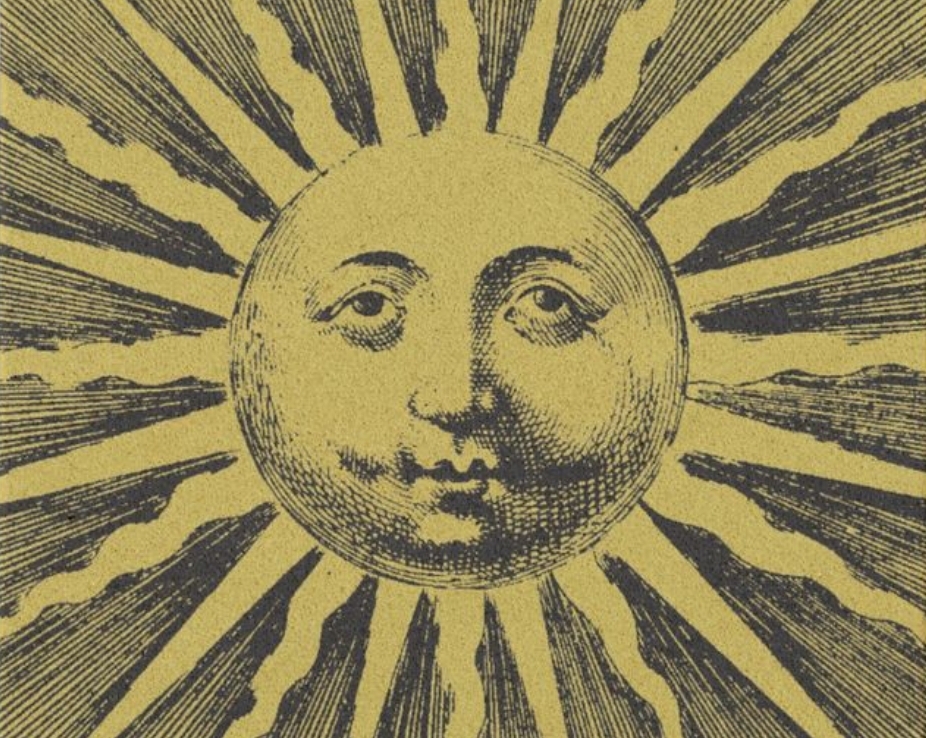
It was once a simple matter. Thousands of years ago, people worshipped the Sun as a god, making sacrifices of all sorts—virgins, goats, perhaps even a few particularly enthusiastic charioteers— everything from which you could extract a still pulsating heart to appease the giant ball of fiery gas that could make or break harvests and tans. The Sun, ever the attention-seeker, didn’t mind. In fact, it quite enjoyed the praise.
It gavee life to everything you see and you can feel its warmth on your skin, and – in exchange – it only demanded that a ribcage or two were cracked open like a walnut she’ll at Christmas time, every now and again. It sounds like a toxic relationship, but these were different times. The good old days.
Then, as history often does, it got complicated. Along came a chap, no less that on the day of the Dies Natalis Solis Invicti – or the “birthday of the invincible Sun” – on December 25th, and said “Why are you all celebrating the Sun? Today is Jesus’s birthday! Always has been! I mean, not always, maybe, but, you know…” and suddenly, the Sun’s big day was overshadowed by someone else’s birthday. The audacity of it all! After millennia of being the center of attention, the Sun was unceremoniously shoved aside by a bearded carpenter, a man who wouldn’t have known a solstice if it slapped him across the face.
A man so obviously less powerful than the Sun. And the Sun knew it well. You can’t stare at the Sun for more than a second, you can stare at a crucifix until you fall asleep, because there are sunglasses, not Jesusglasses. There are solar panels, not Christ panels. The Sun gives you skin’s cancer, Jesus cannot cure it.
There’s simply no context.
At first, it didn’t seem so bad. The Sun still got some mention in passing, perhaps as a metaphor or a glowing reference in a sermon or two. But no hearts were ripped from ribcages to praise it. It was simply no way to live. But the Sun wasn’t the type to forget a slight. Slowly, over the centuries, a subtle resentment began to simmer. Instead of openly confronting the problem—perhaps sending a few angry rays to scorch the city of Rome—the Sun took a far more calculated approach. It did what all truly passive-aggressive entities do: it started to make life uncomfortable, just enough to make you think. It was a slow burn. Literally. Every year, a fraction of a degree warmer. “Oh look, still no sacrifices, let me turn up the thermostat!”
Cli-click.
Minor heatwave here, a summer that was just a little hotter there. It wasn’t immediately noticeable. People simply chalked it up to “weather patterns” or “human activity”—foolishness, of course, because we all know that nothing in the cosmos happens without some sort of celestial motive behind it. The Sun, with all its solar flare and fiery bravado, was sending a message.
Eventually, things heated up. Politicians, ever the experts in obfuscation, began blaming either climate change or telling us that global warming was a myth. Meanwhile, the Sun, content to let its heat rise a degree or two every year, sat back and chuckled.
Like that chap at the office that keeps cranking up the heat until everyone else starts sweating bullets and looks at each other wondering who is going to say something. And still, we didn’t sacrifice even a chipmunk to the Sun.
And so, in a rather quiet and entirely undignified fashion, the Sun exacted its revenge. Each year, another degree. The ice caps melted.
The Sun is reminding us, one degree at a time, that it would not be ignored.
No one likes a birthday party hijacker, and the Sun was no exception. But instead of an all-out tantrum, it’s decided to take the long game approach.
Now that we finally realised we’re all sweating buckets under the Sun’s unrelenting glare, it is too late to send an apology card.
Am I suggesting that we should bring back human sacrifices?
Yes.
That’s exactly what I’m suggesting. After all, what’s the point of being all-powerful if no one’s paying attention?
 Cantankerous Cockerel