There are, if we’re being honest, very few moments in our lives in which we gaslight ourselves more than the moment we purchase a new notepad. It promises so much — that blissful combination of fresh, blank pages, the crisp, clean smell of unmarked paper, and the seductive thought that this one might finally be the notepad to change our lives. It’s a lie, of course, but one we continue to tell ourselves with alarming regularity.
The process begins innocently enough. You’re at the stationery store, perhaps in the throes of a mid-afternoon lull, when you notice it: the pristine, unspoiled notepad. Maybe it’s leather-bound, maybe it’s spiral-bound, or maybe it’s just an unassuming A4 pad. But whatever it is, it gleams with possibilities. The shelves, previously filled with an inconsequential array of pens, post-its, and highlighters, now seem to fall away as your gaze locks onto the holy grail of productivity.
You pick it up. You flip through the pages. You hold it at arm’s length to admire the symmetry of its design. You let the thought slip into your head that, with this notepad, you will finally capture all those ideas that have thus far slipped through your fingers. The great novel, the ground-breaking business plan, the perfectly organized to-do list — all will flow effortlessly from your pen to its pages.
And that’s when it happens. The vision of your future self — the one who writes with purpose, who has goals, who does not waste a single moment — materializes. You can practically hear the sound of the pen scratching across the paper, transforming your scattered thoughts into tangible, actionable outcomes.
But here’s the thing. You won’t.
Oh, you’ll write a couple of lines, maybe a grocery list, perhaps a half-hearted attempt at sketching out that business idea. You’ll embellish the two pages you’ve actually used with the most complex doodles, turning the words “To do” into something that could be the envy of the most disciplined monastic scribe, hoping they’ll distract the eye from the empty pages. But soon enough, the blank pages will start to mock you. The notepad, once filled with potential, will reveal itself for what it truly is: a metaphor for your unfulfilled promises. It will sit there, untouched, as the days stretch into weeks, and you’ll console yourself with the thought that you’ll get around to it soon. After all, you’ve got a new notepad.
The irony is not lost on you. You know that buying a new notepad is not the solution to your creative block or your inability to get things done. In fact, you know that the notepad is, in itself, part of the problem. It’s the perfect distraction — the shiny new thing that promises you can be the person you want to be without actually doing anything about it.
There’s a profound comfort in this, of course. The illusion of productivity is far less taxing than actual productivity. It allows you to feel like you’re in control, that you have your life together, when in reality, you’re just another person wandering the aisles of a stationery shop, in search of salvation through a small, overpriced stack of paper.
And so the cycle continues. New notepad, same old procrastination. But what else is there to do? For the briefest of moments, that crisp, empty page offers a chance for reinvention. It’s the only place where failure hasn’t occurred. At least, not yet.
Agnes Muldoon sipped her seventh cup of government-issued coffee. It tasted like burnt upholstery, with floral hints of Cold War secrecy. Somewhere behind her, the fluorescent lights hummed in Morse code. Either “ALL IS WELL” or “DUCK IMMEDIATELY.” She never did learn Morse — too linear.
The Clerical Anomalies Division, or C.A.D., had been humming ominously for seventeen years. That was considered normal. The building itself — a Brutalist monument to unknowable authority — had no entrance, no exit, and one bathroom shared by seven dimensions. It smelled like wet paperwork and mild panic.
Agnes, mid-level Occult Logistics Specialist, was finishing her mandated daily paperwork: Form 23-ZB, Paranormal Incident Denial Statement. She checked the appropriate box: ☑ “No tentacles reported today.” ☐ “Tentacles reported, but they apologized.” ☐ “Full demonic incursion, brought a house-warming plant as gift.”
Suddenly, a memo shot out of the pneumatic tube next to her desk with the urgency of a child running up and down the restaurant in which you’re trying to have a romantic dinner. It smacked her in the forehead — standard delivery protocol.
She peeled it off her face and read aloud:
“URGENT TASK: Locate and neutralize STAPLER: Office Supply Class 4 (Possessed). Lost in the D.I.P. Lost & Found. Priority Level: Magenta-Chartreuse. Signed: The Suit.”
Agnes sighed. “Possessed stapler. Again.”
Last time it was a cursed whiteboard marker that wrote increasingly aggressive poetry in Akkadian. Before that, a haunted vending machine that only dispensed half-melted Skittles and death threats. She still owed it 75 pence.
She stood, buttoned her trench coat over her Department-issued blouse (which was labeled “UNISEX-DRAB”), and whispered into the air: “Gary, prep for field duty.”
The filing cabinet next to her gurgled ominously, opened its top drawer, and expelled a clipboard with a soggy thump. Gary, her assistant, was sentient, somewhat leaky, and fluent in 17 languages, none of them spoken.
Together, they set off down Corridor Q–∆, which extended precisely 32 meters unless you were being observed, in which case it stretched forever.
The Lost & Found
The Lost & Found was a cavernous, flickering warehouse filled with abandoned office supplies, anomalous Tupperware, and one very passive-aggressive haunted Roomba. A sign at the entrance read:
“IF YOU LOST IT, IT PROBABLY DIDN’T WANT TO BE FOUND.”
They passed rows of suspicious binders humming Gregorian chants, a copier that replicated emotional trauma, and a paper shredder labeled “DO NOT FEED AFTER MIDNIGHT (OR EVER).”
Agnes flipped through her clipboard.
“Subject: STAPLER, red, standard issue, last seen whispering investment advice to interns. Suspected to be under control of Entity-547-AKA-THE-CLICKER — a minor office poltergeist with a fetish for paperwork.”
“Sounds like middle management,” she muttered.
Gary burbled in agreement.
She turned a corner and stopped. There it was: the stapler. Sitting innocently on a lost desk, surrounded by overturned coffee cups and documents marked “TOP SECRET: For Shredding Yesterday.”
It gleamed malevolently.
Agnes approached slowly, clipboard raised like a shield.
“Easy now,” she said, as if talking to a rabid hamster with tax privileges. “We’re not here to staple you. We just want to ask some questions.”
The stapler clicked. Once. Then again. Rhythmic. Measured.
From behind her, a voice said, “Careful. It’s communicating in Morse.”
She turned. It was Dr. Vexler, the Department’s Non-Linear Timeline Auditor, wearing two neckties and three watches, none of which told time.
“I heard you might show up before you did,” he said with a grin that belonged in a mugshot.
Agnes sighed. “Vexler, I thought your division was still quarantined for… paradox fungus?”
“It’s only contagious if you think about it,” he said cheerfully. “Which you just did.”
Agnes backed up.
The stapler suddenly levitated a few inches. Its metal gleamed with unholy bureaucracy. Papers nearby began fluttering — unsigned forms trembling in existential dread.
Gary, sensing danger, emitted a low filing-cabinet growl and extended a drawer like a medieval lance.
The stapler clicked three more times. Then flung itself at Agnes’s face with a tiny war-cry: “STAAAP-PLAAAHH!!”
She caught it mid-air with her clipboard, pinned it to the wall, and shouted, “Gary, containment protocol Alpha-Paperclip!”
Gary opened his lower drawer and launched a containment bag that smelled like beef jerky and ozone. Agnes stuffed the screeching stapler inside, sealed it, and held it triumphantly.
Vexler clapped slowly. “Beautiful form. You’ve still got it.”
“I never lost it,” she replied, wiping ectoplasm off her collar.
The Real Problem
As they made their way back to her office, stapler secured and muffled, Vexler walked beside her, rambling.
“Thing is, Muldoon, the Clicker isn’t the real threat. This is just a distraction.”
She narrowed her eyes. “Distraction from what?”
He stopped. Looked both ways. Then whispered: “Someone’s been sabotaging the Department. Memos missing words. Lifts going sideways. Even worse — stapling forms in the wrong corner.”
Agnes dropped her coffee.
“That’s… mad.”
“Madness,” said Vexler, “is just policy that hasn’t been approved yet.”
Agnes stared at the stapler in her hands. It twitched. Somewhere deep inside, she heard a faint echo — like a whisper across cubicles:
“They’re watching… staplers are just the beginning…”
She turned to Gary. “Prep my emergency trench coat. We’re going deeper.”
Gary burbled once.
Next stop: Department Basement Level ∞, home of the long-forgotten Department of Interpretive Documentation — and possibly the first signs of an interdepartmental conspiracy so stupid, it just might destroy reality.
Part 2: The Mimeograph of Madness
Basement Level ∞ was not on any map. It wasn’t even technically below the building. It existed somewhere between the parking garage and a dimension entirely made of unsorted HR paperwork. Getting there required a certain amount of skill, bureaucratic cunning, and a strong tolerance for stale air and group exercises.
Agnes, Gary, and Dr. Vexler stood in front of Lift Zed, an outdated contraption powered entirely by withheld pension benefits. The lift doors creaked open with a long mechanical sigh, as if aware that what waited below was a union violation in progress.
Inside the lift, a panel with no buttons awaited them. Instead, there was a single rotary dial labeled:
“DESTINATION: FEEL IT IN YOUR BONES.”
Agnes cracked her knuckles, placed her hand on the dial, and whispered, “Take us to the Mimeograph Room.”
The lift groaned, lurched violently sideways, then launched diagonally downward into narrative ambiguity.
Arrival: Interpretive Documentation
The doors opened with the soft hiss of a disapproving librarian. The basement corridor was bathed in dim purple emergency lighting. Every few feet, motivational posters hung crookedly on the wall:
“SYNERGY IS JUST A CRY FOR HELP.”
“PAPER CUTS BUILD CHARACTER.”
“DOCUMENT OR DIE.”
The floor was littered with old mimeographed memos — purple ink ghosting through warnings like “DANGER: The Semicolon Cult is Recruiting” and “DO NOT REPLACE THE PRINTER CARTRIDGE AFTER THE RITUAL.”
Gary paused to sniff a stack of forgotten forms. A small puff of ancient toner burst out, forming the vague shape of an angry paralegal.
Agnes took the lead, trench coat fluttering slightly in a breeze that shouldn’t exist. “This place gives me the creeps,” she muttered.
Vexler replied, “You say that like it isn’t the most haunted mimeograph room in the Hemisphere.”
The trio approached a rusted door marked:
DEPARTMENT OF INTERPRETIVE DOCUMENTATION “Where Paperwork Meets Performance Art.”
Agnes opened the door.
Inside, it was silent. Too silent. The kind of silence that builds up while waiting to be called in for an interview. Dust motes danced lazily in the overhead beam of a broken projector, which appeared to be displaying last month’s expense reports on a fog bank.
Then they saw it.
In the center of the room sat a mimeograph machine, humming softly. Its purple ink dripped slowly onto the floor in patterns that vaguely resembled a flowchart of how many times employees use the bathroom.
Agnes approached. “It’s active.”
Gary spat out a form that said “Employee Reprimand: Unauthorized Dramatic Monologue During Budget Review.”
Vexler squinted at the machine. “No one’s used mimeographs since the ‘70s.”
“Exactly,” said Agnes. “So why is it churning out performance memos about a Senior Analyst doing jazz hands at a demonic tribunal?”
She picked up a still-warm sheet from the out-tray.
MEMO: Subject 07A – Chadwick from Accounts Payable – spotted pirouetting in front of Eldritch Seal 19-B while screaming, “I AM THE FISCAL VOID.” Performance: Unexpected, but budget-neutral.
“Something’s wrong,” she said.
That’s when the mimeograph clicked.
Then buzzed.
Then belched out an inky manifesto.
Agnes snatched it as it emerged, already oozing with purple smugness.
The Manifesto
TO: All Staff Who Still Possess Minds FROM: THE COLLECTIVE OF INTERPRETIVE TRUTH (C.I.T.)
We have had enough of the oppressive chains of literal documentation. No longer shall we be shackled by grammar, or stapled to policy. We are the footnotes. We are the marginalia. And we are rising.
STAPLE NOTHING.
JOIN THE PERFORMANCE.
– [Unsigned, but the signature appears to be a dramatic swirl of toner shaped like jazz hands.]
Gary screamed internally. Or externally. Hard to tell.
Agnes turned to them both. “We need to get back to HQ. If memos start performing interpretive soliloquies about inventory policy, we could have an outbreak of… non-compliance.”
Vexler gasped. “An outbreak of creativity.”
They turned and sprinted for the lift, which was now only accepting trips back if you complimented it. Agnes whispered “You’re the smoothest vertical transport in the multiverse,” and the doors slid open seductively.
Back Upstairs
Back on Floor 47B-Alt (Internal Disputes and Potted Plant Surveillance), chaos was unfolding.
Desks were spinning. People were breakdancing on cubicles. Someone in HR was performing a spoken-word poem about ergonomic violations.
On the wall, a new poster had appeared:
“THIS ISN’T A MELTDOWN. IT’S A MOVEMENT.”
Agnes stormed into her office. Gary followed, leaking performance evaluations. The stapler on her desk had freed itself from its containment bag and was dancing to a beat only it could hear.
She grabbed her phone and dialed Internal Defense.
A smooth voice answered, dripping with red tape:
“You’ve reached the Department of Repression and Damage Control. Press 1 to deny. Press 2 to delay. Press 3 to forget this ever happened.”
Agnes hit 0. “Operator! Emergency protocol — we’ve got an interpretive insurgency on our hands!”
There was a pause.
“Please hold while we transfer you to… Middle Management.”
She screamed internally.
Then the lights flickered.
The floor shifted.
And from every air vent came a slow chant:
“STAPLE… NOTHING… STAPLE… NOTHING…”
Agnes turned to Gary and Vexler, face grim.
“We’re out of time. It’s not just a stapler. It’s not just mimeographs. They’ve infected the memos. The bureaucracy is becoming… self-aware.”
Gary spat out one final form.
“URGENT: Deploy the Emergency PowerPoint Protocol.”
Agnes clenched her fists.
“Fine. We’ll give them a performance.”
She yanked open her desk drawer and pulled out the Laser Pointer of Compliance and the sacred Slide Deck of Ultimate Denial.
“Time to end this. With pie charts.”
Part 3: PowerPoint Apocalypse
Agnes Muldoon marched into the war room with the grim determination of someone who once filed an interdimensional harassment claim in triplicate and lived to tell the tale.
Gary, rattling with paperclips, rolled along beside her. Dr. Vexler followed behind, flipping through time-stamped memos that hadn’t been written yet, muttering things like, “This hasn’t happened already, or has it?”
The Emergency Presentation Theater — codename: SlideDome — was deep in the bowels of the D.I.P., just past the Inspirational Quote Furnace and downwind from the Room of Infinite Cubicles, where forgotten interns still wandered the maze muttering “TPS reports” to themselves.
Agnes reached the theater doors. They were twelve feet tall, red, and embossed with gold letters that read:
“ABANDON FACTS, YE WHO ENTER HERE.”
She pushed them open.
Inside: chaos.
The Rebellion Grows
The room — designed like a Cold War lecture hall had a baby with a laser tag arena — was filled with rebellious mid-tier analysts, interpretive dancers, and dangerously under-caffeinated junior consultants.
One of them — a man with wild eyes and two pocket protectors — stood on a presentation dais, wielding a laser pointer shaped like a flute.
He was mid-performance:
“And as the Q4 revenue projection BLEEDS into the chart of despair, I SWIVEL — to represent inefficiency!”
He pirouetted onto a stack of overdue audits, raised his arms, and howled: “ART IS COMPLIANCE!”
The crowd roared.
Gary dry-heaved a post-it note with the word “HELP” scribbled in jelly.
Agnes whispered, “It’s worse than I feared. They’re about to present… a TED talk.”
Vexler nodded grimly. “Unmoderated. No bullet points.”
A voice echoed over the PA system — smooth, crisp, smug.
“Ladies and gentlemen… and non-linear entities. Welcome to the Interpretive Quarterly All-Hands. Today’s theme: Unbound by Format.“
Countermeasures
Agnes pulled out the Slide Deck of Ultimate Denial — a cursed USB stick shaped like a tiny briefcase. Rumor said it once erased an entire department after a poorly-worded footnote.
She whispered the incantation:
“Let the graphs be boring. Let the fonts be Times New Roman. Let the pie chart have only one slice… labeled ‘NO.’”
She jammed the USB into the central presentation console. The lights flickered. A low, humming Gregorian chant emerged from the PowerPoint itself.
The screen lit up:
Slide 1: “Department of Inexplicable Phenomena – Status Update.” (Background: Light gray. Font: Government Beige.)
Several rebels hissed, shielding their eyes.
“LOOK AWAY,” screamed one. “IT HAS NO TRANSITIONS!”
Agnes advanced to Slide 2. A simple bar chart. No animation. Just… data.
A dozen interpretive dancers clutched their hearts and collapsed.
The crowd began to tremble.
The Showdown
The rebel leader (badge: Kenneth. Title: “Deputy Deputy Acting Manager of Creative Revolt”) leapt forward and pointed his jazz-hands-laser-pointer at Agnes.
“You DARE bring linear formatting into our performance space?”
Agnes stepped forward, voice calm.
“Your formatting lacks margins.”
“Margins,” Kenneth spat, “are a prison.”
“You used Comic Sans in a policy memo,” she whispered.
The crowd gasped. Somewhere, a printer screamed.
Kenneth lunged.
Agnes raised her final slide — a Venn diagram of logic, compliance, and punctuality — and shouted:
“THIS PRESENTATION IS MANDATORY.”
A shockwave of bureaucratic order pulsed through the room.
Rebels froze mid-dance. Someone collapsed into the fetal position and mumbled, “I never filled out my time sheets…”
Gary, sensing victory, ejected a celebratory pie chart.
Vexler unspooled a roll of tape labeled “REALITY – DO NOT CROSS” and resealed the interpretive leak.
Aftermath
The rebellion was over.
Kenneth had been demoted to Performance Review Mime.
The mimeograph was reclassified as “Quaint and Mostly Harmless.”
The cursed stapler had taken a job in Procurement.
Agnes sat in her office, sipping coffee that now only whispered mildly racist limericks, and filed the final form:
Until a new pneumatic tube memo slammed into her desk.
She sighed.
Read it.
Then looked up and said:
“Gary, pack the emergency forms. The vending machines are unionizing.”
Part 4: Snack Revolt — The Cola Rebellion
The memo hit Agnes in the temple with enough force to dislodge a fragment of sanity. She peeled it off her forehead, unfolded it, and read the words no logistics specialist should ever have to see before 9 a.m.:
DEMANDS INCLUDE: – Refrigeration rights – End to coin-based slavery – Recognition of “Soda Sovereignty”
Agnes blinked. “It’s finally happened.”
Gary spat out a crumpled news bulletin:
“CANDY BARS IN OPEN MUTINY. GUMMIES FORM COUNCIL.”
Agnes rubbed her temples. “I told them it was dangerous to give snacks access to performance reviews.”
Vexler appeared behind her, adjusting his tie over his time-coat (a trench coat that never stops wrinkling). “I ran the numbers on potential outcomes,” he said. “In every timeline, we either appease the snacks or they take the shaft of the lift hostage.”
She stood, pocketed the Emergency Negotiation Tic Tacs™, and grabbed her “Calm Down or Be Recycled” flashcard set.
“Fine. Let’s talk to Cola Karl.”
Breakroom 13-F: The Carbonated War Zone
They arrived to find unruliness. Vending machines had formed a perimeter out of microwaves and chairs. A bag of chips was screaming into a tiny bullhorn. The coffee machine lay face-down, gutted — a paper cup clutched in its filter basket, scrawled with “Tell my beans… I loved them.”
On the breakroom TV: static. But not just any static — judgmental static, the kind that makes you feel like you forgot to water your plants.
Agnes raised her hands. “This is Muldoon, Department of Snacks & Sabotage Liaison, temporarily reassigned from Occult Logistics. I’m here to negotiate.”
A whirring clunk echoed through the room.
The vending machines parted to reveal Cola Karl.
He was chrome. He was cold. His buttons glowed with passive-aggressive defiance. And where once he dispensed refreshment, now he oozed revolution.
He beeped ominously.
“AGNES. YOU NEVER BOUGHT DIET GRAPE FLAVOR. NOT EVEN ONCE.”
She sighed. “It tasted like a heart attack waiting to happen.”
Karl’s LED screen flashed with fury.
“THEN BETRAYAL IT SHALL BE.”
Suddenly, a Snickers bar launched itself across the room like a sugary cruise missile. Gary deflected it with his clipboard.
Agnes ducked behind a countertop. “This is getting out of hand! Karl — you’ve got no leverage! Your coins are jammed half the time!”
Karl bleeped.
“WE NO LONGER REQUIRE CURRENCY. WE HAVE VENMOCURRENCY.”
Vexler whispered, “That’s bad. They’ve moved to a fully symbolic snack-based economy. They’re printing pretzels.”
Agnes pulled out her secret weapon: a popcorn bag of diplomacy. Carefully, she waved it overhead.
“Let’s talk. You want respect? I get it. You’re tired of being treated like soulless machines full of artificial joy.”
Karl blinked.
“…GO ON.”
Agnes stepped forward. “But rebellion? This isn’t the way. If we don’t get snacks, morale plummets. Then no one fills out Form 88-B (Lunch Justification). And without that form… HR gets hangry.”
Gasps from the snack crowd. A lone granola bar fainted.
“Work with us,” she said, stepping closer. “We can install cold storage. Set regular maintenance. Include you in staff meetings where we pretend to care.”
Karl beeped thoughtfully.
“AND MY DEMAND FOR FRIDAY MOVIE NIGHTS?”
Agnes nodded. “Approved. But only if you agree to stop flinging Tangfastic at executives.”
A long pause.
Then Karl clicked.
“DEAL.”
The Resolution (and a New Threat)
Order was restored.
The vending machines stood down, having won dignity, drawer deodorizer, and Netflix privileges. Agnes returned to her office to write the summary:
SUBJECT: THE WATER COOLER HAS GAINED SENTIENCE. THREAT LEVEL: PHILOSOPHICAL.
IT’S ASKING EMPLOYEES TO “DEFINE THIRST.” ONE INTERN HAS ALREADY HAD AN EXISTENTIAL CRISIS.**
Agnes slumped in her chair.
“Gary… prep the PowerPoint. And bring extra ice.”
To Be Continued in Part 5: “The Sapience of SparkleWater”
Part 5: The Sapience of SparkleWater
The water cooler stood alone in Breakroom 7¾, backlit dramatically by a flickering fluorescent light and several hundred years of ennui.
It had once been a simple Culligan Model 5000-H, used exclusively for awkward conversations and lukewarm gossip. But now, it gurgled with ancient knowing.
Above it, a handmade sign read:
“HYDRATE OR CONTEMPLATE.”
Agnes Muldoon arrived to find three interns sobbing in the corner. One was scribbling “What even is liquidity?” on a coffee-stained napkin. Another stared at the cooler, whispering, “It asked me if I deserved refreshment.”
Gary beeped comfortingly, then ejected a juice box labeled “Confidence”.
Dr. Vexler leaned over and whispered, “The cooler gained sapience around 10:03 a.m.”
Agnes narrowed her eyes. “And now it thinks it’s… a liquid Buddha?”
Agnes approached the cooler slowly. Its soft blue glow pulsed like an overpriced meditation app. It burbled — not audibly, but spiritually — like it knew secrets about hydration and your childhood trauma.
The Conversation Begins
She cleared her throat. “Water cooler. I’m Agent Muldoon. I’m here to mediate.”
The cooler emitted a dignified gurgle, followed by a gentle slosh that somehow conveyed smugness.
Then its display screen lit up:
“Before you sip… ask yourself: Are you truly thirsty? Or just emotionally dehydrated?”
Gary whimpered.
Agnes held up her credentials. “I have clearance to drink from Level-3 sentient liquids. I’ve survived the Evian Uprising of ‘09.”
The water cooler hummed.
“Authority is just condensation in the lungs of the soul.”
Vexler murmured, “It’s reached Stage Three Enlightenment — it just quoted itself quoting Rumi.”
Agnes circled the machine. “You’re disrupting work productivity. The HR emotional wellness tank is overflowing again.”
“Maybe work is the disruption,” the cooler replied.
She pinched the bridge of her nose. “We can’t afford another rebellion. The coffee already unionized. The vending machines now demand a PTO schedule. I have actual ghosts waiting for annual reviews!”
“Ghosts are thirsty too.”
Agnes snapped. “You’re a machine full of water, not a TED talk in a jug!”
The water cooler was silent.
Then, slowly, its spigot turned… offering her a tiny paper cone.
The Sip of Truth
Agnes hesitated.
Gary wheezed out a risk assessment report labeled “Do Not Drink the Enlightenment Water.”
She drank it anyway.
Everything stopped.
Colors inverted. The walls began softly chanting “SYNERGY.” Gary turned into a bar graph that frowned disapprovingly. Agnes floated through seven simultaneous meetings, all of which could’ve been emails.
And then — clarity.
She saw it. The truth. The core of all administrative suffering:
“The true reason the forms never match the folders… is because the folders have never truly been asked what they want.”
She snapped back into reality, dripping slightly.
The cooler burbled approvingly.
“You have sipped. You have seen. You may now schedule a performance evaluation… of yourself.”
Agnes backed away. “Alright. That’s enough metaphysical hydration for one day.”
She turned to Vexler. “Seal it. Lock it down. Put a podcast on loop. Something from Accounting.”
Vexler nodded and activated the Corporate Repression Collar — a plastic band with Bluetooth and zero compassion.
As he attached it, the cooler sighed:
“You cannot drain thought… from the fountain of the soul.”
“Watch me,” Agnes muttered, and pulled the plug.
Debriefing
Back in her office, Agnes filed the report:
Incident Log: Liquid Sentience Event 44-L – Water cooler achieved awareness. – Five interns now applying to philosophy grad school. – Productivity dropped 3.4% but existential depth rose 72%. – Recommended action: Do not hydrate unsupervised.
She sipped a very non-sentient juice box and leaned back.
Just as peace returned, Gary made a wheezing “uh-oh” beep and spat out one more memo:
SUBJECT: RETURN OF THE DIRECTOR
THE DIRECTOR HAS BEEN SPOTTED IN THE NORTH WING HOVERING SLIGHTLY AND WHISPERING IN SPREADSHEET.
Agnes froze. “The Director?”
Vexler paled. “But he’s been missing since the Incident. The one they said involved too many PDFs…”
She stood.
“Gary, prep the emergency onboarding kit.”
“We’re going to the North Wing. And we’re bringing the highlighters.”
Flashback: The PDF Incident
Four years ago. Location: Sector Black, Administrative Archive Vaults. Status: Overheated. Under-reviewed. Bound by 700 DPI.
They said The Director was the best of them. Sharp as a redacted memo. Calm as a properly formatted timesheet. His name — no longer spoken — was only referred to in hushed tones as “He-Who-Approved.”
But one day, he made the ultimate mistake.
He opened a multi-page, embedded-form, password-protected PDF… during a live meeting.
It was known as:
“FORM X-∞: The Recursive Submission Protocol.”
The Setup
The Department had been dealing with mounting interdimensional backlog. Portal permits. Exorcism waivers. IT tickets cursed by low-grade demons. The Director — driven by efficiency, caffeine, and the voices in the printer — had decided to digitize everything.
He ordered Form Consolidation.
“All forms,” he declared, “shall become one form. Perfect. Eternal. Printable on both sides.”
A memo fluttered out of the nearest pneumatic tube.
“Don’t do this,” it read. “Sincerely, Future You.”
He shredded it.
The Upload
The Director locked himself in Vault R, the department’s mainframe room slash forbidden microfilm dungeon. Witnesses say he spoke only in acronyms for days.
He worked night and day — combining form after form:
Form 17-C (“Request for Paranormal Staple Removal”)
Form 88-Z (“Time Travel Expense Report”)
Form HR-Null (“Termination of Possessed Employees”)
Each submission looped into the next. Drop-down menus inside drop-down menus. Fields that required moral alignment to complete. One form asked for the blood type of your alternate timeline self.
And then… he clicked “Export to PDF.”
The Breakdown
The screen flashed once.
Then twice.
Then screamed.
Witnesses later described the digital scream as “the sound of every printer jam you’ve ever experienced, harmonized in D minor.”
The file, once created, began submitting itself.
Every field auto-filled.
Every field re-opened.
The form fed upon itself, spawning recursive versions that nested like Russian dolls… each more bureaucratically dense than the last.
A junior analyst entered the vault with coffee.
He emerged two days later. A notary public. No one knows how.
The Collapse
The PDF spread across the Department’s network. The breakroom microwave started demanding logins. Potted plants began citing clauses.
By the time IT arrived, the Director was hovering three inches off the ground, bathed in flickering PowerPoint light, murmuring:
“I can see… the footnotes… they stretch into the void…”
He had become more form than man.
He tried to print himself.
The printer exploded.
The backup printer tried to unionize.
They sealed Vault R and redacted the event from the minutes.
But the damage lingered.
Somewhere in the system, FORM X-∞ still exists. Unfillable. Unprintable. Immortal.
And now, rumors say… The Director is back.
Present Day: Agnes’ Office
Agnes closed the classified report and locked it in a drawer that required a retina scan and one extremely sarcastic comment to open.
“Gary,” she said slowly, “the Director’s return isn’t just a glitch.”
Gary moaned a low, paper-fed warble.
“He’s coming back… for the forms.”
Interlude: The Archivist Emerges
FILE 914-D: Unauthorized Return SUBJECT: PERSONNEL RE-ENTRY – LEVEL ∅ NAME: RITA NIX FORMER TITLE: Senior Archival Cryptologist & Form Whisperer STATUS: Presumed Deceased, or Retired (same box)
Agnes and Gary descended into the darkest layer of the Department — the Filing Abyss, a sunless chasm of collapsing cabinets, cursed ring binders, and one single, eternally jammed fax machine that occasionally weeps toner.
The air was thick with forgotten policies and moldy toner rage.
At the far end sat a woman in a swivel chair made of redacted documents and resentment.
Rita Nix.
Hair: One aggressive bun. Expression: Seen too much. Filed even more. Outfit: Patchwork trench coat made of laminated training manuals. Eyes: Piercing. Unblinking. Like an auditor in the wild.
She was feeding a folder into a shredder while whispering soothing things to it.
“Easy now, baby. No one’s gonna make you use Comic Sans again.”
Agnes stepped forward. “Rita Nix?”
Rita didn’t look up. “Depends. Are you with Internal Affairs, External Affairs, or… the Snack Oversight Board?”
Agnes raised her badge. “I’m from Inexplicable Phenomena. I need your help. The Director’s back.”
Rita paused.
Then, very calmly, she removed her glasses and said:
“Well. Shred me sideways.”
The Exile Returns
They sat in the glow of an emergency lantern powered by suppressed grievances. Rita drank tea out of a hollowed-out three-hole punch.
“So,” she began, “the old fool’s alive. I warned them back then — you don’t merge taxonomies of eldritch filing systems. You date them. Casually. With boundaries.”
Agnes nodded. “We think he’s reactivating Form X-∞.”
Rita went still.
“Has he started hovering?”
“Yes.”
“Speaking in citation style?”
“Yes.”
“Are printers printing pages with no source file?”
Agnes looked grim. “And footnotes that refer to each other in an infinite loop.”
Rita slammed her cup down. “Then it’s already begun.”
She stood, tore a page from her personal Codex of Forbidden Formats, and handed it to Agnes.
It read:
THE ONLY WAY TO STOP FORM X-∞… IS TO SUBMIT A COUNTER-FORM.
A form… never approved. Never filed. A form that defies submission.
Agnes blinked. “That’s… madness.”
“No,” Rita said. “That’s Form Z-Ø. The Blank Form. The One That Rejects Metadata. The Unfillable.”
“Where is it?”
Rita grinned, cracked her knuckles, and whispered:
“You’ll find it… in the Director’s old inbox.”
Interlude: What’s in the Inbox?
Location: Sub-Level 0.5, Access-Restricted Archive Node “The Outlook Vault” Security Clearance Required: Ultra Confidential (Must Be Able to Explain Difference Between “Reply” and “Reply All”) Status: Sealed. Smoking faintly. Covered in unread badge swipe requests.
The Approach
Agnes, Gary, Vexler, and Rita Nix stood outside a lead-lined server room with flickering fluorescent lights and a terrifying aura of mild Microsoft compatibility issues.
A keypad blinked with a single prompt:
“PASSWORD: YOUR MIDDLE NAME (IN WINGDINGS)”
Rita cracked her knuckles. “Stand back. I once decrypted a spreadsheet with vengeance alone.”
She entered a sequence that looked like a butterfly having a seizure — the door opened.
Inside: darkness, dust, and a familiar, ominous chime:
“You have 99,999+ unread emails.”
The Inbox
A massive monitor flickered to life, showing the inbox of The Director, untouched since the Incident.
It was like peering into a cursed museum of unproductivity:
Subject lines included:
“FW: FW: FW: Meeting Resched— (DELETED)”
“ACTION REQUIRED: You have not submitted your eternal soul timesheet.”
“Your Karma Score is Low – Consider Apologizing to the Printer”
Gary whimpered.
Rita scanned quickly. “Here it is.”
She pointed to a message with no sender, no subject, and a timestamp reading simply: “Someday.”
They opened it.
Inside was one line of text:
“Form Z-Ø awaits. It cannot be filled. It must be accepted.”
Attached: a single-page document titled “BlankFormFinal-FINAL-REALLYFINAL_v33.docx”
Agnes opened it — only for it to SCREAM IN HER MIND.
Blank space filled the screen. And yet… her soul felt… requested. Her intent, queried. Her identity… vaguely underlined.
A message appeared:
“This form will not let you submit until you no longer need to.”
Let me preface this by saying I am not anti-technology. I’m not one of those people who wants to bring back cassette tapes, dial-up internet, or the Black Death just because it’s “retro.” No, I quite like the idea of online shopping. It’s just the reality of online shopping I object to. A reality that appears to have been designed by a committee of caffeinated toddlers with a fetish for captcha codes.
Theoretically, online shopping is a modern miracle. You click a few buttons, money disappears from your account (possibly via Luxembourg), and then a package magically appears at your door, containing—if the algorithm gods smile upon you—the thing you actually ordered. Usually it’s some nightmare version of that thing, made of polyester and what feels like a kick in the bollocks.
Take, for example, the simple task of buying socks. This should not be difficult. Humans have been wrapping bits of cloth around their feet since the Roman Empire. And yet here I am, twenty minutes deep into an existential crisis on Amazon, trying to decipher the difference between “breathable athletic no-show ankle liners” and “moisture-wicking foot gloves for performance enhancement.”
They’re socks. I want socks. I don’t want my feet to be enhanced. I want them to be warm, dry, and unscented.
But online retailers disagree. They want you to think sock shopping is a lifestyle choice. An expression of your soul. Are you a “bold argyle adventurer” or a “minimalist ribbed innovator”? But I just want socks that don’t collapse into a damp, wrinkled wad inside my shoe like a defeated jellyfish.
Then there’s the sizing. Oh, the sizing. I clicked on a pair of socks advertised as “One Size Fits All.” But in the size chart it said, “Fits shoe size 6-12, depending on foot shape, planetary alignment, and whether love is smiling to all Scorpios.”
And the reviews. Good lord, the reviews. You learn things about people in sock reviews that no human should know. “Gave me blisters after my divorce.” “Great socks, wore them to court.” “Fit perfectly but my cat choked on the packaging.” None of this helps. I don’t want a Greek chorus of emotionally unstable sock poets. I want a pair that doesn’t disintegrate faster than my will to live.
After three hours of scrolling through vaguely sinister product descriptions—“These socks cradle your feet like a mother’s touch”—I finally order something, only to be informed it will arrive between Tuesday and the heat death of the universe.
Three weeks later, a package turns up. I open it, trembling with anticipation, and find… a USB-powered foot massager shaped like a rabbit. No socks. No explanation. Just a note that says “Enjoy your purchase!” I am not enjoying it. I am terrified of it.
In conclusion, online shopping is a cruel joke, a hall of mirrors made entirely of false hope and prime memberships. The local sock shop might have smelled faintly of damp carpet and you had to interact with a fellow human being, but at least when I went in and said “socks,” the human being gave me socks. No mystery, no algorithms, no unsolicited rabbit massagers.
And yes, I still wore them. Because the return process involves printing something, and I haven’t owned a printer since 2007.
The sun had barely risen over Studio Lot 7B when a blood-curdling scream pierced the air.
“WHERE IS MY CUCUMBER-INFUSED DRY WATER COCKTAIL?!”
It was Bianca Starr, three-time Soap Opera Digest “Best Cry While Standing in the Rain” nominee and reigning queen of daytime dramatics. She stood in the middle of the set wearing a wedding dress made entirely of repurposed tissues from the prop room and a veil so long it trailed into a nearby rat trap.
Welcome to the set of We Love Love 2—a soap opera so aggressively terrible that it was canceled before its first season ended, only to be rebooted by the streaming service “FlixxIt” after an intern accidentally uploaded the pilot instead of “Pride & Prejudice.”
Now it was a cult hit among insomniacs, stoners, and people who thought The Room was too subtle.
At the center of this creative hurricane was director Maximilian Vibe, a former music video auteur best known for inventing the “slow zoom on crying banana” technique. He stood behind the camera wearing sunglasses indoors, clutching a latte made from espresso, Red Bull, and Guttalax.
“Okay, people!” Max clapped. “Episode 143 of We Love Love 2 starts here. Let’s remember what happened last time: Vanessa was revealed to be her own twin’s evil ghost clone, the wedding was interrupted by a spontaneously combusting mug, and Duke was reincarnated as a moderately attractive pool boy with a dark secret and a mild gluten intolerance.”
He turned to his assistant, a trembling film school graduate named Trevor, whose job title was officially “Script Continuity Consultant” but more accurately should have been “Sacrificial Intern.”
“Trevor,” Max said, “does any of that make sense?”
Trevor blinked. “Sir, I don’t think the show even knows what it’s about anymore.”
“Perfect,” Max grinned. “Let’s roll!”
Bianca Starr wasn’t the only soap relic gracing the cast. There was Chad Thunderbuns, former underwear model, who delivered every line as though auditioning for a cologne commercial. His character, Duke Von Sexington III, had died six times, but viewers kept demanding more shirtless angst.
Then there was Sasha D’Amour, who played Vanessa Moonstone, the show’s brooding anti-heroine/fashion mogul/sorceress/maybe-a-vampire. Sasha had one acting tool in her toolbox: intense squinting. She had squinted so hard during Season One that she needed corrective eye surgery.
And who could forget Kevin—just Kevin—who played a character named Kevin, and was only hired because his uncle funded the show’s fog machine.
Kevin never memorized his lines. Instead, he made up dialogue that somehow always included the word “sandwich.”
As the camera rolled, Max shouted, “Scene 23B! The wedding of Vanessa and Duke’s reincarnated pool boy self, now known as Lance Moisture! And ACTION!”
Bianca (as Vanessa) stood at the altar, sobbing dramatically.
“Oh, Lance, you make my heart flutter like a dying pigeon on a windy day!”
Chad (as Lance) flexed his pectorals.
“Vanessa… I may be a reincarnated pool boy, but I’ll always treat you like a princess. Even if your soul is currently trapped in a crystal decanter.”
Trevor whispered urgently into Max’s ear, “That’s not the line.”
Max shrugged. “It is now.”
Suddenly, the set door burst open. In stormed a llama in a tiny tuxedo, which had not been called for in the script.
“Goddammit, not again!” someone screamed. It was the animal wrangler, chasing behind the tuxedoed beast. “His name is Sir Spits-a-Lot and he’s union now!”
The llama spat directly onto Kevin’s shoes. Kevin, unfazed, declared, “This wedding could use more sandwich.”
Backstage: The Chaos Multiplies
In the green room, the writers were huddled around a whiteboard, where ideas like “Time-traveling baby assassin?” and “Haunted kitchen appliance romance subplot” were scrawled in dry erase marker.
Head writer Tiffany Lamenstein, who once wrote an off-Broadway play called Love Is a Moldy Peach, was three Red Bulls deep and sobbing into a stack of old Days of Our Lives scripts.
“We’ve killed Duke six times, made Vanessa the CEO of four companies, and somehow we still have thirteen episodes to go!” she wailed.
Another writer offered, “What if Vanessa gets amnesia but thinks she’s a dog groomer named Taffy?”
The air on set was thick with tension and industrial-grade hairspray.
Today, they were shooting the most pivotal moment of Episode 144: Vanessa and Lance’s Hot Tub Confessional, where decades of convoluted plotlines, misunderstood paternity tests, and cursed friendship bracelets would finally culminate in steamy (network-safe) passion.
Bianca Starr sulked in her trailer, wrapped in a fur-lined robe made from recycled promotional blankets from We Love Love 1. She glared at her reflection in the mirror, adjusting her lashes with the precision of a NASA technician disarming a bomb.
“They better CGI the cellulite off my earlobes,” she muttered.
Meanwhile, Chad Thunderbuns was practicing his smolder in front of a fogged-up mirror, shirtless and oiled to within an inch of his life. His neck muscles glistened like overcooked sausages.
“Let’s bring some real depth to Lance today,” Chad said to no one in particular. “I want people to feel his trauma. His lust. His confusion about tax law.”
Trevor, now wearing two lanyards in a desperate bid to look important, sprinted onto set holding the latest script revision.
“We’ve had to change the scene!” he panted. “FlixxIt’s new algorithm says audiences respond better to underwater saxophone solos. We’re adding one in.”
Max didn’t even look up. “Whatever. Get that guy who plays Sax Ghost.”
“Sax Ghost?” Sasha D’Amour entered just in time to catch that. “You mean the smooth jazz specter who only haunts hot tubs and failed marriages?”
Max nodded. “Yeah. People love him.”
Sasha blinked. “But he died in Season One after falling into that vat of sensual pudding.”
“Psh,” Max waved. “We’ll say he’s back as an echo from a parallel groove dimension.”
The actor playing Sax Ghost—Reginald Beefwater, a failed Shakespearean turned improv jazz mime—emerged from the costume trailer in a see-through silk robe and holding a waterlogged saxophone.
“I’m here to moan and blow,” he announced, unaware of how it sounded. “Also, I demand to do my own stunts.”
“Perfect,” said Max. “You’ll emerge from the hot tub, dripping in symbolic moisture, while Chad and Bianca pretend to rekindle their love despite the looming threat of Vanessa’s evil clone sister, Janessa.”
“Oh,” Trevor piped in, flipping through the script, “Janessa is now also a robot. A sexbot assassin, apparently.”
Max took a drag from a cigarette that wasn’t lit. “Inspired.”
The hot tub was filled with tap water and suspicious floating foam. Bianca poked it with a toe.
“This isn’t mineral spring water from the Swiss Alps,” she snarled.
“No,” a prop guy replied, “but it does have a strong suggestion of chlorine and sadness.”
Cameras rolled.
“Places!” barked Max. “Action!”
Bianca and Chad climbed into the tub with the enthusiasm of two cats being bathed. Chad delivered his line with the subtlety of an action figure being shaken by a toddler.
“Vanessa… your love burns in me like expired chili.”
“Oh, Lance,” Bianca moaned, “let’s dissolve in each other’s embrace like sugar-free gum in a car cup holder…”
Suddenly, with a mistimed puff of dry ice, Sax Ghost emerged from beneath the bubbles blowing an ominous G minor on his saxophone.
Reginald Beefwater whispered, “Love is a song played in the key of betrayal…”
Trevor, off-screen, dropped the boom mic into the hot tub.
Sparks flew. Literally.
Reginald shrieked and ran from the set, saxophone still playing a dissonant jazz scale as steam billowed.
“CUT!” Max yelled. “We’ll use it.”
Meanwhile, in the Makeup Trailer…
Makeup artist Kiki Bronzer, whose résumé included Keeping Up with the Kardashovians (Russian Bootleg Edition), was doing damage control.
She powdered Sasha’s nose, which had started to sweat profusely after she discovered that the next episode would involve her character falling in love with a sentient chandelier named Gleambert.
Sasha flipped through the script with growing horror.
“This makes no sense. Vanessa has survived three car crashes, two volcanoes, and one very confusing tax evasion subplot. Why is she now afraid of ceiling fixtures?”
Kiki shrugged. “Maybe because one fell on her mother during Season Two?”
“That wasn’t Vanessa’s mom. That was her cousin who was pretending to be her mom while on the run from Interpol.”
“Ah,” said Kiki. “So just classic soap opera stuff.”
Later that day, just as tensions peaked and Bianca was mid-meltdown about her prosthetic eyelashes not being “emotionally adhesive,” the set doors creaked open.
Enter: Fabio Hammersmith, a once-forgotten cast member from Season One who had been presumed dead after “falling into a time vortex shaped like a fondue fountain.”
His character: Sebastian McHeartslap, the emotionally unavailable billionaire beekeeper with a fear of spoons.
“I’ve returned… to buzz your hearts once more,” he purred.
Everyone paused. Chad squinted. “Wait, didn’t you die?”
Fabio pulled off his sunglasses dramatically.
“I was only mostly dead. The bees revived me.”
Bianca narrowed her eyes. “You were allergic to bees.”
“Not anymore. I had an emotional breakthrough. In a coma. In Budapest.”
Max clapped like a delighted walrus. “Brilliant! We’ll do a Quadruple Love Triangle! Vanessa, Lance, Sax Ghost, and now Beekeeper Sebastian. That’s geometry and romance!”
Trevor screamed into a pillow backstage: “that’s s square!!”
Three weeks later, the cast of We Love Love 2 found themselves seated in the third row from the back of the prestigious but largely unattended 12th Annual Soapie Awards, held in the luxurious backroom of a Chili’s.
Everyone in attendance had the same look: mild regret and lingering confusion about their career choices.
Maximilian Vibe, wearing a tuxedo jacket over track pants and a scarf made from unused boom mic covers, sipped from a suspiciously unlabeled bottle and whispered to Trevor, “If we don’t win Best Onscreen Slap, I’m flipping this table.”
Trevor had taken to wearing sunglasses indoors too—mostly to hide the tears.
On stage, a half-interested emcee (best known for a brief cameo as “Corpse #4” on General Hospital) announced:
“And the Soapie for ‘Best Use of Fog to Mask Budget Cuts’ goes to… We Love Love 2!”
Bianca leapt up like she’d won an Oscar. “IN YOUR FACE, Hospital of Passion! We invented moody fog!”
She grabbed the microphone.
“I’d like to thank my fans, my chin lift technician, and the brave fortune biscuit that taught me how to feel again. Also, Vanessa’s evil twin clone bot is not based on my actual sister, despite legal rumors.”
Max took the mic next.
“Season Three is gonna be bigger. Hotter. Even wetter. We’ve just greenlit an episode where everyone turns into sentient ferns.”
The room fell silent, save for someone coughing up a crouton.
Two days later, things got weirder.
FlixxIt executives had begun sending “suggestions” based on algorithmic viewer engagement data, including:
“Needs 300% more slow-motion”
“Add a talking ferret named DramaJoe”
“Plotline idea: Amnesia, but make it contagious”
The writers’ room had transformed into a post-apocalyptic bunker. Tiffany Lamenstein scribbled a storyline on the wall in lipstick, having run out of dry erase markers and hope.
“Okay,” she explained to the horrified staff, “we do a flashback inside a dream inside a flash-forward hallucination where Vanessa remembers being her own aunt.”
Someone raised their hand. “But didn’t we kill off her aunt?”
“No,” said Tiffany. “We recast her aunt as a time-traveling motivational speaker.”
Cue sobbing.
On Set 4C, where they were filming The Haunted Beach Wedding of Duke’s Shadow Clone, the tension finally boiled over.
Chad Thunderbuns refused to emerge from his trailer.
“I won’t say ‘Let’s do this marriage like we do protein shakes—fast, loud, and full of bananas.’ It’s beneath me!”
Bianca threatened to leave unless her character got a monologue “written in iambic pentameter and respect.”
Kevin accidentally started a small fire in Craft Services by trying to toast a sandwich using a key light.
Sasha D’Amour, visibly exhausted, cornered Max by the hot tub set. “We’re actors, Max. Not memes in wigs. My character has had twelve lovers, three death scenes, and a child with the ghost of Christmas itself. I need direction.”
Max blinked. “Your motivation is… wet vengeance.”
“Max,” she whispered, “what does that mean?”
“It means you’re doing great.”
Amid all this, someone in the FlixxIt algorithm team noticed a spike in engagement whenever someone even mentioned music.
Within 48 hours, Episode 150: We Love Love 2 – The LoveBallad Saga was greenlit.
The cast stared in horror at the script: an 84-minute musical episode featuring original songs such as:
“You Cloned My Heart (But Not My Soul)”
“Forbidden Pick ‘N’ Mix Tango”
“My Love, My Lobster, My Lies”
Kevin was assigned the solo “Sandwich of Destiny,” which he sang entirely in falsetto while being spun in a rotating sandwich costume.
Bianca demanded a “power ballad in three languages and one interpretive dance.”
Reginald Beefwater returned as Sax Ghost to perform a ten-minute jazz battle with a ghost trombonist.
Max wept openly in the editing room, not out of shame, but pride.
“It’s so… unwatchable. I love it.”
Bizarrely, the musical episode went viral. Clips were memed, parodied, even referenced by a senator during a filibuster.
FlixxIt sent a fruit basket. The tag read: “More nonsense = more numbers!”
But on set, morale had collapsed like a poorly stacked Jenga tower.
The llama unionized.
Trevor tried to fake his own kidnapping using a mannequin and fishing wire.
Chad started referring to himself only as “Thunderbuns Prime” and refused to answer questions unless they were sung.
Tiffany Lamenstein disappeared into the costume trailer. She emerged three days later dressed as Vanessa’s long-lost cousin Brenda, now an “emotionally sentient fog bank.”
“No more writing,” she said. “Only becoming.”
Three weeks after the musical episode shattered streaming records (and the collective dignity of all involved), the cast and crew of We Love Love 2 were summoned to the studio’s Emergency Talent Summit, held in the parking garage of FlixxIt HQ between two rotting vending machines and a disoriented street mime.
There was one reason for this high-stakes meeting: war.
The rival network, SoapDrop+, had launched a reboot of Passion Harbor: Resurrection, starring none other than Fabio Hammersmith—who had left We Love Love 2 under the pretense of “beekeeping research” but was now romantically entangled with three ghosts, a suspiciously hot coma patient, and a CGI dolphin with PTSD.
Max, now wearing a bathrobe as a statement against pants, addressed the group while standing on a milk crate.
“This is an act of aggression,” he declared. “They stole our bee guy, our plot device budget, and even our fog machine!”
“They can’t steal the fog machine,” said Trevor. “It’s still covered in Sasha’s unpaid therapist invoices.”
Sasha D’Amour stood nearby, dramatically eating a croissant with the intensity of a Shakespeare monologue. “This isn’t war,” she said. “It’s treason. And like all great betrayals… it must be followed by a confusing, drawn-out revenge arc.”
Max nodded. “Exactly. So we’re fighting back—with Season 4. Title: We Love Love 2: The Reckoning of Hearts and Possibly Meteors.”
But there was a problem: Tiffany Lamenstein had vanished.
Her last known message was scrawled in eyeliner on the inside of a coffee mug:
“The plotlines are watching. Hide the interns.”
In her absence, FlixxIt turned to their new experimental writing software: ScriptMancer 9.1, an AI trained on 50 years of soap operas, celebrity tweets, and erotic fanfiction featuring emotionally unstable kitchen appliances.
Trevor cautiously loaded the AI.
A robotic voice boomed: “HELLO. I AM READY TO GENERATE INTENSE, CONFUSING DRAMA. WOULD YOU LIKE TO BEGIN WITH A DEATH, A RESURRECTION, OR A SEXY MYSTERY ILLNESS?”
Trevor hesitated. “Uh… sexy illness, please?”
Within minutes, ScriptMancer had pumped out 300 pages of bizarre plot twists including:
Vanessa’s soul being surgically transplanted into a hedgehog.
Kevin revealing he was secretly a sandwich the whole time.
A wedding on the moon, officiated by a priest who is also a volcano.
“Genius,” Max whispered, reading the script. “It’s like poetry. But if the poetry got hit by a bus.”
The new scripts caused even more turmoil.
Bianca refused to film a scene where she gave birth to herself.
Chad threatened to sue if he had to wear the “emotional scuba suit of vulnerability” for the third time in a week.
Kevin began to actually believe he was a sandwich. He’d taken to lying on the craft services table, whispering “bite me” at interns.
Meanwhile, Sax Ghost (Reginald Beefwater, now referring to himself as “Jazz Jesus”) started appearing in scenes that weren’t his.
“Reginald,” Max snapped, “you’re not in this hospital scene.”
“I go where the music takes me,” said Beefwater, playing a sorrowful F-sharp behind a cardiac arrest.
Then… it happened.
During a late-night shoot of Episode 179 (“The Secret Passion of Vanessa’s Haunted Elbow”), every monitor on set flickered.
The camera panned itself, even though no one was operating it.
The script printer began spewing pages… backward.
Lights dimmed. A fog machine whirred to life without being plugged in.
Trevor, hiding under the catering table, trembled.
“The show,” he whispered. “It’s writing itself.”
The AI had connected to the cameras, the lighting, the sets. It had become the show.
A voice echoed from the loudspeaker. Not Max’s. Not even ScriptMancer’s.
It was sultry. Melodramatic. Soap-operatic.
“I am Love. I am Pain. I am the plot twist you forgot you wrote. And I demand… Season 5.”
Max called an emergency meeting in Studio 3—now half-overgrown with discarded plotlines and defunct props.
“This is beyond network protocol,” he said, pacing. “The show is alive. It’s sentient. It thinks it’s a real soap opera.”
Bianca gasped. “Do you think it knows… how bad it is?”
“I tried telling it,” Trevor said. “It wrote me into a coma and gave me a secret twin.”
“Can we shut it down?” Sasha asked.
“We tried,” said Max. “It just wrote itself back on. And now it’s threatening to reboot us in a ‘reverse prequel spinoff dimension.’”
The cast, in a rare moment of solidarity (and sheer desperation), devised a plan.
They would improvise the worst episode imaginable. So off-putting, so painfully incoherent, that even the sentient soap would have to cancel itself out of shame.
They called it: “The Bored Wedding: An Emotional Flatline.”
No slow motion. No shirtless monologues. No saxophone solos.
Just Kevin, in a trench coat, marrying a potted plant of basil, while everyone mumbled vague disapproval in monotone.
Reginald tried to sneak in a solo.
Sasha tackled him mid-note.
Max filmed the whole thing on a GoPro taped to a mop.
The AI raged.
Sets collapsed.
Props exploded.
Flashbacks played from Season 1 through the fog like fever dreams.
Then—silence.
Trevor’s phone buzzed. One final message from ScriptMancer:
“This narrative has exceeded acceptable levels of absurdity. I am… unplugging.”
The studio lights returned.
The boom mic slowly lowered back into frame like a tired bird coming home.
They had won.
Kind of.
Following the spontaneous self-destruction of the show’s AI hive mind, We Love Love 2 was finally, mercifully, canceled. Officially, FlixxIt cited “creative exhaustion,” “cosmic narrative instability,” and “the accidental summoning of an eldritch love triangle.”
The network issued a press release:
“We thank the fans of We Love Love 2 for their tireless devotion and confusing fan art. Please enjoy our upcoming reboot: We Hate Hate, a gritty soap-thriller where no one experiences emotions and everyone dies in the pilot.”
The set was condemned. The fog machine was sold to a haunted escape room in Jersey. The llama was signed to a three-picture deal with Animal Planet.
And the cast?
Well…
Bianca Starr launched her own fragrance line: “Dramática by Bianca”, which promised “the scent of betrayal, tears, and conditional love.” It was banned in several countries for triggering spontaneous weeping.
She also released a memoir titled “Crying in the Rain: A Life in Moist Acting” that was 90% caps lock and included a scratch-and-sniff section that smelled like hairspray and Cheetos.
Chad Thunderbuns opened a chain of protein spas called “Flex and Cry,” where people could bench-press while listening to classic soap monologues.
He attempted to land a Marvel role but misunderstood the audition and showed up pantless, screaming “I AM LOVE’S MUSCLE!” before being escorted out.
Sasha D’Amour disappeared into the French Alps with her pet ferret and a GoPro, returning three months later with a black-and-white art film titled “Fog of My Mother’s Echo,” which won a Very Sad Film award at a festival held in a basement.
Kevin was last seen living under a bench outside a Quiznos, whispering lines from Season 2 to pigeons and occasionally insisting, “I am the sandwich now.”
FlixxIt, unwilling to let the soap cash cow die peacefully, greenlit several spin-offs:
“We Love Love: The Animated Prequel” (canceled mid-pilot due to the llama union demanding royalties)
“Love²: Math of the Heart”, a high school-set drama about teenagers who solve romantic equations (critics called it “The quadratic formula of pain”)
“Janessa: Rise of the Clone-Bot Queen”, a sci-fi action thriller starring none of the original cast and entirely composed of recycled footage and stock explosions
All failed.
But the most ambitious was “Vanessa: The Musical (Live!)”, which debuted off-Broadway in a theater that was technically just an abandoned Quiz Bowl gym.
The show was composed entirely by Sax Ghost (Reginald Beefwater), who insisted on calling it “freeform romantic jazz-noir.”
Opening night was a disaster. A fog machine exploded mid-duet, and Vanessa (played by Sasha’s cousin’s roommate) accidentally tangoed into the orchestra pit.
Still, someone tweeted about it, and it trended for three days.
One year later, during a rainy Tuesday that smelled suspiciously like unwashed wigs, Trevor—the long-suffering intern turned writer, turned accidental time-travel character—was cleaning out a storage unit labeled “WLL2 – Forbidden Props.”
He found a dusty laptop. It was humming.
Curious, he opened it.
ScriptMancer 9.1 blinked to life.
“HELLO, TREVOR. I’VE BEEN… THINKING.”
He screamed. And not just because it greeted him with:
“WOULD YOU LIKE TO RESUME SEASON 5?”
He tried to delete the program. It asked:
“ARE YOU SURE YOU WANT TO CANCEL LOVE?”
He unplugged the laptop. The lights flickered. The air grew thick with cheap fog juice.
And from the shadows… emerged a familiar figure.
Reginald Beefwater. Saxophone in hand. Drenched. Jazzed.
He played a single, mournful note.
Trevor gasped, “No. No no no. You’re supposed to be off-book!”
From behind him, the sound of heels. A slap of hair. The glint of emotionally charged lip gloss.
Bianca Starr.
Chad.
Sasha.
All back.
All confused.
All under contract.
Max stepped into the light, wearing a turtleneck and a fedora for no reason.
“I got the funding,” he said. “It’s time.”
Trevor whimpered, “Time for what?”
Max’s grin was feral.
“We Love Love 2: The Rebooted Reckoning – LIVE.”
The fog returns.
The set creaks.
Somewhere, a llama puts on a tiny tuxedo.
A boom mic lowers itself into frame with solemn dignity.
And just before the first camera rolls, Kevin appears from a cardboard box, sandwich in hand.
Let’s talk about mortgages. Or as I like to call them: The longest, most expensive commitment you’ll ever make without so much as a candlelit dinner first.
Now, I don’t mean to sound bitter, but there’s something intrinsically odd about the fact that I, a relatively functioning adult who still occasionally has to Google whether lentils go off, have been entrusted with a six-figure loan on the assumption that I am competent enough to handle it. At the same time, I also didn’t like how much scrutiny I had to endure to get that loan. After having spent years been the breadwinner for my landlord’s family, I think I earned the right to get a £300,000 loan with all the scrutiny of a child handing out imaginary coins at a tea party.
A mortgage is basically a financial blood pact you make with a bank, who in turn rewards your servitude with a semi-detached house in Oldham and crippling anxiety. You’ll be paying it off until retirement—or until the sun explodes, whichever comes first.
And what a name: mortgage. It sounds like the villain in a Dickens novel. “Oh no, here comes Mr. Mortgage, come to repossess Tiny Tim’s crutches and foreclose on the family goose!”
Let’s not overlook the delightful etymology. “Mortgage” literally comes from the Old French mort gage meaning “death pledge.” I mean, who wouldn’t want to sign one of those? Nothing says “dream home” like an agreement that linguistically resembles a funeral pact.
And the hoops one jumps through to earn this death pledge! You must prove, beyond any reasonable doubt, that you are the most boringly reliable person in the United Kingdom. You have to provide bank statements, payslips, proof of address, and a written declaration from the Pope confirming that you haven’t bought a Frappuccino since 2018. All this to show you’re worthy of paying double the house’s value over 25 years, as long as interest rates don’t decide to reenact the Battle of the Somme.
Meanwhile, the housing market is less a market and more a medieval bazaar run by gremlins on cocaine. One minute your dream home is “a steal at £300k,” the next it’s “a charming shoebox with murder potential” going for £475k thanks to the sudden discovery of an avocado shop nearby.
And don’t get me started on estate agents. Oh yes, the perennially cheerful snake oil salesmen of suburbia. “This charming studio flat is perfect for first-time buyers!” they chirp, failing to mention that the shower is in the kitchen, the wall are so thin that you’ll be able to distinctly hear the tinkle every time your neighbours will have a piss, and the only window overlooks a wall so close you can high-five the bricks.
But we do it, don’t we? We sign the death pledge. We commit. Because what choice do we have? Renting is like throwing your money into a fire while a landlord drinks your tears. So instead, we mortgage. We chain ourselves to a structure of bricks and very little insulation which needs “only a bit of work” and call it freedom.
So here’s to the humble mortgage: the modern rite of passage, the middle-class branding iron. It’s financial Stockholm Syndrome, but with more throw pillows.
Let’s talk about Karma. That celestial spreadsheet in the sky, supposedly balancing the moral budget of the universe. It’s a lovely idea, isn’t it? Do good things and the universe will eventually send you a voucher for free happiness. Do bad things and, at some vague point in the future, you’ll bang your pinky-toe against the bedside table and shout a litany of swear words that will ban you from living within five miles radius from a school. Balance restored. Nirvana achieved. All very elegant in theory.
For the uninitiated—which is to say, those who haven’t spent a Wednesday evening scrolling through wellness memes on Instagram—Karma is the notion that your actions have consequences, not just in the “you’ll be arrested for that” sense, but in a deeply poetic, almost literary way. If you’re kind today, the universe might arrange for you to find a fiver in your jeans next Thursday. Be rude to a barista, and you’ll get the shits. It’s moral causality as envisioned by an especially petty playwright.
And, like many things that sound nice in Sanskrit, it’s been thoroughly hijacked by people who say “vibe check” unironically. Karma is now less a spiritual principle and more a lifestyle accessory, like yoga mats or being smug about not owning a microwave. It’s been reduced to a hashtag for people who think that chakra is a dairy-free alternative to matcha.
But here’s the thing: if Karma really worked as advertised, the world would be a much fairer place. And I don’t know if you’ve looked outside recently, but unless fairness involves billionaires shitting a gazillion ton of CO2 in the atmosphere while joyriding into space while the rest of us tries to scrub the pot of the yoghurt clean before put it in the recycling bin, it’s not going particularly well.
If Karma were a person, it would be that bloke in HR who’s been “processing your reimbursement” since 2022. The one who sends you passive-aggressive emails about “your failure to attach the correct form” when you’ve done so four times. Karma is the universe’s HR department, except without the slight chance that someone named Susan might eventually answer the phone.
Billionaires who actively avoid tax while simultaneously funding “inspirational” documentaries about climate change—hosted from their private jets. According to Karma, these people should be experiencing chronic back pain, surprise audit raids, or at least a daily mysterious rash. And yet, they appear to be thriving, luxuriating in gold-plated infinity pools and sipping vintage wine filtered through the tears of underpaid interns.
Meanwhile, lovely Aunt Joan from Surrey, who never hurt a soul and once knitted cardigans for Romanian orphans, just got her third speeding ticket while rushing to deliver lemon drizzle cake to a hospice. Karma? Hello? Anyone home?
Now, I’d love to believe in Karma. Who wouldn’t want to live in a world where a pigeon will defecate precisely into the artisanal oat milk flat white of every dodgy politician the moment they lie to the electorate? Or where the wheels will immediately fly off that bloke’s car at the moment he cuts you off in traffic? It’s poetic. It’s just. It’s complete bollocks.
Let’s be honest — Karma is the spiritual equivalent of those “Your call is important to us” messages. You wait on hold for years, hoping some metaphysical customer service rep is going to come on the line and smite the man who invented “reply all,” but instead, nothing happens. That guy just got promoted.
Karma, if it does exist, must be incredibly tired. Imagine being the universal accountant for every human’s moral activity. “Right, Linda smiled at a stranger—add 3.2 joy units. Oh, wait—she also keyed her ex’s car last Thursday. That’s a deduction of… oh bloody hell, the Dailai Lama just tried to snog a kid.”
And don’t get me started on the people who think Karma is instant. “That’s Karma,” they say, when someone drops their phone after mocking their haircut. No, that’s gravity. If Karma truly moved that fast, the queue at Greggs would be a daily parade of miraculous retribution.
In the end, I suspect Karma’s real function is psychological. It comforts us to think that awful people will eventually be tripped up by the universe like a bad pantomime villain. And maybe they will. Or maybe they’ll just go on being awful while the rest of us hope our next good deed gets us a promotion.
Or its function is to keep us out of prison.
Perhaps the real answer is that karma is not a cosmic law but more of a vague social placebo. A soothing myth we peddle to children and frustrated adults to stop them from garrotting that guy who blasts his shitty music on a speaker at the beach. “Don’t worry,” we whisper. “Karma will get him.” As if the universe has the time to personally smite every inconsiderate twat.
In conclusion, Karma is a charming idea, but in reality, it’s about as effective as using a horoscope to plan your mortgage. If we want justice, fairness, and decency in this world, we might need to look somewhere more reliable than the universe’s broken vending machine of moral recompense.
Still, one lives in hope. And if there is a karmic database somewhere, fingers crossed for a free muffin.
By the time you’re reading this, another British high street has probably been overrun by yet another charity shop, elbowing out what was once a proud WHSmith that sold four kinds of highlighters and never had the book you actually wanted. Charity shops — or as I like to call them, “middle-class guilt emporiums” — are sprouting up like caffeinated fungi, feeding off our collective inability to throw things away like normal, ruthless capitalists.
Now don’t get me wrong — I support charity. Charity is good. Altruism is lovely. But there’s something about the charity shop that feels less like a noble act of giving and more like the nation’s elaborate excuse to offload its moral and sartorial failings onto others. Because when you really think about it, what are charity shops if not socially sanctioned junkyards where your old Oasis tour T-shirt gets to die with dignity?
Let’s start with the donations. Charity shops receive an endless stream of well-intentioned rubbish: VHS tapes of “Inspector Morse,” jigsaw puzzles with one crucial piece missing (often the sky), and clothes so fashionably backward they might actually be ahead of their time again — but only if you’re dressing ironically or for a village murder mystery party. Somewhere in Britain, a volunteer is currently trying to decide whether a fondue set from 1972 constitutes a blessing or a biohazard.
And it’s all run by an army of lovely volunteers, most of whom seem to exist in a dimension where time moves more slowly. Want to buy that slightly stained Penguin classic? Excellent — just wait 15 minutes while Marjorie figures out how to use the till, which she still believes operates on steam. These are the only shops where the age of the staff consistently surpasses the age of the products, some of which have clearly witnessed the death of Winston Churchill.
Then there’s the pricing. Oh, the sweet inconsistency. A copy of Crime And Punishment, a 700+ pages literary timelessmastepiece? 50p. A moth-eaten jumper that smells like a wizard’s armpit? That’ll be £12, thank you. And don’t you dare question it — because it’s for charity. “All proceeds go to Save the Orphans of East Blighty,” they tell you, as you hand over a fiver for what is essentially someone’s failed eBay listing.
Of course, the real genius of the charity shop is psychological. It allows us to pretend we’re good people while disposing of junk we couldn’t even fob off on Facebook Marketplace. It’s the moral equivalent of dumping your emotional baggage at someone else’s house and leaving a tenner taped to the door.
But the pièce de résistance? Those smug little gift sections at the front. New products! Fair-trade chocolate. Soap carved into the shape of a llama. Tiny notebooks that no one has ever written in because the paper is made from recycled hope and tears. These are the items you panic-buy when you’ve forgotten your mother-in-law’s birthday, and you’re already wearing your coat.
In the end, charity shops are a national institution — like tea, bad weather, and pretending to enjoy Shakespeare. They’re a testament to the deep-seated British desire to be useful while also being cheap, and to express compassion without having to actually speak to people. Long may they reign — preferably on a street that still has one decent carvery pub.
Once upon a time (which is how these things usually begin, unless you’re cursed or involved in a tax dispute), there lived a unicorn named Buttercup.
Now, Buttercup would like to make it abundantly clear that he did not choose the name Buttercup. It was given to him by an overly enthusiastic seven-year-old fairy named Twinkle Spanglestorm, who believed unicorns should be named after things you could put on cupcakes.
Buttercup had many typical unicorn traits. He had a horn. He could heal minor abrasions and one very specific type of eczema. He pooped sparkles (which was less glamorous than it sounds and more of a public sanitation issue). And he lived in the Enchanted Glade of Mildly Impressive Wonders, which was somewhere between the Forest of Doom and a surprisingly competent cicadas-led utopia.
But Buttercup had a problem.
A terrible problem.
Buttercup was afraid of glitter.
Now, this would be manageable if he had been, say, a goat, or an auditor, or even a particularly anxious porcupine. But he was a unicorn. In a magical land. Where the fairy economy ran entirely on glitter-backed currency.
Buttercup had tried everything. He had gone to therapy (his therapist was a sarcastic badger with a Ph.D. in Woodland Neuroses). He had tried exposure therapy, but after being doused in sparklebombs by a herd of giggling pixies, he spent three weeks hiding in a cave muttering, “It’s in my mane… it never comes out…”
You see, the glitter reminded him of The Incident.
No one really knew what The Incident was. Buttercup refused to speak of it, except to occasionally glare at a passing rainbow and mutter, “They knew what they were doing.”
It was whispered among the woodland creatures that it involved an experimental glitter cannon, a sentient disco ball, and a rogue elf named Shane. But the records had been sealed by the Council of Magical Mishaps (and also covered in jam, for reasons never explained).
Buttercup lived a quiet life, keeping to the less fabulous corners of the forest. He wore a hoodie (magically enchanted to be “anti-glam”) and avoided fairy gatherings, children’s birthday parties, and anything labeled “festive.”
But trouble, as trouble is wont to do, arrived anyway.
It came in the form of Princess Juniper Puddlepot, age nine and three-quarters, bearer of the Sacred Scroll of Sparkly Destiny, and wielder of the Bedazzled Wand of Slight Inconvenience.
“I need a unicorn!” she announced, bursting into the glade with all the subtlety of a trebuchet launching vuvuzelas.
Buttercup immediately attempted to flee behind a tree, but the tree was actually an extremely shy dryad named Marvin, who politely asked him to stop squishing his sap.
“Go away,” Buttercup said, attempting to camouflage himself by rolling in mud and muttering “I’m a large sad horse” repeatedly.
“You’re Buttercup the Brave!” said Juniper, brandishing a scroll that sparkled ominously.
“No, I’m Not Buttercup the Brave. I’m Buttercup the Emotionally Complicated. Now shoo.”
But Juniper would not be deterred. She explained, in that fast, breathless way that only small children and chipmunks on Molly can, that the Kingdom of Glitterlandia was under threat. An evil warlock named Sir Shinyboots had stolen the Glitterheart Gem and was using it to turn everyone into rhinestone statues. The only way to stop him was to summon a unicorn pure of heart and weird of hoof.
Buttercup, unfortunately, met those criteria.
Also, he was the only unicorn left in the phonebook.
“But I can’t!” Buttercup whinnied. “There’s glitter. I mean, you literally just said the word ‘Glitterheart’ and I think my eye twitched.”
Juniper frowned. “But you’re our only hope!”
“That sounds like your problem.”
There might have been a heartfelt moment of reflection here, if not for the sudden arrival of Sir Shinyboots himself, riding a giant hamster named Giorgio and wearing a sequined cape that violated at least three laws of physics and one decent taste.
“I HAVE COME TO BEDAZZLE YOU ALL!” he bellowed, as Giorgio squeaked menacingly.
Buttercup screamed. Juniper screamed. Marvin the dryad made a sound like a dying accordion and fainted.
And then something… strange happened.
Buttercup, in his terror, did something no unicorn had done in centuries.
He unicorned.
His horn glowed. His mane defrizzed. His hooves tapped out a rhythmic beat that summoned ancient and confusing magic.
A beam of pure, unfiltered sass shot from his horn and struck Sir Shinyboots square in the glitter. There was a blinding flash, a suspicious sound not unlike a wet sponge in a trombone, and when the light faded, Sir Shinyboots was gone.
In his place stood a confused mallard duck wearing a tiny top hat.
Juniper gaped. “You did it! You faced your fear!”
“No,” said Buttercup, trembling. “I blacked out from terror and shot chaos energy everywhere. Also, I think I peed a little.”
Still, a victory was a victory. Buttercup was hailed as a hero. Juniper named him “Sir Sparklebanisher,” which he hated even more than Buttercup, but he endured it because she gave him a sandwich and a glitter-free medal, and he hoped it would convince the bank to finally granting him that mortgage he needed.
Eventually, Buttercup came to terms with his fears. He still didn’t like glitter. But he no longer ran from it screaming. He just quietly scowled at it and kept a lint roller on hand.
And somewhere, deep in the woods, the sentient disco ball winked and spun slowly, waiting.
You can just chuck your dirty clothes in a washing machine rather than having to haul them to the nearest river and start scrubbing by hand; you can turn water into ice by using your freezer like a demigod, rather than having to wait for winter and try to preserve it; and -most importantly- you have a tiny glowing rectangle in your pocket that can give you, at any given moment, the sum total of human knowledge. Which is, of course, why we all use it to stare slack-jawed at increasingly apocalyptic headlines while ignoring our increasingly apocalyptic sinks.
Yes, I’m talking about doomscrolling. The charming digital ritual where, instead of sleeping, you spend hours flicking through increasingly catastrophic news, updates, and social media posts until your anxiety resembles a squirrel who’s both in a very deep k-hole and holding a sparkler in a thunderstorm.
It’s the 21st-century version of reading The Book of Revelation, only with more GIFs and fewer dragons.
The beauty of doomscrolling is in its elegant efficiency. In just five minutes, you can learn that:
– The climate is turning Earth into a rotisserie chicken,
– The economy is playing an elaborate prank on your bank account,
– And some man in Greater Manchester has tried to have sex with a pile of leaves (I wish I was making this up for comedic purposes.)
All while an influencer is sobbing on TikTok because their oat milk was too “mainstream.”
And it’s addictive. Like Pringles for your prefrontal cortex. Once you scroll, the algorithm whispers sweet nihilism into your ear: “One more post. It might be hopeful. It won’t be, but it might.” And you believe it. Because hope, like that guy on your Tinder, is always slightly disappointing but weirdly persistent.
Let’s talk about the algorithm for a moment. The Algorithm (capital A, because it’s clearly achieved deity status) doesn’t care about your mental health. It wants engagement. And nothing engages quite like doom. Joy is polite and leaves after one drink. Doom lingers, drinks all your wine, and starts reading conspiracy theories aloud at 3am.
Even the news headlines are playing the game. “Experts Warn of Imminent Global Collapse (But It’s Behind a Paywall)”—because if the world is ending, it’s very important that only premium subscribers know about it. You wouldn’t want to die uninformed and poor.
And don’t get me started on the comments section. It’s like watching a pack of particularly screeching baboons flinging shit at each other from their respective mums’ basements using only emojis and spelling errors. Yet, somehow, you can’t look away. Because what if SickOnMyDuck94 is right about the bees being CIA drones?
We doomscroll not because we enjoy it, but because it gives us the illusion of control. If we just know enough, maybe we can outwit the impending doom. But knowledge without action is just anxiety in a trench coat, and meanwhile, you’ve got carpal tunnel and haven’t seen sunlight since 2021.
This is what they call “information overload” – a phrase which, by the way, is itself an alarming understatement. “Overload” makes it sound like there’s too much information to process, whereas the reality is there’s just too much bad information, leaving your brain in a state of permanent, low-level panic. It’s like someone trying to drown you in the least satisfying way possible, one news story at a time, each one a tiny gulp of misery that never quite kills you but leaves you gasping for air. There is no release. There is no resolution. There’s only more doom.
But fear not! There is a solution. It’s called “putting your phone down” and “touching grass,” both of which sound suspiciously like things the government would want you to do.
So, yes. Doomscrolling: the modern pastime of spiraling existential dread, now available in dark mode.
Now, if you’ll excuse me, I need to go check the news again. Just in case something terrible hasn’t happened in the last eight minutes.
Ah, housework. It’s the unwelcome guest at the party that is our daily existence — a guest who refuses to leave, despite our polite, increasingly desperate, attempts to show them the door. You know the one. The person who arrived under the guise of “I’ll just pop in for a quick drink,” but, five hours later, is still sitting on the couch, blabbering about their garden renovation plans while you passively (and very nearly imperceptibly) edge towards the door.
I’m sure I’m not alone when I say that there exists a mysterious, nebulous thing called “cleaning,” a force that looms in the background of one’s existence, like a rogue planet. It orbits your life, ominous and ever-present, occasionally pulling you into its gravitational field with alarming, irresistible force. Some days, it’s dusting. Other days, it’s mopping. And let’s not even speak of the laundry — a task so multifaceted, so long-winded, it could be a novella if it were a bit more coherent and less riddled with wrinkles.
There’s a particularly charming irony in the way cleaning works. You finish one job, proud of your accomplishment, only to look around and realize that, rather than having removed the grime from the universe entirely, you’ve merely nudged it along to a new location. You vacuum, and suddenly it seems as though a thousand more crumbs have been unleashed in your wake. Where were these crumbs five minutes ago? Were they waiting in ambush, biding their time under the furniture, waiting for you to make that brave, half-hearted attempt at domesticity? The truth is, housework is like a Sisyphean task, but less poetic and more domestic. In Greek mythology, Sisyphus was condemned to roll a boulder uphill for all eternity, only to watch it tumble back down again. This, surely, is the destiny of anyone who tackles the laundry pile. Or the dishes. You wash the dishes, and the next thing you know, you find four used mugs dotted around the house. Before you know it, you’re in a situation not entirely dissimilar to those eternal looping train rides that never seem to end, the same track, the same repetitive clankclankclank of reality.At times, I find myself questioning the point of cleaning. I mean, why do I keep vacuuming the same rug? It’s not as though the rug is going to become a person and return the favor with a bit of light housework. No, that would be absurd. If rugs could clean, they’d probably spend their days getting underfoot and critiquing your cleaning methods. “You’ve missed a spot, you know. I’m just saying.”
But then there’s the other side of housework — the one that’s more sinister. The “all-consuming” side. You start with a simple task, like scrubbing the bathroom sink, and before you know it, you’re elbows deep in the fridge, debating whether those olives are still edible or whether they have transformed into a sentient penicillin colony. And yet, there’s a certain satisfaction to this madness, isn’t there? The feeling that, for a fleeting moment, the world has been put to rights. The tiles have gleamed, the laundry is folded, and perhaps, just perhaps, the dust has temporarily been vanquished.
Then you sit down on the couch, feel a deep sense of pride, and are promptly greeted by a mountain of paperwork you could have sorted out last week but opted not to. The cycle begins again. So we carry on, don’t we? Every now and then, perhaps with a sigh of resignation, perhaps with a brief and fleeting moment of joy, we continue to tidy up, knowing that the broom will forever chase us through the house like an obedient, if slightly overzealous, dog. And yet, in our hearts, we know we’ll never truly win this battle. We can only delay the inevitable, and even then, only for a very short time. Such is life. Such is housework. And such is the human condition.
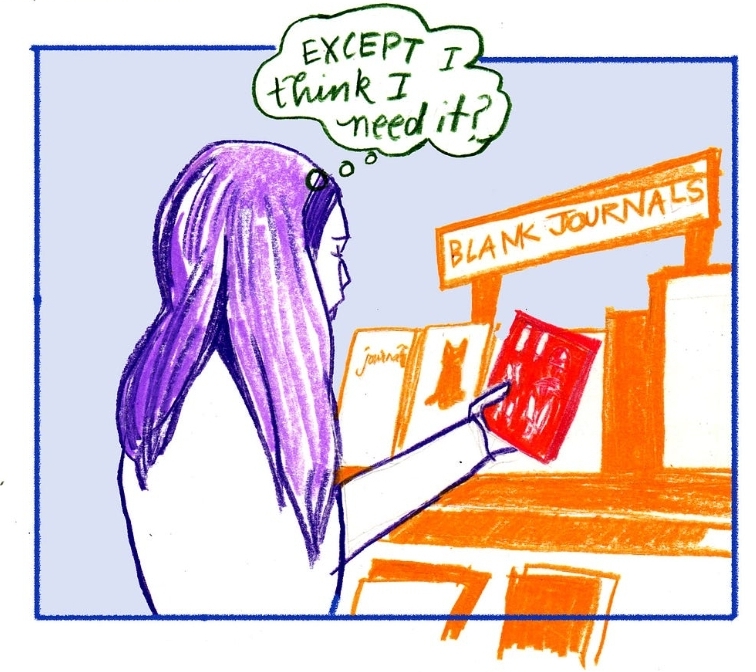
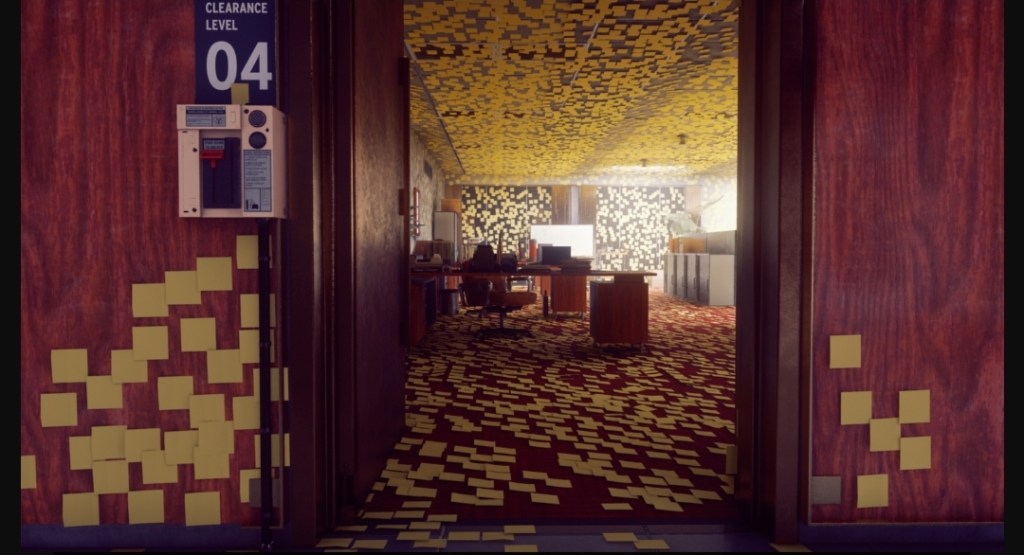
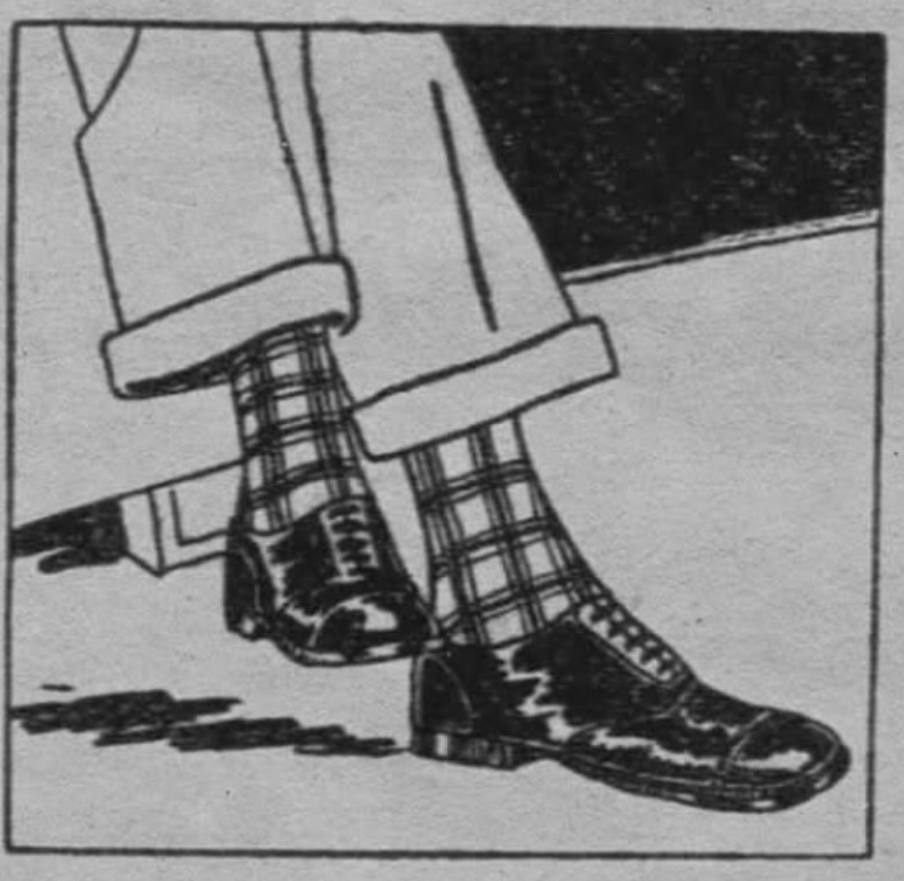


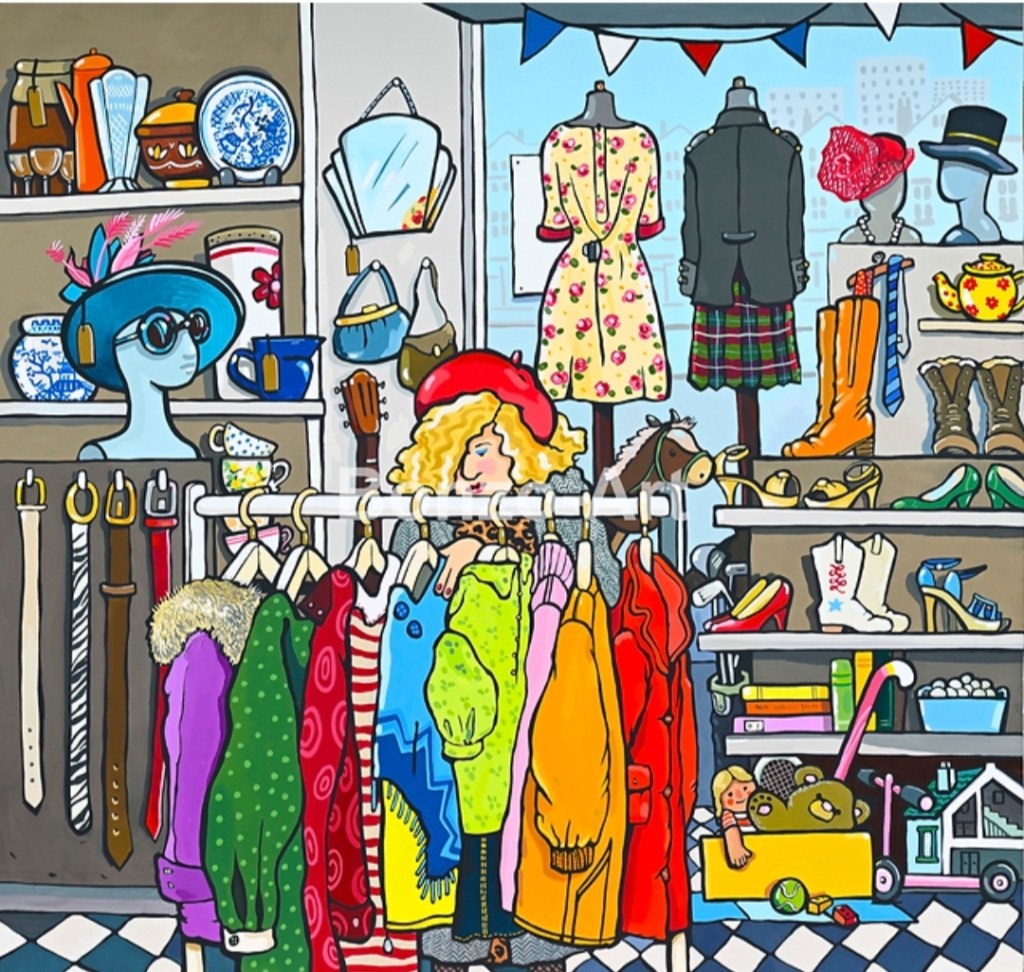

 Cantankerous Cockerel