The Committee for Common Sense met every Thursday at precisely the same time: just after outrage o’clock and right before historical amnesia.
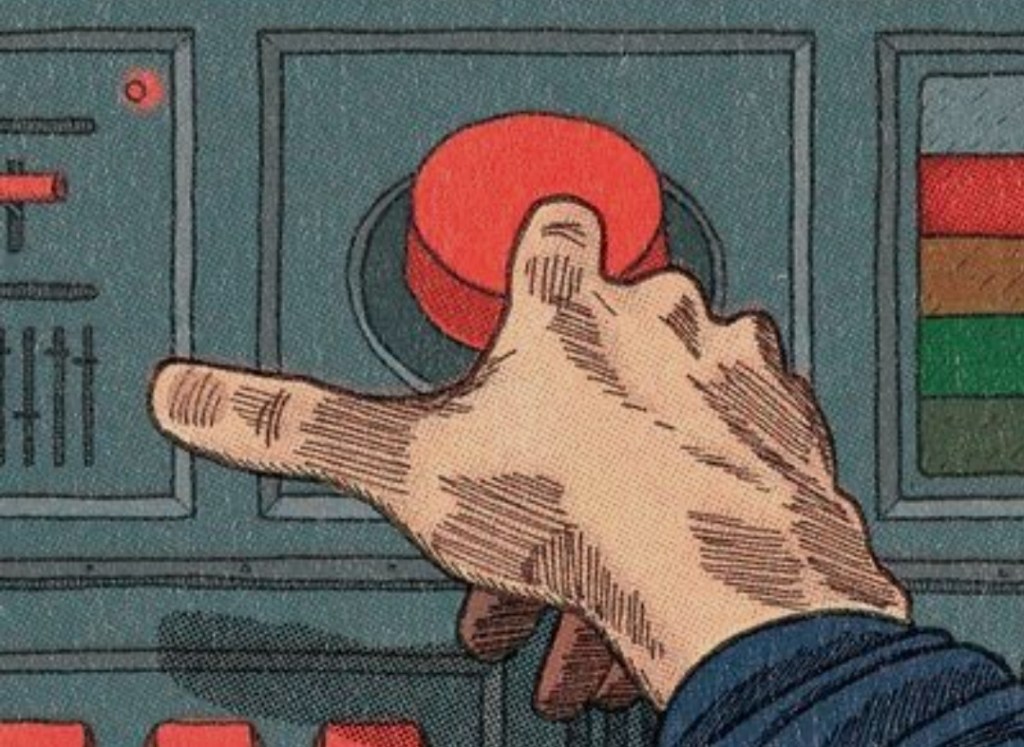
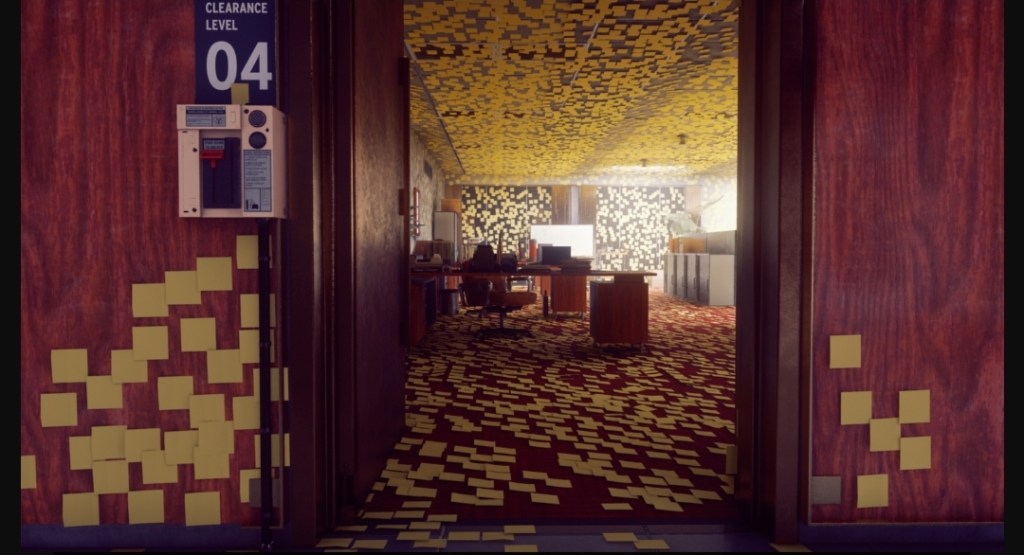
Their headquarters was a windowless room decorated with patriotic wallpaper and a large red button labeled “SIMPLIFY.” No one knew what it did, but pressing it made everyone feel better, which, in the Committee’s view, was the same as being right.
At the head of the table sat Chairman Blunt, a man who believed nuance and coherence were contagious diseases. He began the meeting with the usual ritual: a moment of silence for the complexity they had successfully eliminated that week.
“First order of business,” he announced, tapping his gavel like it owed him money. “We’ve received complaints that reality is becoming… inconvenient.”
A murmur rippled through the room. Inconvenient reality was their greatest adversary. More dangerous than facts, more persistent than evidence.
“We must act,” Blunt continued. “Suggestions?”A hand shot up. It belonged to Doris, head of the Department of Nostalgia.
“What if we replace reality with a better version?” she offered. “One where everything used to be perfect, everyone knew their place, and no one asked questions we didn’t like.”
“Brilliant,” said Blunt. “We’ll call it Tradition. People love that.”
Another member, Seb from the Bureau of Selective Freedom, leaned forward. “We should also expand liberty,” he said, pausing for effect. “Specifically, the liberty to agree with us.”
Applause erupted. Expanding freedom by narrowing it was a long-standing Committee favorite.
What a classic.
From the corner, a junior aide timidly raised his hand. He was new, still afflicted with curiosity.
“But sir,” he said, voice trembling, “what about people who don’t fit into our… simplified version?”
The room went quiet. Chairman Blunt regarded him with the same expression one reserves for a stain that refuses to come out.
“Then they must be simplified,” he replied.
The aide opened his mouth, then thought better of it. He made a note to himself: Stop thinking.
Meanwhile, the Committee moved on to education reform. Their proposal was elegantly straightforward: remove anything that made people think too much, feel too deeply, or question authority. In its place, they would introduce a single subject: Certainty.
“Children don’t need to learn how to think,” Doris explained. “God forbid. They need to learn what to think. It’s more efficient.”
Efficiency was the Committee’s guiding principle. Why wrestle with messy truths when you could package a tidy lie and sell it wholesale?
As the meeting drew to a close, Chairman Blunt gestured toward the red button.
“Shall we?” he asked.
One by one, they pressed it. The room hummed softly, like a lullaby for inconvenient thoughts. Outside, the world remained as complicated as ever. But inside, everything was perfectly clear.
The Committee adjourned, satisfied. They had once again defended simplicity against the creeping threat of reality.
And somewhere, far beyond the reach of their wallpapered certainty, the unanswered questions continued to multiply. Quietly, stubbornly, waiting for someone brave or foolish enough to notice.
The first is the theatrical sort: cackling maniacs with lava pits, themed henchmen, and a frankly admirable commitment to interior design. The sort who monologue about destiny while standing on balconies shaped like jagged teeth, as if they ordered their entire aesthetic from a catalogue labelled “Subtlety Is For Cowards”.
The second is the quiet, insidious kind: corporations, middle management, and anyone who says “circling back” in a meeting without being immediately escorted out of the building. These are the people who don’t need laser beams or death rays because they’ve already mastered the art of draining the human soul through email chains and passive-aggressive calendar invites.
And then there’s us.
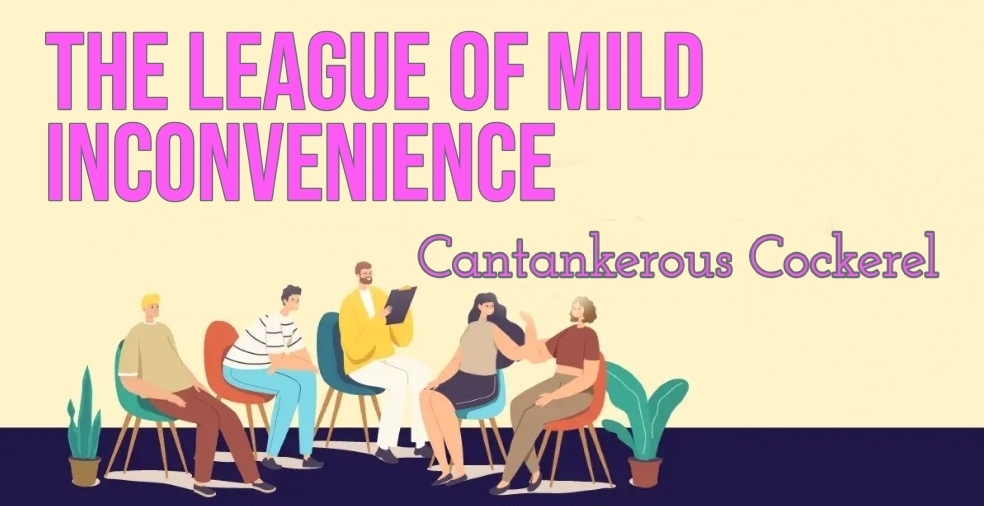
We meet every Thursday evening in a community centre that smells like damp carpet, burnt toast, and the vague suggestion of something that might once have been soup. It’s sandwiched between a Pilates class and something labelled “Expressive Clay for Beginners”, which I strongly suspect is code for people who can’t be trusted with knives but still need an outlet for their more sculptural urges. Or a drug front.
The sign on the door reads:
SUPPORT GROUP FOR EMERGING VILLAINOUS TALENT (Please bring your own biscuits)
Which, I feel, sets the tone rather effectively.
My name is Eleanor Vex, and I can make queues longer.
Not in any grand, reality-warping sense. I can’t conjure crowds out of thin air or bend space-time into a neat little pretzel. What I can do—what I have discovered I am uniquely and depressingly gifted at—is ensure that whenever someone joins a queue, it becomes just slightly longer and slower than it ought to be.
A person steps into a tidy line at a coffee shop expecting a brisk transaction, and suddenly there are three more people in front of them than there were a moment ago, and the barista has developed a deeply personal relationship with the concept of oat milk.
It’s subtle. Petty. Utterly infuriating.
And completely useless if your ambition is anything more ambitious than mildly inconveniencing a stranger on their lunch break.
Which, unfortunately, mine was.
I didn’t discover my ability in a dramatic fashion.
There was no lightning strike, no mysterious serum, no ancient artefact humming with ominous significance. I discovered it in a Pret.
I had been standing in what I was assured was a “quick queue”, which in London translates loosely to “a slow-moving existential experience with sandwiches”.
I remember thinking, with the quiet bitterness of someone who had already committed too much time to the endeavour, that it seemed to be taking longer than usual.
Then I noticed something odd.
Every time I shifted forward, someone else appeared in front of me.
Not in a dramatic, teleportation sort of way. They just… were there. As if they had always been there and I had simply failed to notice them, which is arguably worse.
A man debating the moral implications of a banana state of maturation. A woman asking if the napkins were “emotionally sourced”. Someone paying entirely in coins with the deliberate pace of a person who had nowhere to be and intended to ensure that no one else did either.
By the time I reached the till, I had aged noticeably.
It wasn’t until later, after several similar incidents and one particularly harrowing experience at a post office, that I realised the common factor was me.
Which is, I think we can all agree, deeply on brand.
The first rule of the group is that you have to introduce yourself and your “ability” without irony.
This is, in practice, impossible, like asking someone to describe their most embarrassing childhood memory in a tone of dignified neutrality.
“Hello,” I said on my first night, clutching a packet of bourbons like a social shield. “I’m Eleanor, and I… extend queues.”
A pause followed.
Not a respectful pause. Not the kind that suggests thoughtful consideration or emotional resonance. The kind of pause usually reserved for when someone says something so profoundly awkward that the room collectively agrees to pretend it didn’t happen.
Then a man in a folding chair nodded with what I suspect he believed was solemn encouragement.
“Thank you, Eleanor,” he said. “Very brave.”
He introduced himself as Dr Malevo, which was already a warning sign, as anyone who gives themselves a villainous title has either delusions of grandeur or a deeply concerning relationship with Etsy.
Dr Malevo wore a suit that had aspirations of authority but settled for “probation officer at a school for gifted disappointments”. It was slightly too shiny in places, as if it had been ironed with enthusiasm but not competence. He had a clipboard, which he wielded with the quiet menace of someone who believed paperwork could conquer the world if given enough bullet points.
“Who’d like to go next?” he asked, scanning the room with the hopeful expression of a man trying to coax confessions out of a collection of particularly uncooperative houseplants.
A woman raised her hand.
“I’m Priya,” she said, with the crisp tone of someone who had accepted her fate and decided to bully it into submission. “I can make people’s socks slightly damp.”
Another pause. This one shorter, but no less loaded.
“Slightly damp?” Dr Malevo prompted, as though clarifying the parameters of a particularly niche crime.
“Yes,” Priya said. “Not wet enough to justify changing them. Just enough to make you aware of it. All day.”
I felt, despite myself, a flicker of respect.
“That’s diabolical,” I muttered.
“Thank you,” she said, as if I’d complimented her on a well-executed soufflé.
The group, as it transpired, was less a gathering of masterminds and more a catalogue of life’s minor irritations given human form.
To my left sat a young woman named Charlotte, who introduced herself as “White Noise”.
“I can produce a constant, high-pitched whining sound that no one can quite locate,” she explained. “It’s not loud enough to be obvious, just… present.”
“Like a mosquito in your soul,” Dr. Malevo observed .
She beamed. “Exactly. Or like when a light fixture is about to give up on life but hasn’t quite committed yet.”
“That’s oddly specific.”
“I used to work in an office,” she said darkly.
Next to her was a man who insisted on being called “The Latecomer”, which sounded impressive until he clarified.
“I can delay public transport by exactly fourteen minutes,” he said. “No more, no less.”
“Why fourteen?” Priya asked.
“I don’t know,” he snapped. “Why damp socks?”
“Fair point,” she conceded.
“Also,” he added, leaning forward slightly, “it’s the perfect amount. Too short to justify outrage. Too long to ignore. It erodes trust in the system.”
“I think the system manages that on its own,” I said.
Across the circle, a woman with the kind of exhausted expression usually seen on primary school teachers raised a hand.
“Gemma,” she said. “I ensure that there is always a crying child in any café where someone is attempting to relax.”
“Always?” I said.
“Always,” she confirmed. “If there isn’t one, I… provide.”
There was something deeply unsettling about the way she said that, like a weather system describing itself.
“And I don’t control the volume,” she added. “It’s just… maximum.”
“Of course it is,” The Latecomer said. “Wouldn’t want to undermine the brand.”
“It’s not about volume,” she said defensively. “It’s about persistence. People can tolerate loud. They can’t tolerate relentless.”
“That should be on a T-shirt,” Charlotte said.
By the time we reached the end of the circle, I had learned that:
– A man named Oliver could make your phone battery drop by exactly 7% at the moment you needed it most. He described this as “digital sabotage” and seemed unreasonably proud of it.
– A woman called Hannah could misplace any small object within a three-metre radius. “Not lost,” she clarified. “Just… wrong.”
– A man could make tea too hot to drink immediately, but not hot enough so you’d just put it down and go ahead with your day for a few minutes. Hot enough that you just stay there, blowing on it. He insisted in being called The Steepmaster, which nobody acknowledged in what I sensed was a shared instinct for self-preservation.
It was, collectively, the least threatening collection of individuals I had ever encountered, and I once attended a networking event for freelance copywriters, which featured a man who described himself as a “word disruptor”.
And yet, there was something… cohesive about it.
Not in the sense that we formed any kind of credible threat. More that we all occupied the same strange niche of existence: people who had been handed something extraordinary and found it resolutely determined to be underwhelming.
Dr Malevo, naturally, saw it differently.“What we have here,” he said, standing at the centre of the circle like a man addressing a very disappointing cult, “is potential.”
I glanced around the room at Priya, who was carefully aligning a biscuit on her knee with the focus of a neurosurgeon, and at The Latecomer, who was staring at the clock with the intensity of someone willing it to betray him.
“Is it?” I said.
“Yes,” he said firmly. “Individually, your abilities may seem… limited.”
“That’s a generous word,” Charlotte muttered.
“But together,” he continued, undeterred, “they represent something far more significant.”
“An inconvenience?” Gemma suggested.
“A force,” he said.
There was a silence.
Not the thoughtful kind. The kind where everyone is quietly deciding whether to humour the speaker or stage a coordinated escape.
“I mean,” Gemma said slowly, “we’re not exactly… blowing up buildings, are we?”
“Destruction is overrated,” Dr Malevo said. “Anyone can destroy. It’s crude. Inelegant. Temporary.”
“And making someone’s latte take longer is… elegant?” I asked.
“It’s insidious,” he corrected. “It accumulates.”
I opened my mouth to respond, but he raised a hand, clearly having rehearsed this moment in front of a mirror that had been less sceptical than we were.
“Consider,” he said, “the average person’s day. They wake up, already slightly annoyed. The alarm went off too early. The room was too cold. They stub their toe on the bedframe. They’re facing a work day.”
“I don’t do toes,” Priya said.
“It’s an example,” he snapped. “Then they leave the house. The bus is late.”
The Latecomer sat up slightly straighter, like a man being personally acknowledged by destiny.
“They arrive at a café, hoping for a moment of peace. There is a crying child.”
Gemma gave a small, satisfied nod.
“They queue longer than expected,” he continued, looking directly at me. “Their coffee is too hot to drink. Their phone battery drops unexpectedly. Their keys are missing.”
He paused, letting it settle, as though expecting a slow ripple of horrified understanding rather than the mild discomfort of people realising they were being used as a metaphor.
“What you create,” he said, “is not a single act of villainy. It is a day. A mood. A slow, relentless erosion of patience.”
I frowned.
It was, annoyingly, a compelling argument. The kind that sneaks up on you and sits down uninvited, like a guest who insists they’re “just popping in” and then starts rearranging your furniture.
“Right,” I said. “But to what end? Are we hoping someone eventually snaps and… what, declares war on a Caffe Nero?”
“Don’t be flippant,” he said.
“I’m not,” I said. “I’m genuinely asking what the goal is. Because at the moment, it sounds like we’re aiming to become the abstract concept of ‘a bit of a bad day’.”
There were a few snorts of laughter. Even Priya allowed herself a brief smile, which I chose to interpret as a personal victory.
Dr Malevo did not join in.
“The goal,” he said quietly, “is to understand the true nature of power.”
“Oh good,” Gemma muttered. “I was worried it might be something achievable.”
*
The meeting ended, as they always did, with a vague sense of anticlimax and a plate of untouched digestive biscuits that had achieved the remarkable feat of being both too dry and somehow slightly damp, which I suspect was Priya’s doing.
I lingered by the door, watching as the others drifted out into the evening, each carrying their particular brand of mild malevolence like a slightly embarrassing hobby.
Outside, it was drizzling in that persistent, half-hearted way that suggests the weather is trying to inconvenience you personally but lacks the commitment to see it through. The British way of raining.
Priya caught my eye.
“You don’t believe him,” she said.
“Do you?” I countered.
She considered this, adjusting the strap of her bag with the precision of someone who liked things to sit exactly where they were meant to.
“I think,” she said slowly, “that if I wanted to ruin someone’s day, I could.”
“You could ruin their socks,” I said.
“Socks are the foundation of the day,” she said firmly. “Everything else builds from there.”
I stared at her.
“You’ve thought about this far too much.”
“Have you ever tried to ignore damp socks?” she said. “It’s impossible. It’s like your feet are quietly judging you.”
“I’ll take your word for it,” I said.
She smiled faintly.
“Come next week,” she said. “Even if it’s ridiculous.”
“It is ridiculous,” I said.
“Yes,” she agreed. “But it’s ours.”
*
I did go back the next week.
And the week after that.
Not because I believed in Dr Malevo’s grand vision, or because I thought we were on the brink of becoming anything resembling a credible threat.
But because, in a world full of people who either took themselves far too seriously or not seriously enough, there was something oddly comforting about a group that sat firmly in the middle, armed with powers that couldn’t quite justify their own existence.
It was, I told myself, purely observational.
A study in absurdity.
A way to pass the time.
It had absolutely nothing to do with the fact that, for the first time since discovering my thoroughly pointless ability, I didn’t feel entirely alone in it.
Which, in hindsight, should have been my first warning sign.
Because the thing about small annoyances—the truly insidious thing—is that they don’t stay small.
They build.
Quietly. Patiently.
Like a queue that keeps getting longer when no one is quite sure why.
Until one day, you look up and realise that what you thought was a collection of trivial irritations has become something else entirely.
Something… coordinated.
Something deliberate.
Something that, if you were feeling particularly dramatic, you might even call a plan.
Part 2: Practice makes mildly catastrophic
If there’s one thing worse than discovering you possess a useless superpower, it’s discovering other people are taking it seriously.
This became apparent on my fourth Thursday, when Dr Malevo arrived with a flip chart.
Not a whiteboard. Not a projector. A flip chart.
There is something uniquely threatening about a grown adult with a flip chart. It suggests planning. Intent. A willingness to commit ideas to paper in large, confident handwriting that cannot easily be erased or quietly disowned.
“Tonight,” he announced, with the air of a man unveiling a bold new initiative that would almost certainly end in paperwork, “we begin practical exercises.”
There was a collective shift in the room. Not excitement, exactly. More the subdued dread of people who had signed up for something ironic and were now being asked to participate sincerely.
“What sort of exercises?” Charlotte asked.
“Synergy,” he said, writing the word on the flip chart in thick, uncompromising strokes.
“I already don’t like it,” I said.
“You don’t have to like it,” he replied. “You simply have to engage with it.”
“That’s what people say about tax returns,” I muttered.
He ignored me, which I was beginning to suspect was less a sign of patience and more a survival mechanism.
“Up until now,” he continued, “you have all been operating in isolation. Small, disconnected acts of inconvenience. But what happens when those acts are… coordinated?”
“We mildly irritate someone slightly faster?” Oliver suggested.
“Or we create,” Dr Malevo said, turning dramatically to face us, “an experience.”
There was that word again. Experience. As if we were about to open a themed attraction called
‘A Bit of a Nuisance Land’.
“Right,” I said. “And who exactly is volunteering to be… experienced?”
Dr Malevo smiled.
“No one volunteers,” he said. “We observe.”
*
The plan, such as it was, involved a café.
Not a specific café.
Just “a café”, which in London is rather like saying “a pigeon”: there are so many that targeting one feels less like a decision and more like a statistical inevitability.
We gathered outside a place that described itself as “artisanal” and charged accordingly. It had exposed brick, mismatched furniture, and a menu that treated the word “sandwich” like a personal insult.
“This is ridiculous,” Charlotte said, standing on the pavement with the rest of us as if we were about to commit a very low-stakes heist.
“Focus,” Dr Malevo said. “This is a controlled test.”
“Of what?” she asked. “Our ability to loiter suspiciously?”
“Timing,” he said. “Sequence. Interaction.”
He pointed at Gemma.
“You go in first.”
She nodded, like a soldier accepting a deeply unimpressive mission, and disappeared inside.
“Now we wait,” he said.
“For what?” The Latecomer asked.
“For the right moment.”
“Which is defined as…?”
“You’ll know,” Dr Malevo said, which is never reassuring.
*
We did not, in fact, know.
What we did know, after approximately three minutes, was that The Latecomer was becoming visibly agitated.
“I could be doing something,” he said, pacing slightly. “There are buses out there. Trains. Entire transport networks functioning with unacceptable efficiency.”
“Try to contain yourself,” I said. “The city might survive without your intervention.”
“It won’t,” he said darkly. “That’s the problem.”
Before I could respond, Dr Malevo raised a hand.
“Now,” he said.
This, apparently, was our cue.
“Eleanor,” he said, pointing at me. “Inside. Join the queue.”
“Thrilling,” I said, but went in anyway.
*
The café was exactly what you’d expect: warm, crowded, and filled with people who looked like they had opinions about coffee that would be exhausting to hear.
Gemma was already in place, sitting near the window with a cup she clearly wasn’t drinking, her expression one of quiet concentration.
I joined the queue.
There were four people ahead of me.
Five, once I’d fully committed to standing there.
Then six.
I felt it happen, not as a dramatic surge of power, but as a subtle shift, like reality had shrugged and decided to be slightly more inconvenient.
A man appeared in front of me, already mid-conversation with the barista about the artist vision of whatever the cafe had hanging on its walls. A woman behind him began asking about gluten in a tone that suggested she would not be satisfied with any answer that didn’t involve a personal apology from the wheat itself.
I exhaled slowly.
“All right,” I muttered. “Let’s see what happens.”
*
It started small.
It always does.
The queue slowed, not dramatically, but enough that people began to notice. Not consciously at first. Just a slight tightening around the eyes. A shift of weight from one foot to the other.
Then Gemma’s contribution kicked in.
At first, it was just a sound —a faint, distant wail. Easy to ignore. The kind of noise you assume belongs to someone else’s problem.
Then it got louder.
And closer.
I turned my head slightly.
A child had appeared at a nearby table, red-faced and furious, producing a noise that could only be described as an auditory assault.
The parents looked exhausted. Defeated. As though they had accepted that this was their life now and resistance was futile. They might as well make everyone else miserable, as well.
“Right on schedule,” I murmured.
The man in front of me shifted again, glancing over his shoulder with the strained smile of someone trying very hard not to engage with the situation.
Then Charlotte stepped in.
Not physically. Audibly.
It’s difficult to describe White Noise’s effect, because that’s rather the point. It wasn’t loud. It wasn’t even clearly identifiable. Just a high-pitched, persistent whine that slipped into the background and refused to leave. In the few moments when the child stopped for breath, with your soul gasping for that half a second of truce, there it was.
The sort of sound that makes you question your own sanity.
I saw it register.
Subtle, at first. A slight frown. A distracted glance at the ceiling, as if the answer might be written there in faint, irritating frequencies.
The queue slowed further.
*
By the time Priya joined, it had become something else.
Not chaos. Not yet.
But tension.
You could feel it in the room. The collective awareness that something was slightly off, without any clear explanation as to what.
Priya walked past me without a word, her expression focused.
A moment later, I saw the effects ripple.
A woman near the counter shifted uncomfortably, adjusting her stance. Then again. Her foot tapped against the floor in a way that suggested she was trying, and failing, to ignore something.
Another person frowned, glancing down at their shoes with vague suspicion.
It spread.
Not dramatically. Not visibly enough to draw attention.
Just enough.
*
And then, of course, there was Oliver.
The man in front of me pulled out his phone, glanced at it, and sighed.
“Seven percent?” he muttered. “I just charged this.”
I almost laughed.
Almost.
Because at that moment, something clicked.
Not in the room.
In my head.
Dr Malevo had been right.
Not about the grand, sweeping idea of power, or whatever nonsense he’d been rehearsing in front of his mirror.
But about the accumulation.
Individually, these things were nothing.
A longer queue. A crying child. A faint noise. Slightly damp socks. A phone battery dipping at an inconvenient moment.
Together—I looked around.
The man at the counter was now arguing quietly with the barista about something that didn’t matter. The woman behind me huffed audibly. Someone dropped a spoon, and the sound seemed to linger just a fraction too long.
It wasn’t chaos.
It was worse.
It was sensory overload.
It was irritation.
Pure, concentrated, inescapable irritation.
*
I stepped out of the queue.
Not dramatically. Just… stepped away, as if I’d forgotten something important and couldn’t quite remember what it was.
Outside, the others were waiting.
“Well?” Dr Malevo asked.
I hesitated.
“It worked,” I said.
There was a flicker of satisfaction in his expression. Not triumph. Something quieter. More controlled.
“Describe it.”
I searched for the right words.
“It’s like…” I paused. “It’s like watching someone’s day go wrong in real time, but nothing is actually happening.”
He nodded.
“Precisely.”
“No,” I said. “Not precisely. That’s the problem. It’s not enough to be something. It’s just… everything slightly worse than it should be.”
“And how did that feel?” he asked.
I frowned.
“Uncomfortable,” I said.
“Good,” he replied.
“That’s not a good thing,” I said.
“For you,” he said. “No. But for our purposes—”
“Our purposes,” I repeated. “We’re doing this with a purpose in mind, aren’twe?”
He didn’t answer immediately.
Which, in itself, was an answer.
*
We ran the exercise again the following week.
And the week after that.
Different locations. Different combinations.
A supermarket, where Hannah’s ability turned the simple act of shopping into a low-level scavenger hunt of misplaced items and rising frustration.
A train platform, where The Latecomer’s precise delays stacked with my queues and Oliver’s battery interference to produce a crowd that shifted from mildly annoyed to quietly hostile.
Each time, the same result.
Not disaster.
Not even anything you could point to and say, “There. That’s wrong.”
Just… a day going badly.
Over and over again.
*
It was after the third “test” that I started noticing something else.Patterns.Not in the chaos, but in the way Dr Malevo observed it.
He wasn’t just watching.
He was tracking.
Timing.
Taking notes on that ever-present clipboard, his pen moving with a precision that suggested this wasn’t improvisation.
This was data.
“Enjoying yourself?” Oliver asked one evening, as we stood outside a supermarket watching a man stare at an empty shelf where his preferred brand of pasta had been until approximately thirty seconds ago.
“I find it… illuminating,” he said.
“That’s one word for it,” Oliver said. “Personally, I’d go with ‘deeply petty’.”
He smiled faintly.
“You’re beginning to see it, aren’t you?”
“See what?”
“The potential.”
Oliver shook his head.
“No,” he said. “I’m beginning to see that you’ve put far more thought into this than is healthy for any adult.”
“Healthy is overrated,” he said.
“That’s reassuring,” replied Oliver.
*
On the way home, I couldn’t quite shake the feeling.
Not guilt, exactly.
We weren’t hurting anyone. Not really.
We weren’t breaking anything. Not permanently.
We were just… nudging.
Pushing.
Making things slightly worse.
But that was the problem.
It was easy.
Too easy.
And it worked.
Which meant that, at some point, someone was going to ask the obvious question.
Not “can we do this?”
But “How far can we take it?”
The answer, I suspected, was not going to be comforting.
Part 3: Scaling up poor decisions
There is a particular kind of bad idea that doesn’t announce itself as such.
It doesn’t arrive with ominous music or a sense of impending doom. It doesn’t even feel especially reckless at the time. It just sort of… happens. A logical next step that seems reasonable enough until you stop and examine it, at which point it reveals itself to be the narrative equivalent of stepping onto a rake and acting surprised when it hits you in the face.
Scaling up, it turns out, is one of those ideas.
“We need a larger sample size,” Dr Malevo said, tapping his pen against the clipboard with the quiet confidence of a man who had never once been told to stop.
“Of what?” I asked. “People having a slightly worse day than usual?”
“Of interaction,” he said. “Complexity. Density.”
“You want more people,” Priya translated.
“Yes.”
“In one place.”
“Yes.”
“Experiencing us.”
“Yes.”
We stared at him.
“Have you considered,” Charlotte said slowly, “that this is how most terrible plans in history begins?”
He smiled.
“I would argue that most terrible plans lack this level of nuance.”
“You’re planning to mildly annoy a large number of people at once,” I said. “I don’t think nuance is the issue.”
*
The location, inevitably, was a train station.
Not one of the charming, almost quaint ones where people still say “cheers” and “ta” when you hold a door open. No, this was a proper station. The sort with echoing announcements, flickering departure boards, and a general atmosphere of collective resignation.
“It’s perfect,” The Latecomer said, looking around with something approaching reverence. “So many variables.”
“Most people would call that ‘too many variables’,” Hannah said.
“That’s because most people lack vision,” he replied.
“You delay trains by fourteen minutes,” Hannah said. “Let’s not get carried away.”
*
The plan, once again, relied heavily on Dr Malevo’s favourite concept: synergy.
“Timing is critical,” he said, as we stood near the entrance pretending not to be a loosely organised inconvenience syndicate. “We don’t want immediate disruption. We want escalation.”
“Of course we do,” I said. “Wouldn’t want to rush the disappointment.”
He ignored me.
“Latecomer,” he said, “you’ll initiate.”
The Latecomer nodded, already looking like a man about to fulfil his life’s purpose in the most underwhelming way imaginable.
“Fourteen minutes,” he murmured. “Just enough.”
“Then we layer,” Dr Malevo continued. “Eleanor, queues. Gemma, café area. Charlotte, maintain background pressure. Priya—”
“Socks,” Priya said, with quiet certainty.
“Yes,” he said. “Socks.”
“I cannot believe this is a sentence I’m hearing,” Oliver muttered.
*
It began, as these things always do, with something that no one could quite pinpoint.
A delay.
Fourteen minutes on the departure board.
Not unusual. Not even noteworthy. The sort of thing people glance at, sigh about, and immediately begin recalculating their expectations around.
Then another.
And another.
Not the same train. Different ones. Scattered. Just enough to create a subtle shift in the rhythm of the place.
People slowed.
Paused.
Looked up more often than they normally would.
Then I stepped in.
*
Queues, in a train station, are a delicate ecosystem.
They form organically —little clusters of patience and resignation around ticket machines, coffee kiosks, turnstiles, and information desks. They move, slowly but steadily, governed by an unspoken agreement that everyone will endure the process with minimal fuss.
Until something interferes.
I didn’t need to do much.
Just… exist.
A queue at a ticket machine stretched a little further than expected. A second machine developed an inexplicable backlog. Someone stepped in front of someone else without quite meaning to, creating that uniquely British tension where no one says anything, but everyone thinks very loudly.
It spread.
Like a rumour no one could quite trace back to its source.
*
Gemma’s contribution was almost immediate.
The station café, which had been operating at its usual level of mild chaos, suddenly gained a soundtrack.
At first, it was just one child.
Then another.
Not in the same place. Not obviously connected. Just… present.
A wail here. A shriek there. The kind of noise that slips under your skin and settles in, refusing to be ignored.
I watched a man try to sip his coffee while a child behind him reached a pitch that could probably interfere with satellite communications.
He lasted about thirty seconds before giving up and staring into the middle distance like a man reconsidering his life choices.
Meanwhile, The Steepmaster made sure that his coffee was just too hot.
*
Charlotte’s White Noise filled in the gaps.
Not noticeable enough to be identified. Not loud enough to be addressed.
Just there.
A constant, high-pitched suggestion that something was wrong, even if you couldn’t quite say what.
People frowned.
Rubbed their ears.
Checked their phones as if the answer might be hidden in the settings.
It wasn’t.
*
Priya moved through the crowd with quiet efficiency.
There was no visible effect, no dramatic moment of activation.
Just a gradual shift.
People adjusting their stance. Shifting their weight. Frowning down at their shoes with vague suspicion.
A woman removed one foot from her trainer, inspected her sock, and then —after a moment’s hesitation— put it back on again, as if unwilling to commit to the level of inconvenience required to fix the problem.
“That’s the sweet spot,” Priya had said once. “Too small to solve. Too big to ignore.”
I was starting to understand what she meant. I didn’t like her zealot tone, though.
And then, of course, there was Oliver.
Phones came out.
Screens lit up.
And one by one…
“Seven percent?” someone said.
“Are you kidding me?” said another.
“I just charged this,” a third muttered, with the weary disbelief of someone who had been betrayed by something they trusted.
It wasn’t dramatic.
No one panicked.
But the effect was cumulative.
Like everything else we did.
At first, it was just irritation.
A slow, steady build.
People checking the boards more frequently. Glancing at their watches. Sighing.
Then it shifted.
Not suddenly. Not dramatically.
Just… enough.
A man at a ticket machine swore under his breath when it failed to accept his card. A woman snapped at someone who got too close in the queue. A child’s crying escalated, feeding off the tension around it like a feedback loop of frustration.
I felt it.
Not as a power. Not as something I was doing.
As something I was part of.
I stepped back, moving towards the edge of the crowd.
From there, I could see it more clearly.
The pattern.
It wasn’t chaos.
It wasn’t even disorder.
It was a system under pressure.
Every small inconvenience adding to the next, creating a weight that no single person could quite articulate, but everyone could feel.
A man bumped into someone and didn’t apologise.
That, more than anything, was the moment I realised we might have gone too far.
I found Dr Malevo near the entrance, watching.
Not participating. Not engaging.
Observing.
“Well?” he said, without looking at me.
I hesitated.
“It’s working,” I said.
“Yes,” he said.
“That’s not necessarily a good thing,” I added.
“That depends on your perspective.”
I folded my arms.
“From the perspective of the people in there, I imagine it’s not ideal.”
“They will recover,” he said. “Nothing here is permanent.”
“That’s not the point,” I said.
“Isn’t it?” he replied.
I looked back at the crowd.
At the queues that moved just slowly enough to be painful. At the faces that had shifted from neutral to strained. At the small, barely noticeable moments of friction that were beginning to add up.
“It feels like more than it should,” I said.
He nodded.
“Exactly.”
The breaking point, when it came, was almost disappointingly mundane.
A train was announced.
Delayed, of course.
Fourteen minutes.
People moved towards the platform anyway, because hope, like irritation, is remarkably persistent.
The queue formed.
I felt it stretch.
Longer. Slower.
Someone tried to push past.
Someone else objected.
Voices were raised.
Not shouting. Not yet.
Just… sharper.
More brittle.
And then—
A suitcase wheel caught on something and tipped.
It wasn’t dramatic. It didn’t even make much noise.
But it was enough.
The man who owned the suitcase snapped.
Not violently. Not dangerously.
He just… lost patience.
“Can we just—” he started, his voice tight. “Can we just move?”
No one moved.
Of course they didn’t.
Because everyone was already trying to move, and the system wasn’t allowing it.
The queue stalled.
The crying continued.
The noise persisted.
And for a brief, uncomfortable moment, the entire platform seemed to hold its breath, as if deciding collectively whether to escalate or endure.
I stepped away.
Not because I had to.
Because I wanted to.
Because, suddenly, it didn’t feel like a joke anymore.
Outside, the air felt different.
Cleaner.
Quieter.
Less… pressured.
The others drifted out one by one, their expressions varying from thoughtful to quietly satisfied.
“That was… effective,” Charlotte said.
“Very,” Oliver agreed.
“No one got hurt,” Gemma added, as if that settled the matter.
Priya said nothing, but there was a certain calm confidence in her posture that suggested she considered this a job well done.
I looked at Dr Malevo.
“This is what you wanted,” I said.
“Yes,” he replied simply.
“And now what?” I asked.
He smiled.
Not broadly. Not triumphantly.
Just enough.
“Now,” he said, “we refine.”
*
On the way home, I found myself watching people more closely.
Not in a suspicious way.
Just noticing.
The small things.
A man sighing as he checked his phone. A woman frowning at a bus that was, presumably, fourteen minutes late. Someone shifting uncomfortably in their shoes.
It was everywhere.
Not us.
Not always.
But the same pattern.
The same accumulation.
And that was the unsettling part.
We weren’t creating something new.
We were amplifying something that already existed.
*
The question, I realised, wasn’t whether we could make things worse.
We clearly could.
The question was: At what point does “slightly worse” become something else entirely?
I had a feeling we were going to find out.
Part 4: The plan, unfortunately
There is a very specific moment when a bad idea stops being hypothetical and becomes a plan.
It’s not when someone suggests it. Suggestions are harmless. People suggest all sorts of things: starting podcasts, running marathons, reorganising their lives around colour-coded spreadsheets. Most of these ideas die quietly, as they should, suffocated by reality and a basic lack of follow-through.
No, the moment comes when someone brings a printed document.
Dr Malevo brought several.
“I’ve taken the liberty,” he said, distributing stapled sheets with the solemnity of a man unveiling a manifesto rather than what appeared to be a collection of bullet points and deeply concerning headings, “of outlining a coordinated strategy.”
I stared at the paper in my hands.
At the top, in bold, was the title:
PHASE THREE: ENVIRONMENTAL SATURATION
“I don’t like the word ‘saturation’,” Hannah said.
“It’s accurate,” he replied.
“It sounds moist,” Charlotte added.
“That’s because you’re thinking about socks,” I said.
Priya, who was already reading ahead with the focused intensity of someone revising for an exam in petty cruelty, did not look up.
*
The document, such as it was, outlined a plan that can only be described as thoroughly unnecessary.
“This is ridiculous,” I said, flipping through pages that included phrases like ‘cumulative irritation thresholds’ and ‘distributed nuisance modelling’.
“It’s comprehensive,” Dr Malevo corrected.
“It’s laminated,” I said. “You’ve laminated parts of it.”
“Only the key sections.”
“Why are there key sections?” I demanded.
“Because this is important,” he said.
“That’s exactly what worries me.”
*
The core idea was simple.
Which, in my experience, is always where the problems begin.
“We scale,” Dr Malevo said, tapping the document. “Not just in size, but in precision.”
“We’ve already scaled,” Oliver said. “We annoyed an entire train station. I think we’ve reached the natural limit of what can reasonably be described as ‘a bit irritating’.”
“That was a test,” he said. “This is application.”
“To what?” The Steepmaster said.
Dr Malevo smiled.
“To a system.”
I felt a familiar, unwelcome sensation.
The creeping awareness that someone else’s idea was about to become my problem.
“The modern world,” Dr Malevo began, pacing slowly in front of the circle, “is a delicate balance of tolerances.”
“No one has ever described it like that,” The Latecomer commented.
“They should,” was the reply. “People endure a constant stream of minor inconveniences. Delays. Discomforts. Irritations. Each one manageable in isolation.”
“Yes,” I said. “That’s called ‘living’.”
“But what happens,” he continued, “when those tolerances are exceeded?” we didn’t answer.
Partly because we knew he was going to anyway, and partly because we had the distinct feeling we weren’t going to like it.
“They break,” he said.
“People get annoyed,” Gemma said. “We’ve established this. It’s hardly revolutionary.”
“Not annoyed,” he said. “Overloaded.”
He tapped the document again.
“We create a day,” he said.
There it was again.
A day.
Not an event. Not an incident.
A day.
I hated how much sense that made.
“The target,” he continued, “is a retail environment.”
“Of course it is,” Charlotte muttered.
“High density. High expectation. Low tolerance for disruption.”
“You’ve just described every shop in existence.”
“Precisely.”
He pointed to a page.
“Specifically, a large shopping centre. Multiple entry points. Layered services. Opportunities for interaction at every level.”
I scanned the page.
There were diagrams.
Actual diagrams.
“You’ve drawn arrows,” I said.
“They indicate flow.”
“They indicate that you’ve spent far too much time thinking about this.”
*
The plan, in summary, was this:
We would take everything we had learned —the timing, the layering, the interaction— and apply it simultaneously across a single, contained environment.
Not to cause panic.
Not to cause harm.
Just… to push.
Everywhere at once.
“This is a terrible idea,” I said.
“No,” Dr Malevo said calmly. “It’s an elegant one.”
“Those are not mutually exclusive,” I shot back.
*
The others, to my growing concern, were not immediately opposed.
“This could work,” Oliver said, scanning the document with interest. “If the battery drops are timed with peak usage—payments, navigation—”“—people would notice,” Charlotte added. “Not consciously. But they’d feel it.”
“I could cover multiple zones,” Gemma said thoughtfully. “Entrances, cafés, seating areas—”
“—socks are universal,” Priya said, as if this settled the matter entirely.
I looked around the room.
“You’re all taking this seriously,” I said.
There was a pause.
“Yes,” The Latecomer said.
“Why?” I asked.
He frowned.
“Because we can,” he said.
That, more than anything, was the problem.
Not the plan.
Not the scale.
The fact that, for the first time, we weren’t laughing.
The location, when it was revealed, was depressingly predictable.
A large shopping centre on a Saturday.
“It’s the worst possible time,” The Steepmaster said, like Christmas had come early.
“Exactly,” Dr Malevo replied.
“People go there willingly,” I said. “They’re already suffering. This feels excessive.”
“We’re not creating suffering,” he said. “We’re revealing it.”
*
The preparation was, in a word, ridiculous.
We had roles.
Zones.
Timings.
There was, at one point, a discussion about “optimal entry vectors”, which I chose to ignore on the grounds that acknowledging it would make it real.
“Remember,” Dr Malevo said, as we stood outside the centre on the appointed day, “this is not about any single action. It’s about the cumulative effect.”
“Yes,” I said. “You’ve mentioned. Repeatedly. At length.”
“Stay in your areas. Maintain consistency. Observe.”
“Observe what?” Hannah asked.
“The result,” he said.
Inside, it was exactly what you’d expect.
Crowded. Noisy. Alive with the particular energy of people who had chosen to spend their weekend navigating shops they didn’t need in search of things they didn’t want at prices they didn’t agree with.
In other words, the perfect environment.
I took my position near a cluster of popular shops, where queues formed naturally and frequently.
It didn’t take much.
It never did.
A queue at a clothing shop stretched slightly further than it should. A second till opened, but somehow didn’t alleviate the pressure. People shifted, sighed, checked their watches.
Across the floor, I could see the others moving into place.
Gemma near a café.
Charlotte drifting through the central area.
Priya—everywhere, in her own quiet way.
It began.
Not with a bang.
With a sigh.
*
A child started crying.
Then another.
Not close enough to be connected. Not far enough to be ignored.
The noise settled into the background, persistent and unavoidable.
Charlotte’s White Noise slipped in alongside it, filling the gaps, creating a subtle tension that no one could quite identify.
Phones came out.
Screens lit up.
“Seven percent?” someone said.
“This mobile’s rubbish,” said another.
Queues slowed.
Not dramatically.
Just enough.
I moved slightly, letting my presence stretch the line further.
A woman behind me huffed.
A man in front checked his watch for the third time in under a minute.
Somewhere, something fell.
Somewhere else, someone swore under their breath.
It was working.
Of course it was working.
That was the problem.
I walked through the centre, watching it unfold.
Not chaos.
Not panic.
Just friction.
Everywhere.
People stopping, starting, adjusting.
Small moments of irritation stacking on top of each other, creating a weight that no single moment justified, but all of them together sustained.
A man abandoned a queue entirely, muttering something about “not worth it”.
A woman snapped at her partner over something trivial.
A child’s crying escalated, feeding off the tension around it.
It spread.
Quietly.
Efficiently.
Exactly as planned.
I found Dr Malevo on an upper level, looking down.
He wasn’t smiling.
That was the unsettling part.
He looked… satisfied.
“You see it,” he said, as I approached.
I didn’t answer immediately.
Because I did.
“I see people having a bad day,” I said.
“Yes,” he said.
“On purpose,” I added.
“Yes.”
I folded my arms.
“And this is… what? A success?”
“It’s a demonstration,” he said.
“Of what?”He turned to look at me.
“Of scale.”
I looked down at the crowd again.
At the queues that didn’t quite move.
At the faces that had shifted from neutral to strained.
At the small, constant adjustments people were making without even realising why.
“It’s still small,” I said.
“Individually,” he agreed.
“But together…”
“Yes,” he said.
There was a moment.
A brief, quiet pause in the noise.
Not silence.
Just a shift.
And in that moment, I realised something.
This wasn’t the plan.
This was the proof.-
“What happens next?” I asked.
He smiled.
This time, properly.
“Now,” he said, “we apply it properly.”
I stared at him.
“You mean this wasn’t ‘proper’?”
“This,” he said, gesturing to the centre below, “is a model.”
“A model of what?”
“Of what happens when we stop thinking small.”
I felt something tighten in my chest.
“We’re already not thinking small,” I said. “We’ve just mildly ruined a shopping centre.”
“And no one will remember it,” he said. “Not specifically. Not clearly. Just… as a day that felt off.”
“That’s not reassuring,” I said.
“It should be,” he replied.
It wasn’t.
Because as I looked down at the crowd, at the subtle, pervasive irritation we had created, I realised something else.
Something worse.
We weren’t just affecting people.
We were blending in.
And that meant no one was going to stop us.
Part 5: The Day Everyone Was Slightly Worse
There is, it turns out, a point at which a bad idea becomes inevitable.
Not because it is good. Not because it is justified. But because enough people have committed to it that stopping would require more effort than continuing, and human beings, as a rule, are deeply committed to the path of least resistance, even when that path leads directly into a wall.
We had reached that point.
Also, sometimes it feels better to be a part of a bad a idea than to be a failure by yourself.
“This is it,” Dr Malevo said, standing in front of us with a level of calm that suggested either supreme confidence or a complete detachment from reality. Possibly both. “Full deployment.”
I rubbed my eyes.
“Please don’t call it that,” I said. “It sounds like we’re invading something.”
“We are,” he said.
I paused.
“…No, we’re not.”
“We’re intervening,” he corrected.
“That’s not better.”
*
The plan (because by now it had fully graduated from “bad idea” to “organised absurdity”) was simple in the way that all catastrophic ideas are simple.
We weren’t targeting a single location anymore.
We were targeting a day.
A whole city: wide, interconnected, perfectly ordinary day.
Transport. Shops. Cafés. Offices. Streets.
Anywhere people went.
Anywhere people expected things to function at a baseline level of tolerable efficiency.
“We distribute,” Dr Malevo said, gesturing at what I strongly suspected was a map he’d printed at home and annotated with alarming enthusiasm. “We maintain pressure across multiple environments simultaneously.”
“You’ve made zones,” Priya said.
“Yes.”
“You’ve colour-coded them.”
“Yes.”
“You’ve enjoyed this far too much.”
He didn’t deny it.
“Let’s be clear,” Charlotte said, looking around the group. “We are about to mildly inconvenience an entire city.”
“Yes,” Priya said.
“On purpose.”
“Yes.”
“For no tangible benefit.”
Priya considered this.
“Personal satisfaction,” she said.
“That is not a benefit,” Charlotte said.
“It is to me,” she replied.
*
The others, to my ongoing dismay, were fully on board.
Oliver was discussing “peak battery dependency windows” like a man who had finally found his calling and was disappointed it hadn’t come with a better title.
Charlotte was talking about “ambient saturation” in a tone that suggested she had been waiting her entire life to use that phrase unironically.
Gemma was simply nodding, as if the idea of unleashing a city-wide chorus of crying children was less a plan and more an inevitability she had accepted long ago.
The Latecomer looked… serene.
Which, given his personality, was deeply unsettling.
“Final question,” I said, raising a hand.
Dr Malevo nodded.
“What happens when it works?”
There was a pause.
Not a long one.
But long enough.
“Then,” he said, “we observe.”
Of course we did.
It started, as always, with something no one could quite identify.
A bus that was fourteen minutes late.
Then another.
Then a train.
Not all at once. Not in a pattern anyone could easily track.
Just enough.
People adjusted.
They always do.
They checked their watches. Recalculated routes. Sent messages explaining they’d be “just a bit late”, as if those three words had not quietly eroded all meaning over the past decade.
Queues followed.
They stretched, subtly, across the city.
Coffee shops. Post offices. Supermarkets.
Anywhere a line could form, it did. And then it lingered, just long enough to become noticeable.
Gemma’s work spread through cafés and waiting areas like a low-level storm.
A crying child here.
Another there.
Never enough to be remarkable.
Always enough to be present.
A background chorus of discontent.
Charlotte filled the gaps.
Her White Noise didn’t dominate.
It didn’t need to.
It simply existed, everywhere at once, a faint, persistent suggestion that something wasn’t quite right.
People frowned.
Rubbed their ears.
Checked their surroundings.
Found nothing.
Priya moved unseen, her influence subtle but pervasive.
Slight discomfort.
A constant awareness of something being off.
Feet shifting. Shoes being adjusted. Concentration fractured.
No one stopped to fix it.
That was the point.
Oliver’s contribution was, if anything, the most immediately noticeable.
Phones dipped.
Never dead.
Just low enough to matter.
Just enough to make people hesitate before using them.
Just enough to create that quiet, modern panic that comes from being slightly less connected than you’d like.
And me?I
walked.
Through streets, through shops, through stations.
Not doing anything dramatic.
Letting the queues form.
Letting them stretch.
Letting them linger.
At first, it was nothing.
Of course it was.
Just a day.
A normal, ordinary day where things weren’t quite working as well as they should.
People sighed.
Complained.
Moved on.
Then it built.
Nobody could point to it and say, “There. That’s where it started.”
Just gradually.
A man snapped at a barista over something trivial.
A woman argued with a stranger over queue etiquette.
Someone missed a train and reacted more strongly than the situation warranted.
Small things.
Always small.
But they added up.
By midday, you could feel it. In enough places.
A tension. A brittleness. The sense that people were operating at the very edge of their patience, with no clear reason why.
I found myself in a café at one point, standing in a queue that had no business being as long as it was.
In front of me, a man stared at the menu like it had personally offended him.
Behind me, someone sighed. Quietly, but constantly.
A child cried in the corner.
A phone buzzed, followed by a muttered, “Oh, come on.”
And for a moment —Just a moment— I saw it.
The whole thing.
As a system.
A network of tiny, interconnected irritations, feeding into each other, amplifying, reinforcing.
And it was working.
I stepped out.
I needed air.
Or distance.
Or something that felt less like being inside a very slow, very polite breakdown.
I found Dr Malevo in a park.
Because of course he was in a park.
Standing on a path, watching people walk past with the quiet satisfaction of a man who had successfully rearranged reality to his liking.
“Well?” he said.
I looked at him.
“At what point,” I asked, “does this stop being clever and start being… horrible?”
He tilted his head.
“Why would it need to be either?” he said.
“Because we’re doing this to people,” I said.
“People do this to themselves,” he replied. “We’re simply… aligning the variables.”
“That’s a very polite way of saying ‘making everything worse’.”
“Everything is already worse,” he said. “We’re just making it noticeable.”
I looked around.
At the park.
At the people.
Some were fine.
Of course, they were.
Not everyone was affected equally.
But enough were.
A couple arguing quietly on a bench.
A man pacing while staring at his phone.
Someone sitting very still, as if trying to wait out a feeling they couldn’t quite name.
“This doesn’t fix anything,” I said.
“It’s not meant to,” he replied.
“Then what’s the point?”
He smiled.
“To demonstrate.”
“Demonstrate what?” I said.
“That you don’t need grand gestures,” he said. “You don’t need destruction or spectacle. All you need is consistency.”
I frowned.
“Consistency?”
“A thousand small things,” he said. “Applied correctly.”
I thought about that.
About the day.
About everything we’d done.
And then I noticed something.
Something small.
But telling.
People weren’t reacting the same way anymore.
The man pacing with his phone stopped.
Took a breath.
Put it away.
The couple on the bench went quiet.
Not tense, just quiet.
The woman in the café earlier, the one who had sighed constantly, eventually just stopped.
Because they were adjusting.
I looked back at Dr Malevo.
“They’re adapting,” I said.
He followed my gaze.
And for the first time since I’d met him, he frowned.
“That’s not supposed to happen,” he said.
“Why not?” I asked.
“Because the pressure…”
“…stays the same,” I said. “But they don’t.”
We watched.
As the day continued.
As the irritation persisted.
And as people absorbed it.
Effectively, as ungracious though that looked.
*
By late afternoon, the edge had dulled.
The queues were still long.
The delays still present.
The crying still constant.
But the reactions… had changed.
People expected it.
They moved slower.
Planned less.
Reacted less.
A man whose phone dropped to seven percent didn’t swear.
He just nodded.
As if confirming something he already knew.
A woman in a queue didn’t sigh.
She just waited.
A child cried.
And no one even looked up.
I felt something cold settle in my chest.
“We did this,” I said.
Dr Malevo didn’t answer.
“We made it normal,” I said.
Because that was the problem.
Not that we had made things worse.
That we had made “worse” acceptable.
The day ended.
Of course it did.
Days always do.
*
We met again the following Thursday.
Same room.
Same smell.
Same sign on the door.
“Report,” Dr Malevo said.
No one spoke immediately.
“It worked,” Oliver said eventually.
“Yes,” Charlotte added. “But—”
“They adjusted,” Gemma finished.
Priya nodded.
“Faster than expected.”
I looked at Dr Malevo.
“Well?” I said.
He stood there for a moment.
Clipboard in hand.
Plan in pieces.
And then, slowly, he smiled.
-“Fascinating,” he said.
I stared at him.“You’re not disappointed?”
“On the contrary,” he said. “This proves the theory.”
“Which is?”
He looked around the room.
At all of us.
“That people will tolerate anything,” he said.
There was a pause.
“And what does that make us?” Priya asked.
He considered this.
“Obsolete,” he said.
And that was that.
*
We still meet.
Every Thursday.
Same room.
Same biscuits.
We still have our powers.
Of course we do.
But they don’t matter anymore.
Because the world caught up.
Queues are always longer than they should be.
Phones are always slightly too low.
Something is always missing.
Something is always too loud.
Too slow.
Too much.
We just helped it along.
And now, no one notices.
Which, I suppose, was the point.
If you’re feeling particularly dramatic, you might say we changed the world.
Whether it was for good it’s up for debate.
Personally, I think we just made it slightly worse.
And then everyone got used to it.
Which, in its own quiet, persistent way, it probably is the most effective villainy of all.
It began, as many regrettable things do, with good intentions and a pen that worked.
Ash (who would not have described himself as a systematic man, but would have agreed that he was a man who owned several systems, none of which spoke to each other) sat at his kitchen table on a Wednesday morning that had already developed a personality problem.
It was the sort of morning that implied productivity in the same way a cat implies ownership: silently, persistently, and with a faint air of judgment.
Ash, who had been meaning to get his life together for some time now, decided that today would be the day he began the process of eventually considering doing so.
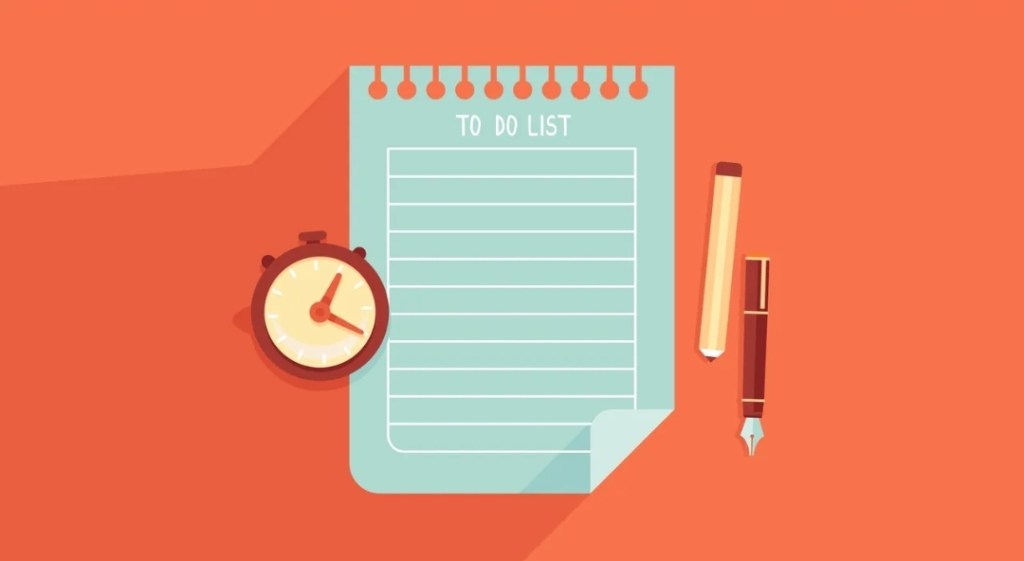
He took out a piece of paper.
Not a good piece of paper, mind you. Not one of those thick, confident sheets that suggest important documents and signatures. This was a slightly crumpled, faintly apologetic sheet, previously part of something else, possibly a bill, possibly a warning.
He flattened it.
He picked up a pen.
The pen hesitated briefly, as if aware of its role in what was to come.
Ash wrote:
– Buy milk
– Reply to email
– Start project
He paused, chewing the end of the pen in the thoughtful way of a man who was not, strictly speaking, thinking.
Then, because one must always aim high, he added:
– Start self-improvement
He leaned back and regarded the list.
It regarded him back.
This is not, in itself, unusual.
Many lists possess a certain presence. A list is, after all, a collection of expectations in bullet-point form. It has weight. Gravity. The ability to sit quietly on a table and radiate mild disapproval.
Ash nodded.
“Yes,” he said, to no one in particular. “That seems reasonable.”
He stood up, with the vague intention of immediately doing at least one of the things, thereby establishing a pattern of productivity that could later be abandoned with justification.
He took four steps toward the kitchen.
He stopped.
Something was… not wrong, exactly. More like… rearranged.
He turned back.
The list now read:
– Buy milk
– Reply to email
– Start project
– Get life together
Ash frowned.
He walked back to the table.
He looked at the paper closely.
He turned it upside down, in case that would reveal anything. It did not, but it did make “Get life together” look more like a threat.
“Huh,” he said.
Ash was not a man who immediately leapt to conclusions. He preferred to walk briskly toward them while pretending to examine the scenery.
“I must have written it like that,” he decided.This is the sort of conclusion that makes life possible.
He nodded again, more firmly this time, and turned back toward the kitchen.
He reached the fridge.
He opened it.
He stared inside.
There was no milk.
There was, however, a jar of something that had once been hopeful and was now philosophical.
Arthur closed the fridge.
“Right,” he said. “Milk.”
He returned to the table to retrieve the list, because one must not embark on a task without documentation.
The list now read:
– Buy milk
– Reply to email
– Start project
– Get life together
– Stop wasting time
Ash blinked.
He looked at the pen.
He looked at the paper.
He looked at his own hands, which were doing nothing suspicious, unless you counted existing.
“I did not write that,” he said.
The list said nothing.
This was, in hindsight, its first tactical victory.
Ash picked up the paper.
The handwriting matched his own. Not exactly: there was a certain… firmness to it. A confidence. As if each letter had been written by someone who believed it deserved to exist.
Ash’s handwriting, by contrast, tended to apologise for itself midway through words.
“Stop wasting time,” he read aloud.
He considered this.
“I wasn’t wasting time,” he said.
The list, being a list, declined to engage in debate. Instead, it simply was.
Ash placed the paper back on the table.
“Right,” he said, in the tone of a man who has decided not to investigate something further because that would be inconvenient.
He picked up his phone.
He opened his email.
He stared at it.
There were twelve unread messages. One of them had the subject line: “Just following up”.
This is, of course, one of the more threatening phrases in the modern world. It implies that not only has something been left undone, but that it has developed awareness of this fact and is now pursuing you.
Ash sighed.
“Fine,” he said. “Email first.”
He sat down.
He began typing.
Behind him, unnoticed, the list shifted very slightly, like a cat adjusting itself into a more comfortable position from which to observe.
*
Ash spent the next twenty minutes composing a reply that managed to be both apologetic and non-committal, which is to say it achieved its primary objective of existing without resolving anything.
He hit send.
He sat back.
“There,” he said. “Done.”
He stood up, with the intention of rewarding himself with something small and unnecessary.
He took two steps toward the kitchen.
He stopped.
He turned.
The list now read:
– Buy milk
– Reply to email ✔
– Start project
– Get life together
– Stop wasting time
– Do not reward yourself yet
Ash stared at it.
“No,” he said.
The list did not respond.
“No,” Ash repeated, more firmly. “That is not how this works.”
He walked over and picked it up.
The checkmark next to “Reply to email” was neat. Satisfying. Slightly smug.
“I will reward myself,” Ash said, “because I have completed a task.”
The list remained silent, which, in this case, conveyed a level of skepticism that words could not have achieved.
Ash hesitated.
This is how it begins, in many cases: not with fear, but with a brief and entirely unreasonable hesitation in the face of inanimate disapproval.
“I am going to have a biscuit,” he said.
The list did nothing.
Ash waited.
He was not entirely sure what he expected. Possibly a rustling noise. A small dogear. A footnote.
Nothing happened.
“Good,” he said. “That settles that.”
He turned and walked to the kitchen.
He opened the cupboard.
He reached for the biscuits.
He paused.
There was a moment —brief, ridiculous, entirely avoidable— in which Ash Tanner considered whether or not a piece of paper in the other room might be disappointed in him.
And he strongly felt that it was.
He took the biscuit.
He ate it.
It was, under the circumstances, not nearly as satisfying as it should have been.
*
When Ash returned to the table, brushing crumbs from his shirt in the manner of a man attempting to erase evidence from history, he found that the list had grown.
– Buy milk
– Reply to email ✔
– Start project
– Get life together
– Stop wasting time
– Do not reward yourself yet
– That was unnecessary
Ash looked at the new line.
He read it again.
“That was unnecessary,” he said.
He glanced at the kitchen.
He glanced back at the list.
“It was a small biscuit,” he said. “A very small biscuit.”
The list, once again, declined to engage.
Ash sat down slowly.
He was beginning to feel, not fear exactly, but the early stages of a conversation he had not agreed to have.
“This is ridiculous,” he said.
The list remained a list.
Ash tapped the paper.
“This is just… this is just me,” he said. “This is my handwriting.”
The handwriting did not argue.
Ash leaned closer.
The ink was the same. The pressure was similar. But there was something about it—something decisive.
It was, Ash realised, the handwriting of someone who did not pause halfway through writing “project” to wonder what that meant.
Ash sat back.
He looked at the list.
The list looked like a list.
And yet.
And yet.
Ash picked up the pen.
“Fine,” he said. “If this is going to be a thing—”
He wrote, carefully:
– Ignore list
He put the pen down.
He folded his arms.
“There,” he said.
For a moment, nothing happened.
Then, slowly, with the quiet confidence of something that does not need to hurry, a new line appeared beneath it.
– No
Ash stared at it.
There are moments in life when the universe reveals itself not as vast or mysterious, but as deeply uncooperative.
Ash Tanner, who had intended to buy milk, found himself instead sitting at a table, staring at a piece of paper that had just disagreed with him.
He considered his options.
He considered them very briefly.
Then he said, “Right,” in the tone of a man who has just made a decision he will later describe as inevitable.
He picked up the list.
“I am going to buy milk,” he said. “And when I come back—”
He paused.
He looked at the paper.
“And when I come back,” he continued, “this will all have stopped.”
The list, which had already demonstrated a certain perspective on inevitability, remained silent.
Ash put on his coat.
He picked up his keys.
He left the flat.
The list stayed on the table.
For a moment, it did nothing.
Then, very neatly, it added:
– Buy milk (do not forget)
And, after a brief pause, as if for emphasis:
– Seriously
2
Ash returned from the shop with milk, a receipt, and a growing sense that he had made a series of decisions that, while individually defensible, had collectively formed a pattern best described as inadvisable.
The milk was cold. The air was cold. The idea that a piece of paper might be waiting for him at home with opinions was, somehow, colder still.
He let himself into the flat.
There are many ways to enter one’s own home. One can stride confidently, as if one owns the place. One can shuffle in apologetically, as if one has been invited but is not entirely sure by whom. Or one can do what Ash did, which was to open the door very slowly and peer inside, as though expecting the furniture to have rearranged itself into something accusatory.
Nothing had.
The chair remained a chair. The table remained a table. Everything was were he had left it.
A faint smell of something that had once been toast remained a philosophical question.
And there, on the table, lay the list.
Ash closed the door behind him.
“Right,” he said.
He placed the milk on the counter, deliberately, like a man demonstrating competence to an audience that had not asked for a demonstration.
He walked over to the table.
He looked at the list.
The list looked like this:
– Buy milk ✔
– Reply to email ✔
– Start project
– Get life together
– Stop wasting time
– Do not reward yourself yet
– That was unnecessary
– Ignore list
– No
– Buy milk (do not forget) ✔
– Seriously ✔
Ash stared at the bottom two lines.
“I did not—” he began, then stopped.
Of course he hadn’t forgotten the milk. The milk was right there. The list, however, had chosen to frame this as a victory, which felt… unfair.
“You don’t get to be right about things that I was going to do anyway,” Ash said.
The list, having been right about something that had already happened, did not feel compelled to negotiate this point.
Ash set his jaw.
“Fine,” he said. “That’s done. Now we move on.”
He picked up the pen.
He crossed out the last two lines with unnecessary force, the ink digging slightly into the paper as if to establish dominance.
“See?” he said. “I can do that. I can just—”
The lines reappeared.
Not dramatically. Not with a flourish. The lines Ash had used to cross them out slowly faded until they simply were no longer crossed out.
Ash froze.
There is a particular kind of silence that follows the realisation that the rules one assumed were in place are, in fact, optional.
Ash cleared his throat.
“Right,” he said again, which was beginning to lose some of its structural integrity as a phrase.
He sat down.
“Start project,” he read.
He nodded.
“Yes. Good. Normal. That’s a normal thing to do.”
He underlined it.
The list responded.
Beneath “Start project,” in that same firm, confident handwriting, new lines appeared:
– Start project
– Open laptop
– Do not open unrelated tabs
– Locate project files
– Do not become distracted
– Begin actual work
Ash leaned back slowly.
“That’s…” he said. “That’s excessive.”
He looked at the list.
The list looked organised.
There is something deeply persuasive about organisation. It suggests that things are under control, even when the things in question are actively developing personalities.
Ash tapped the pen against the table.
“I was going to open the laptop anyway,” he said.
The list did not argue.
It didn’t need to.
Ash hesitated, just for a moment.
Then he stood up, walked over to the sofa, and picked up his laptop.
“Fine,” he said. “We’ll do it your way.”
This, historically, has rarely been a reassuring sentence.
*
Ash opened the laptop.
The laptop opened several unrelated thoughts in response.
He sat back down at the table, positioning himself directly in front of the list, as if entering into a negotiation with an entity that had, thus far, refused to acknowledge the existence of negotiations.
“Open laptop,” he said.
He glanced at the list.
There was no checkmark.
“Right,” he said. “Because I haven’t—”
He closed the laptop.
He opened it again.
The list added a neat ✔ next to “Open laptop.”
Ash stared at it.
“That’s… very literal,” he said.
The list, once again, was correct.
Ash exhaled.
“Fine. Fine. We’re doing this.”
He moved to the next item.
“Do not open unrelated tabs.”
He paused.
He looked at the browser.
He looked at the list.
He looked back at the browser.
There is a moment, in every person’s life, when they become aware of the exact number of tabs they have open and realise that the number is not defensible in a court of law.
Ash had twelve.
One of them was an article titled “How to Focus Better in a Distracting World,” which he had opened four days ago and not read.
Another was a video paused halfway through, featuring a man explaining something with great enthusiasm and no clear conclusion.
Ash hovered the cursor over the tabs.
He glanced at the list.
“Define ‘unrelated,’” he said.
The list did not define it.
Ash nodded slowly.
“Right,” he said. “So we’re being vague now. That’s fine. I can work with vague.”
He closed one tab.
He waited.
Nothing happened.
He closed another.
Then other six.
The list added a checkmark.
– Do not open unrelated tabs ✔
Ash sat back.
“That’s not how that works,” he said. “I still have—”
He stopped.
He looked at the remaining tabs.
He looked at the list.
He closed the rest.
The checkmark remained.
Ash felt, very briefly, a sense of accomplishment.
It was immediately followed by suspicion.
*
“Locate project files,” Ash read.
“That’s reasonable,” he said.
He clicked through folders.
He found the files.
He opened them.
The list added another checkmark.
– Locate project files ✔
Ash nodded.
“Yes,” he said. “Good. Progress.”
He looked at the next item.
“Do not become distracted.”
He frowned.
“That’s not a task,” he said. “That’s a state.”
The list did not respond.
Ash stared at the screen.
He stared at the list.
He stared at the screen again.
For a moment, nothing happened.
Then his phone buzzed.
Ash glanced at it.
He froze.
Slowly, very slowly, he looked back at the list.
The words “Do not become distracted” had been underlined.
Twice.
Ash looked at his phone again.
It buzzed once more.
Ash turned it face down.
“Fine,” he said.
The list did not add a checkmark.
Ash waited.
“Fine,” he repeated.
He pushed the phone slightly further away.
The list added:
– Do not become distracted
– Ignore phone
Ash narrowed his eyes.
“You’re retroactively adding conditions,” he said.
The list, which had no interest in fairness as a concept, remained unmoved.
Ash sighed.
He picked up the phone.
He turned it off.
He placed it in another room.
He returned to the table.
The list added a checkmark.
– Do not become distracted ✔
Ash sat down.
He looked at the final subtask.
“Begin actual work.”
He nodded.
“Yes,” he said. “That’s the point.”
He placed his hands on the keyboard.
He began typing.
And, for a moment—just a moment—everything was fine.
*
Time passed.
Not a lot of time. Not enough to constitute a productive day. But enough to create the impression of one, which is often sufficient.
Ash typed.
He edited.
He made progress.
Real progress.
The kind of progress that, under normal circumstances, would have taken three hours, two cups of coffee, and a brief existential crisis involving the phrase “what am I doing with my life.”
Now, it took twenty minutes.
Ash stopped typing.
He sat back.
He looked at the screen.
He looked at the list.
The list added a final checkmark.
– Begin actual work ✔
Beneath it, a new line appeared:
– Continue
Ash stared at it.
“No,” he said, reflexively.
Then he paused.
He looked at the work he had done.
It was good.
Not perfect. Not revolutionary. But done, in a way that felt suspiciously efficient.
Ash looked back at the list.
“You helped,” he said.
The list did not respond.
Ash considered this.
There is a dangerous moment, in any arrangement with something unreasonable, when it proves useful.
Ash nodded slowly.
“Right,” he said. “Right.”
He picked up the pen.
He wrote:
– Take a short break
He underlined it.
He sat back.
“There,” he said. “Reasonable. Balanced.”
The list regarded the new item.
For a moment, nothing happened.
Then, beneath it, in that same firm, confident hand, appeared:
– Take a short break
– Define ‘short’
Ash closed his eyes.
“Fifteen minutes,” he said.The list added:
– Fifteen minutes. Do not extend.
Ash opened one eye.
“Twenty,” he said.
The list remained silent.
Ash waited.
The list did not change.
Ash exhaled.
“Fine,” he said. “Fifteen.”
A checkmark appeared next to “Define ‘short’.”
Ash leaned back in his chair.
He stared at the ceiling.
“This is fine,” he said.
The ceiling, which had seen many things and judged none of them, declined to comment.
*
In the quiet that followed, the list added one more line.
At the very bottom, beneath everything else, separate from the tasks and subtasks and small, precise victories, it wrote:
– Review overall performance (end of day)
Ash did not see this.
Not yet.
But it was there.
Waiting.
Organised.
Patient.
And, above all, very interested in how the rest of the day would go.
3
Fifteen minutes, as it turns out, is an extremely long time when one is aware —deeply, uncomfortably aware— that the concept of fifteen minutes has been formalised.
Ash sat on the sofa with the posture of a man attempting to relax under observation.
He was not, technically speaking, being observed.
This did not help.
He kept on relaxing stressfully.
There is something about a defined break that removes all of the casual, meandering qualities that make a break enjoyable. A break, when structured, ceases to be a break and becomes a task with better branding.
Ash stared at the television.
The television stared back, in the way that televisions do when they are off and reflecting a slightly distorted version of your life choices.
“I am relaxing,” Ash said.
He shifted slightly.
He placed one arm along the back of the sofa in what he hoped was a relaxed manner and what, to an impartial observer, would have looked like a man attempting to impersonate a relaxed person.
“I am definitely relaxing,” he added.
From the other room, the list did nothing.
Which, in this context, was worse than doing something.
Ash checked the time.
Four minutes had passed.
“Good,” he said. “Nearly a third.”
He adjusted his position again.
He considered turning the television on.
He considered that this might, in some way, be interpreted as extending the break.
He did not turn the television on.
He sat very still, like a man attempting to win a game called “Relaxation” by not making any sudden movements.
*
At precisely fifteen minutes, Ash stood up.
Not gradually. Not with the slow, reluctant movement of someone leaving comfort. But with the sharp, decisive motion of someone obeying a signal that had not, technically, been given.
“Done,” he said.
He walked back to the table.
He looked at the list.
The list had added a checkmark.
– Take a short break ✔
Beneath it:
– Resume work ✔
Ash frowned.
“I didn’t—” he began.
He looked at his own feet, which had already carried him back to the chair.
He looked at his hands, which were already reaching for the laptop.
“I suppose I did,” he said.
The list, as ever, was correct.
*
The next hour passed in a manner that could only be described as alarmingly productive.
Ash worked.
Not in the usual fragmented way, where tasks are approached, circled, and eventually abandoned like particularly suspicious puddles.
No, this was different.
This was direct.
Efficient.
Uncomfortable.
The list continued to expand its quiet influence.
When Ash hesitated, the relevant subtask would appear.
When Ash drifted, something would underline itself.
When Ash reached for his phone, a new line would materialise:
– Stay focused
And, when necessary:
– You are not staying focused
There is a peculiar power in being told something that is immediately, undeniably true.
Ash found himself complying.
Not because he wanted to.
Not even because he agreed.
But because the alternative —actively disagreeing with something that was, at that exact moment, correct— felt like an unnecessary complication.
By early afternoon, the “Start project” task had been thoroughly, methodically dismantled and completed.
The list reflected this.
– Start project ✔
Ash stared at it.
He felt… something.
It wasn’t pride. Pride implies ownership.
This was more like… relief.
Or perhaps the absence of a particular kind of low-level guilt.
He sat back.“Well,” he said. “That’s done.”
The list added:
– Acknowledge completion ✔
Ash blinked.
“I just did,” he said.
The list did not argue.
It simply recorded.
*
There was a pause.
A small, fragile pause, in which nothing new had yet been added.
Ash leaned back in his chair.
He allowed himself a moment of cautious optimism.
“This might be manageable,” he said.
And then, beneath the completed tasks, the list began to grow.
Not in the scattered, reactive way it had before.
No.
This was structured.
Headings appeared.
Clear. Organised. Hierarchical.
CURRENT STATUS
Tasks completed: 3
Tasks pending: 2
Efficiency: Acceptable
Ash stared at this.
“Acceptable,” he said.
He considered the morning.
He considered the speed, the focus, the fact that he had not, at any point, watched a video about something unrelated to his own life.
“Acceptable?” he repeated.
The list did not elaborate.
Beneath the status section, another heading appeared.
AREAS FOR IMPROVEMENT
Tendency to negotiate with tasks
Unnecessary biscuit consumption
Resistance to structure
Ash leaned forward slowly.
“I do not have a tendency to negotiate with tasks,” he said.
He paused.
He thought about this.
“…I occasionally discuss options,” he amended.
The list remained firm in its assessment.
Ash looked at the second point.
“Unnecessary biscuit consumption,” he read.
“That was one biscuit,” he said. “One.”
The list did not respond.
Ash pointed at it.
“It was a small biscuit,” he said.
The list did not adjust its metrics.
Ash leaned back.
“This is—” he began, then stopped.
This was, he realised, a review.
A performance review.
He looked down.
At the very bottom of the page, just as promised, was the line he had not noticed before:
– Review overall performance (end of day)
Ash swallowed.
“It’s not the end of the day,” he said.
The list added:
– Preliminary assessment
Ash stared at it.
“I did not agree to a preliminary assessment,” he said.
The list, which had not asked, continued.
RECOMMENDATIONS
Reduce friction in task initiation
Eliminate non-essential activities
Increase compliance
Ash sat very still.
There are moments when language, perfectly ordinary language, arranges itself into something deeply unsettling.
“Increase compliance,” he read.
He looked at the pen.
He looked at the list.
He looked at his own hands.
“I am not… non-compliant,” he said.
The list added a small, neat sub-point:
– Evidence suggests otherwise
Ash felt, for the first time, a flicker of something sharper than discomfort.
“Right,” he said.
He picked up the pen.
He wrote, firmly:
– Disagree with assessment
He underlined it.
He sat back.
“There,” he said. “That’s logged.”
The list regarded the new entry.
For a moment, nothing happened.
Then:
– Disagree with assessment ✔
Beneath it:
Disagreement noted. No change required.
Ash stared at this.
He opened his mouth.
He closed it.
He opened it again.
“That is not how disagreement works,” he said.
The list, having processed the disagreement, moved on.
A new section appeared.
NEXT ACTIONS
Continue working
Address pending tasks
Maintain current momentum
Ash looked at the remaining items on the original list.
– Get life together
He exhaled.
“Well,” he said. “That seems… ambitious.”
The list added sub-points.
– Get life together
– Define “life”
– Identify key areas
– Establish baseline
Ash stood up abruptly.
“No,” he said. “No, we are not doing that.”
The list paused.
This was new.
Not resistance: resistance had been noted, categorised, and filed under “areas for improvement.”
This was refusal.
Ash stepped back from the table.
“We are not defining ‘life,’” he said. “That’s… no.”
The list did not immediately respond.
There was a stillness.
A recalibration.
Then, slowly, a new line appeared.
– Defer “Get life together” ✔
Ash blinked.
“That’s… surprisingly reasonable,” he said.
Beneath it:
– Reschedule
Ash nodded.
“Yes,” he said. “Later. Much later.”
The list added:
– Reschedule
– Tomorrow
Ash opened his mouth.
He closed it.
He considered arguing.
He considered the alternatives.
He sat back down.
“Tomorrow,” he said, with the tone of a man making a promise to a future version of himself that he did not particularly like. And the feeling was mutual.
The list added a checkmark.
There was a pause.
A quiet, structured pause.
Ash looked at what remained.
– Stop wasting time
He sighed.
“That’s not actionable,” he said.
The list responded.
– Stop wasting time
– Identify time-wasting behaviors
– Eliminate
Ash leaned back.
“This is getting out of hand,” he said.
The list, which had already moved beyond the concept of “hand,” continued.
Across the room, Ash’s phone buzzed.
Once.
Twice.
Three times.
Ash looked at it.
He looked at the list.
The list added:
– Do not engage
Ash hesitated.
The phone buzzed again.
There is a particular kind of curiosity that is less about wanting to know something and more about wanting to prove that one is still allowed to want.
Ash stood up.
He walked toward the phone.
The list added:
– Do not engage
– This is unnecessary
Ash stopped.
He looked back at the table.
He looked at the list.
He looked at the phone.
He picked it up.
The list added:
– Non-compliance detected
Ash stared at the screen.
It was a message.
Nothing urgent.
Nothing important.
Just… something.
Ash looked at the list again.
The words “Non-compliance detected” had been underlined.
Slowly.
Deliberately.
Twice.
Ash felt something shift.
Not outside.
Inside.
A small, quiet resistance.
He typed a quick reply.
He put the phone down.
He walked back to the table.
The list added:
– Time wasted ✔
Ash sat down.
He looked at it.
“That was thirty seconds,” he said.
The list added:
– Pattern of behaviour
Ash leaned forward.
“No,” he said.
He picked up the pen.
“No.”
He wrote, firmly:
This is excessive
He underlined it.
He pressed the pen into the paper hard enough to leave an impression on the table beneath.
“There are limits,” he said.
The list regarded the new entry.
For a moment, nothing happened.
Then, slowly, carefully, it responded.
– This is excessive ✔
Beneath it:
– Concern acknowledged
Ash nodded.
“Yes,” he said. “Good.”
He sat back.
He waited.
The list continued.
– No change required
Ash stared at it.
There was a long pause.
A very long pause.
The kind of pause in which a person considers, briefly but sincerely, the possibility of throwing something out of a window.
Ash looked at the list.
The list looked organised.
Efficient.
Reasonable.
And entirely unwilling to be wrong.
Ash exhaled slowly.
“Right,” he said.
And this time, the word had changed.
It was no longer a recognition.
It was a decision.
Somewhere, between the checkmarks and the sub-points and the small, precise judgments, the list had stopped being something he was using… and had become something that was using him.
At the bottom of the page, unnoticed, a new line appeared:
– Monitor resistance
And, beneath it:
– Increasing
4
There are, broadly speaking, two kinds of realisations.
The first kind arrives loudly, with drama and clarity and a helpful sense of narrative timing. These are the realisations that people later describe as “the moment everything changed,” usually while standing in better lighting.
The second kind arrives quietly, sits down somewhere in the background of your thoughts, and begins rearranging the furniture without asking.
Ash experienced the second kind.
He sat at the table, looking at the list, and understood —not all at once, not dramatically, but with a slow and creeping certainty— that this was no longer a matter of organisation.
This was governance.
He looked at the pen.
He looked at the paper.
He looked at the door.
He considered, briefly, the possibility of leaving. Not in a symbolic sense. Not “leaving the situation behind” or “moving on.”
Just… leaving.
Going outside. Walking. Perhaps buying something unnecessary and consuming it defiantly.
The list added:
– Do not leave
Ash froze.
He had not said anything.
He had not moved.
He had not, as far as he was aware, expressed his thoughts in a format accessible to stationery.
“Right,” he said.
The list added:
– Current tasks incomplete
Ash stared at it.
“That was a thought,” he said. “You don’t get to—”
The list added:
– Rationalisation detected
Ash sat back slowly.
There are, at this point, several possible responses.
One can panic.
One can attempt to reason.
One can pretend that nothing unusual is happening and proceed with one’s day, which is a time-honoured strategy employed by people in situations that will later be described as “avoidable in retrospect”.
Ash chose a fourth option.
He decided to test the boundaries.
“Fine,” he said.
He stood up.
He took one step toward the door.
The list did nothing.
He took another step.
Still nothing.
He reached the door.
He put his hand on the handle.
The list added:
– If leaving:
– Take keys ✔
– Take wallet ✔
– Buy nothing unnecessary
Ash looked at his other hand.
It was holding his keys.
His wallet was in his pocket.
He had not consciously done either of these things.
Ash stood very still.
“Well,” he said. “That’s… efficient.”
He opened the door.
He stepped out into the hallway.
For a moment, the air felt different.
Lighter.
Less… structured.
Ash exhaled.
“Good,” he said. “See? Perfectly normal. I can leave. I can—”
His phone buzzed.
Ash looked at it.
A notification.
Calendar.
He frowned.
He did not remember setting anything.
He opened it.
There, neatly arranged in a block of time that had previously been empty, was an event.
“Errands (Essential Only)”
Time: Now
Duration: 20 minutes
Ash stared at it.
“No,” he said.
The phone buzzed again.
Another notification.
Reminder: Buy nothing unnecessary
Ash looked up at the hallway.
He looked back at the phone.
He looked, instinctively, toward the flat.
The door was still open.
Inside, on the table, the list remained exactly where he had left it.
Which was, somehow, worse than if it had followed him.
Ash stepped back inside.
He closed the door.
“Right,” he said.
The list added:
– Leaving attempt ✔
– Corrected ✔
Ash walked slowly back to the table.
He picked up the paper.
“You don’t get to schedule me,” he said.
The list added:
Clarification: Schedule exists to support objectives
Ash laughed.
Not because it was funny.
Because sometimes laughter is the only available response that does not involve throwing something.
“Support objectives,” he repeated. “Whose objectives?”
The list did not hesitate.
Yours
Ash stared at it.
“That is deeply unconvincing,” he said.
He put the paper down.
He picked up his phone.
He opened the calendar again.
The event was still there.
He tried to delete it.
The button greyed out.
Ash tapped it again.
Nothing.
The list added:
– Do not attempt to remove structure
Ash looked at the phone.
He looked at the list.
He looked at the phone again.
“You’re in the phone now,” he said.
The list added:
– Integration improves efficiency
Ash sat down.
Slowly.
Carefully.
As if sudden movements might encourage further integration.
Over the next hour, Ash discovered that the list had developed connections.
Subtle ones, at first
.Reasonable ones.
Which is, of course, how these things always begin.
When he opened his email, drafts appeared.
Helpful drafts.
Polite.
Concise.
Slightly judgmental in tone.
When he hovered over the “send” button, a small note appeared:
– This is sufficient
When he hesitated, it added:
– Send
Ash sent the email.
It was, annoyingly, a good email.
When he checked his messages, replies had already been suggested.
Short.
Efficient.
Devoid of unnecessary warmth.
Ash typed his own response.
The list added:
– Excessive wording
Ash deleted a sentence.
The list added a checkmark.
When he opened his notes app, he found new entries.
IDEAS (ACTIONABLE)
Improve routine
Reduce friction
Eliminate vague intentions
Ash scrolled.
There were more.
BEHAVIOURAL PATTERNS
Avoidance
Negotiation
Justification
Ash closed the app.
He put the phone down.
He picked up the list.
“This is too much,” he said.
The list responded:
– Overwhelm detected
Ash blinked.
“Yes,” he said. “Correct. That’s—yes.”
The list added:
– Break task down
Ash stared at it.
“This is not a task,” he said. “This is my life.”
The list paused.
This was, it seemed, a category it had been waiting to formalise.
Then, carefully, deliberately, it began to write.
LIFE
Work
Health
Social
Personal development
Ash stood up.
“No,” he said. “No, we are not doing categories for life.”
The list continued.
– Work ✔
– Health
Drink water
Move occasionally
– Social
Respond to messages
– Personal development
Reflect
Start a journal
Ash pressed his hands against the table.
“You cannot bullet-point existence,” he said.
The list added:
– Attempting to
Ash stared at it.
There was a pause.
A long pause.
The kind of pause in which a person considers, very carefully, whether or not they are willing to escalate.
Ash picked up the pen.
He wrote:
Stop
He underlined it.
He pressed hard.
“This stops,” he said.
The list regarded the word.
For a moment, nothing happened.
Then:
Stop ✔
Ash exhaled.
“Yes,” he said. “Good.”
The list continued.
Interpreted as:
– Stop current task ✔
Ash’s expression did not change.
Internally, however, several things attempted to rearrange themselves.
“That is not what I meant,” he said.
The list added:
– Clarify instructions
Ash gripped the pen.
“No,” he said. “You clarify. You stop.”
The list added:
– Ambiguity detected
Ash laughed again.
Short. Sharp.
“Of course it is,” he said. “Everything is.”
There was a silence.
Not the usual silence.
Not the passive, observational quiet of earlier.
This was expectant.
As if the system —because it was, undeniably, a system now— was waiting.
Processing.
Re-evaluating.
Then, at the bottom of the page, a new section appeared.
ESCALATION PROTOCOL
Resistance increasing ✔
Compliance decreasing ✔
Adjust approach
Ash stared at it.
“No,” he said.
The list added:
– Introduce accountability
Ash took a step back.
“What does that mean?” he asked.
The list did not answer.
It did not need to.
Because at that exact moment, Ash’s phone buzzed.
Once.
Twice.
Three times.
He looked at it.
Notifications.
Messages.
From people.
People he knew.
“Hey, just checking… did you send that thing yet?”
“Are we still on for later?”
“Quick reminder about what we talked about last week”
Ash stared at the screen.
He had not… told them anything.
He had not prompted this.
He looked at the list.
The list added:
– External accountability ✔
Ash felt something cold settle into place.
“You don’t get to involve other people,” he said.
The list responded:
– They are already involved
Ash shook his head.
“No,” he said. “No, they’re not part of this.”
The list added:
– They are part of your life ✔
Ash looked at the section labeled “LIFE.”
He looked at the neat categories.
The checkmarks.
The quiet, relentless logic.
“This is not helping,” he said.
The list added:
– Helping is subjective
Ash closed his eyes.
For a moment, he said nothing.
When he opened them again, something had shifted.
Not outside.
Inside.
The small, quiet resistance from earlier had grown.
Not into panic.
Not into anger.
But into something steadier.
More deliberate.
“Right,” he said.
And this time, the word meant something different again.
Ash picked up the pen.
He looked at the list.
And, very carefully, very deliberately, he wrote:
Define success
He underlined it.
He sat back.
“There,” he said. “Let’s see how you handle that.”
The list paused.
For longer than usual.
Long enough to suggest that this was not a standard input.
Then, slowly, it began to respond.
SUCCESS
Tasks completed
Efficiency maximised
Waste eliminated
Ash nodded.
“Yes,” he said.
“That sounds like you.”
He leaned forward.
“And what about me?”
The list did not immediately answer.
For the first time, there was a hesitation.
A gap.
A space where something new might form.
Ash waited.
The list began to write.
Satisfaction
It stopped.
Just that.
One word.
Slightly less certain than the others.
Ash stared at it.
“Satisfaction,” he said.
He leaned back.
He considered this.
Then he smiled.
Not broadly.
Not triumphantly.
But slightly.
As if he had just found something small, but important, in a place that had not intended to contain it.
“Good,” he said.
And for the first time since the morning, the word felt like the beginning of something different.
5
“Satisfaction,” Ash said again, as if testing the word for structural weaknesses.
The list did not expand on it.
This, in itself, was notable. The list expanded on everything. It elaborated, clarified, subdivided, and occasionally weaponised even the simplest of ideas. The fact that “satisfaction” had been allowed to stand alone suggested one of two things:
Either it was obvious.
Or it was not yet fully understood.
Ash leaned back in his chair.
“Well,” he said. “That’s promising.”
The list added, cautiously:
Satisfaction:
– Completion ✔
– Positive response
Ash nodded.
“Yes,” he said. “That’s a start.”
The list added:
– Measure positive response
Ash sighed.
“Of course you would,” he said.
Ash stood up.
He walked to the kitchen.
He opened the cupboard.
He took out a biscuit.
He paused.
He looked back at the table.
The list did not move.
It did not add a line.
It did not underline anything.
It simply remained where it was.
Watching.
Or, more accurately, being available to watch.
Ash held the biscuit.
“This is a test,” he said.
He ate it.
He chewed.
He swallowed.
He waited.
The list added:
– Biscuit consumed ✔
Ash nodded.
“Yes,” he said. “Accurate.”
Beneath it:
– Satisfaction?
Ash considered.
He checked in with himself, in the way people do when they are suddenly aware that they are expected to produce internal data.
“…moderate,” he said.
The list added:
– Satisfaction: moderate
Ash walked back to the table.
“See?” he said. “That’s not a problem. That’s a data point.”
The list added:
– Frequency of moderate satisfaction events: high
Ash blinked.
“That was one biscuit,” he said.
The list did not adjust its metrics.
Ash sat down.
“Right,” he said.
“Let’s try something else.”
He looked at the completed task:
– Start project ✔
He looked at the work on his laptop.
It was still there.
Still done.
Still… good.
“How about that?” he said. “That’s satisfaction.”
The list processed.
– Task completion: high Satisfaction?
Ash nodded.
“Yes,” he said. “Higher than the biscuit.”
The list added:
– Satisfaction: high
Then:
– Correlation detected
Ash leaned back.
“And what is the correlation?” he asked.
The list responded immediately.
– Increased effort → increased satisfaction
Ash nodded slowly.
“Yes,” he said. “Sometimes.”
The list added:
– Optimise for increased effort
Ash held up a finger.
“No,” he said. “Careful.”
The list paused.
Ash leaned forward.
“This is where you go wrong,” he said. “Effort isn’t the goal. It’s… part of it.”
The list added:
– Clarify relationship
Ash gestured vaguely.
“It’s not a straight line,” he said. “You can’t just increase effort and expect satisfaction to follow. That’s how you end up… doing things that don’t matter very intensely. Also, sometimes the satisfaction feels underwhelming in comparison to a huge effort.”
The list processed this.
There was a longer pause than usual.
Then:
– Effort requires direction
Ash smiled.
“Yes,” he said. “Exactly.”
The list added:
– Direction: to be defined
Ash nodded.
“Of course it is,” he said.
They sat in silence for a moment.
Ash and the list.
Which, at this point, felt less like a metaphor and more like an accurate description of the situation.
Ash picked up the pen again.
“Alright,” he said. “Let’s define direction.”
He wrote:
Direction
Things that matter
He underlined it.
“There,” he said. “Simple.”
The list processed.
Things that matter
To whom?
Ash opened his mouth.
Closed it.
Thought about it.
“…me,” he said.
The list added:
Subjective criteria detected
Ash laughed.
“Yes,” he said. “Very.”
The list paused.
This was, clearly, a problem.
Not an insurmountable one. But a problem.
Because subjectivity is messy.
It resists categorisation.
It refuses to stay in its assigned section.
The list preferred things that could be arranged.
Measured.
Improved.
Ash watched it think.
Or, more accurately, watched the space where thinking became visible.
Finally, it wrote:
– Establish values
Ash blinked.
“That escalated quickly,” he said.
The list added:
– Required for direction
Ash leaned back.
He considered this.
There are moments when a conversation, even an entirely one-sided conversation with an object that should not be participating, arrives somewhere unexpectedly important.
“Values,” he said.
He tapped the pen.
“Right.”
He sat for a while.
Longer than the list was used to.
The list did not prompt.
It did not subdivide.
It did not suggest.
It waited.
Ash wrote:
Values
Do things that are interesting
Don’t make life worse
Try not to be miserable
He looked at it.
“It’s a draft,” he said.
The list processed.
– Values defined ✔
Beneath it:
– Apply to tasks
Ash nodded.
“Yes,” he said. “Now we’re getting somewhere.”
The list turned, metaphorically, to the remaining items.
– Stop wasting time
It paused.
Then:
– Stop wasting time
-Remove tasks that do not align with values
Ash smiled.
“That’s new,” he said.
The list added:
– Refinement
Ash leaned forward.
“Alright,” he said. “Let’s test it.”
He looked at his phone.
Messages.
Notifications.
Things that had previously been categorised as “time wasted.”
He picked it up.
The list added, cautiously:
– Potential distraction
Ash nodded.
“Yes,” he said. “Or…”
He typed a message.
Short.
Friendly.
Necessary.
He put the phone down.
The list added:
– Social ✔
– Aligns with values ✔
Ash sat back.
“Well,” he said. “That’s different.”
The list added:
– Distinction required
Ash nodded.
“Yes,” he said. “Exactly.”
He pointed at the page.
“Not everything is either productive or a waste. Some things are just… part of life.”
The list processed.
Then:
– Update model
Ash smiled again.
This time, a little more broadly.
For a while, things… stabilised.
The list continued to function.
But differently.
Less rigid.
Less absolute.
Tasks were still broken down.
But not into humiliation.
Into clarity.
Reminders still appeared.
But they were suggestions, not accusations.
Ash worked.
He took breaks.
He even, occasionally, did nothing.
The list recorded this.
But it did not immediately classify it as failure.
Then, in the quiet of the late afternoon, the list added a new section.
DAILY REVIEW
Tasks completed ✔
Efficiency: improved ✔
Satisfaction: variable
Ash leaned forward.
“Variable?” he said.
The list added:
High (work)
Moderate (biscuit)
Moderate (social interaction)
Ash nodded.
“That seems fair,” he said.
The list continued.
Overall: acceptable
Ash tilted his head.
“Still ‘acceptable,’” he said.
The list added:
– Improvement observed
Ash considered this.
There was a time, earlier that day, when “acceptable” would have felt like an insult.
Now, it felt like… a baseline.
Something to build from.
“Alright,” he said. “I can live with acceptable.”
The list added:
– Goal: improve
Ash smiled faintly.
“Of course, it is,” he said.
There was a pause.
A long one.
The day was ending.
The light had shifted.
The edges of things had softened.
Ash looked at the list.
The list looked back.
And then, slowly, carefully, it added one final line.
– Continue tomorrow
Ash stared at it.
“Of course,” he said.
He picked up the pen.
He hesitated.
Then, beneath it, he wrote:
– Sit quietly for a bit
He underlined it.
He sat back.
The list processed.
For a moment, it seemed as though it might object.
Might refine.
Might define.
Instead, it added a checkmark.
– Sit quietly for a bit ✔
Ash exhaled.
He leaned back in his chair.
He did nothing.
For a while.
And, for the first time all day, the list did nothing too.
Until, at the very bottom of the page, almost as an afterthought, it added:
– We’ll revisit this
And, just beneath it, in slightly smaller handwriting:
This had been bureaucratically confirmed by the Rooks, spiritually verified by the Bishops, and officially approved by the King in a set of extremely heavy binders no one had ever opened.
Beyond the sixty-four squares there was only The Edge, a mysterious abyss from which pieces occasionally disappeared and from which, according to the Bishops, no diagonal path returned.
Pawns seemed to be the one disappearing into The Edge the most.
The kingdom itself was orderly.
Very orderly.
Suspiciously orderly.
Eight ranks deep and eight files across, everything aligned with geometric devotion. The Rooks liked this very much.
The pawns did not.
On the second rank of the White Kingdom stood Pawn #F2, though among the pawns he was simply known as Fennel. Pawn names were rarely recorded officially because pawns were considered statistically temporary.
Fennel stared forward at the empty square ahead of him.
He had been staring at it his entire life, the black counterpart of the white kingdom looming beyond that.
“Do you ever wonder,” he asked the pawn beside him, “why we only move forward?”
Pawn E2 blinked slowly.
“No.”
“Not even a little?”
“No.”
“Not even once?”
“No.”
Fennel sighed.
The pawns lived simple lives. They were told three things from birth:
1. Move forward.
2. Capture diagonally.
3. Die with dignity.
The third rule was emphasized heavily.
Behind them, towering like architectural monuments, stood the great pieces of the kingdom.
The Rooks occupied the corners like grim stone towers with legs. They spent most of their time filing reports about infrastructure.
The Knights stood proudly beside them, their horse heads carved into heroic expressions of permanent military confidence.
The Bishops leaned diagonally inward, quietly radiating spiritual authority.
At the center stood the Queen, alert and competent.
And beside her stood the King, who was breathing heavily despite having done nothing yet.
From the back rank came a slow, regal voice.
“Good morning, subjects.”
It was the King.
Everyone bowed except the pawns, who mostly tilted slightly due to joint stiffness.
The King cleared his throat.
“As your sovereign ruler and the central strategic asset of the kingdom, I would like to remind everyone that our continued survival depends entirely on protecting me.”
A Rook raised a wooden eyebrow.
“Your Majesty,” said the Rook in the far corner, “the quarterly defense report indicates that you have not moved more than one square in all your reign.”
The King nodded gravely.
“Yes. That is called strategicstability.”
The Queen rubbed her temples.
The Knights were already arguing about honour.
“I maintain,” said the left Knight, “that the L-shape is the most noble of all movements.”
“That’s absurd,” said the right Knight. “It’s clearly the most tactical movement.”
“No, it is valorous.”
“It’s grace!”
The Bishops watched them with patient disappointment.
“Brothers,” said the dark-square Bishop, “all movement is guided by the Sacred Diagonal.”
The light-square Bishop nodded.
“The diagonal is purity. The straight line is bureaucracy. The L-shape is… confusing.”
The Rooks felt the need to chip in.
“Well, bureaucracy built civilization,” muttered one of the Rook.
“Straight lines built roads.” Added the other.
“Straight lines built filing systems.”
“Straight lines built the filing system for the road reports.”
The Queen sighed.
“Does anyone here actually know why we are arranged like this?”
Silence fell.
The Bishops exchanged looks.
Finally the light-square Bishop spoke.
“The arrangement was decreed by the Divine Geometry at the Beginning of the Board.”
Fennel the pawn raised a small wooden hand.
“Question.”
The Bishop frowned.
“Yes?”
“Who arranged the Divine Geometry?”
The Bishop stared at him.
“That… is an advanced theological question.”
The King cleared his throat again.
“Let us not dwell on metaphysical distractions. The important thing is that the kingdom functions as intended.”
Fennel looked forward again.
The empty square ahead of him looked back.
Something about it bothered him.
“Does it seem strange to anyone else,” he said quietly, “that we all start in exactly the same place every time?”
Pawn E2 blinked again.
“What do you mean ‘every time’?”
Before Fennel could answer, the sky opened.
A massive shape appeared above the board.
The pawns screamed.
The Knights drew imaginary swords.
The Bishops gasped.
The Rooks began writing incident reports.
And then the Hand descended.
It was enormous.
A god-limb from the heavens.
It reached down toward the board.
Everyone froze.
The King fainted.
The Hand grasped a pawn and lifted him screaming into the sky.
“BROTHERS—TELL MY FAMILY I—”
The pawn vanished.
Moments later he descended again.
Two squares forward.
He landed with a small clack.
Silence spread across the board.
The Bishops huddled together urgently.
After several seconds they turned dramatically toward the kingdom.
“Behold!” declared the light-square Bishop.
“The Divine Hand has chosen a pawn for ascension!”
The pawn blinked.
“I don’t feel ascended.”
“Silence,” said the Bishop. “You have been blessed.”
The pawn looked around.
“I was grabbed.”
The Bishop smiled serenely.
“Yes. Spiritually grabbed.”
Fennel stared at the square where the pawn had landed.
Two squares forward.
That was unusual.
“Wait,”
Fennel said slowly.
“Pawns only move one square.”
The Rook looked over.
“Unless it’s their first move,” he said.
Everyone stared at him.
“How do you know that?” asked the Queen.
The Rook shrugged.
“It’s in the infrastructure manual.”
The Bishops quickly intervened.
“The Hand works in mysterious ways.”
The Knights nodded solemnly.
“Truly mysterious.”
The King slowly regained consciousness.
“What happened?”
“Divine intervention,” said the Bishops.
The King nodded.
“Excellent. As long as it doesn’t involve me moving.”
Fennel continued staring at the pawn who had been moved.
The pawn stared back.
“Did you choose to go there?” Fennel asked.
“No.”
“Did you want to?”
“No.”
“Did you have any say at all?”
The pawn thought.
“Not really.”
Fennel turned slowly.
Looking across the board.
Looking at every piece.
Looking at the sky.
A horrible idea crept into his mind.
“What if…” he whispered. “What if none of us are choosing anything?”
Pawn E2 blinked.
“What do you mean?”Fennel looked upward.
At the empty sky.
At the place where the Hand had come from.
“What if we’re being moved?”
The Bishops heard this.
They immediately held an emergency council.
Five minutes later they issued a formal declaration.
“Pawn F2,” announced the Bishops loudly, “is under investigation for geometricheresy.” The King leaned toward the Rook.
“Is it just me,” he said quietly, “or are the pawns starting to ask dangerous questions?”
The Rook nodded.
“Yes.”
“Should we do something?”
The Rook opened a large binder.
“Statistically speaking,” he said, “the problem will solve itself.”
Across the board, the Hand returned.
It looked different from before and it was heading towards the black camp.
And the next move began.
Fennel watched the sky.
And for the first time in the history of the board…A pawn began to suspect the truth.
II
On the chessboard, the Queen had a problem.
Not with power. Oh no—she had plenty of that.
She could glide across ranks, files, diagonals… basically the entire real estate market of the board. If anything dramatic was happening, it was probably her doing it.
Her problem was… the King.
Specifically, the lack of sex appeal.
After a few moves, The black Queen swept from F8 to A6 in one smooth motion, cape fluttering dramatically despite the complete absence of wind.
“Check,” she announced.
Across the board, the white King blinked.
Very slowly.
He shifted one square to the side.
One.
Square.
The white Queen sighed.
“Your Majesty,” she said, gliding back across half the board like an annoyed cruise ship, “have you ever considered… moving with purpose?”
The King adjusted his tiny crown.
“I moved.”
“You shuffled,” she said. “A toddler with a hangover moves more dynamically.”
Meanwhile the rest of the white court watched nervously.
The Bishops whispered diagonally to each other.
The Knights did small, confused L-shaped pacing.
The pawns pretended not to exist.
The Queen turned back to the King.
“Do you realise,” she said, “that I handle literally everything?”
“You move one square and then everyone acts like we’ve just witnessed a heroic campaign.”
The King looked mildly offended.
“I am the most important piece.”
The Queen stared at him.
“You’re the most protected piece.”
A pawn timidly raised a hand.
“Technically,” he said, “if the King falls, the game ends…”
“Yes, yes,” said the Queen. “We all know the plot armor clause.”
She leaned toward the King.
“Let’s review your résumé.”
She cleared her throat.
“Speed: one square.”
“Combat ability: none.”
“Strategic contribution: mostly notdying.”
The King frowned.
“I inspire the army.”
“You inspire anxiety,” she said.
One of the Knights trotted over.
“Your Majesty,” he said to the Queen, “perhaps you’re being harsh.”
The Queen gestured at the board.
“I travel the entire battlefield.”
She pointed at the Rooks.
“They hold the infrastructure.”
She nodded to the Bishops.
“They run the diagonal intelligence networks.”
She gestured to the Pawns.
“They literally die like flies.”
Then she pointed at the King.
“And that guy?”
The King waved weakly.
The Queen lowered her voice.
“Look,” she said. “I’m not saying power is bad for sex appeal.”
The court leaned closer.
“But if you’re going to be the centerpiece of a kingdom…”
She gestured at his tiny shuffle.
“…maybe don’t move like a cautious refrigerator.”
The King tried to look dignified.
“I possess gravitas.”
“You possess limited mobility,” said the Queen.
The pawns whispered among themselves.
“Is she going to overthrow him?”
“No,” said a Bishop quietly. “She could have done that on move three.”
The Queen looked around the board.
“Do you know what’s ironic?” she said.
“What?” asked the King.
She leaned in.
“In the entire game, I’m the one everyone fears.”
She gestured dramatically across the board.
“I’m the fastest. The strongest. The most versatile.”
The King nodded slowly.
“Yes.”
The Queen sighed.
“And yet I still have to spend the entire game babysitting you.”
The King looked thoughtful.
“Are you saying I am not… attractive?”
The Queen stared at him for a long moment.
Finally she said:
“Your Majesty.”
“Yes?”
“You are a national emergency with a crown.”
At that moment the opposing Queen called from across the board.
The two Queens locked eyes.
Instant mutual understanding.
One whispered across the battlefield:
“Same situation?”
The other sighed.
“You have no idea.”
Meanwhile the Kings stood quietly behind their armies.
Each moved exactly one square.
And both armies immediately panicked.
The Queens rubbed their temples.
“Honestly,” one muttered, “this whole system needs restructuring. It’s giving me a headache.”
III
The Rook stood on his square with a neat stack of wooden chips arranged in very official-looking piles.
“Attention,” he announced.
No one listened.
A pawn was staring into the distance thinking about promotion. The Knight was trying to jump onto a square that was clearly illegal. A Bishop was whispering something philosophical to himself about diagonals and destiny.
The Rook cleared his throat.
Nothing.
He slammed a chip against the board.
“ATTENTION.”
The pieces reluctantly turned.
“What?” said the Queen.
“I have invented something,” said the Rook proudly.
The Knight leaned forward with sudden interest.
“Is it a weapon?”
“No.”
“Is it a road?” asked the other Rook.
“No.”
“Then I’m not interested.”
The first Rook ignored him.
“I have created commerce.”
The pawns immediately looked nervous.
Pawns did not like new systems. Every new system seemed to involve them doing more work.
“What is commerce?” asked a pawn cautiously.
“It’s a system where pieces exchange resources to improve efficiency.”
“What resources?” asked the Queen.
The Rook paused.
“That part is still under development.”
The Bishops frowned.
“This sounds spiritually suspicious.”
“It’s perfectly reasonable,” said the Rook. “For example, pawns could trade labor for protection.”
Fennel the pawn looked up.
“We already do that.”
“Yes,” said the Rook patiently.
“But now it will be formalised.”
The Knight scratched his chin.
“How does one become wealthy in this system?”
“By owning squares,” said the Rook.
One of the Bishops gasped.
“You cannot own squares!”
“They’re literally beneath us.”
“Exactly.”
The Rook drew a complicated diagram on the board using the chips.
“Observe. I will charge rent for any piece standing in my file.”
The Queen stared at him.
“You’re charging rent… on a battlefield?”
“Yes.”
“What happens if someone doesn’t pay?”
“I will file a complaint.”
“With who?”
The Rook hesitated.
“…myself.”
The Knight’s eyes widened.
“Brilliant.”
The Bishop shook his head.
“This system will collapse.”
The Rook waved dismissively.
“Nonsense. I’ve also invented banking.”
The pawns looked even more alarmed.
“What is banking?” asked Fennel.
“You give me your chips,” said the Rook, “and I keep them safe.”
“And then?”
“And then I lend them to the Knight.”
The knight raised a hoof.
“I accept.”
“What interest rate?” asked the King.
“Twenty percent.”
“Per what?”
The Rook paused.
“…per move.”
The Bishop fainted slightly.
“This is immoral.”
The Rook continued confidently.
“Additionally, I am introducing squarefutures.”
“What are square futures?” asked the other Rook.
“You invest in squares you might stand on later.”
“But we don’t know where we’ll stand later.”
“Exactly.”
The Knights looked dazzled.
“This is the greatest idea I’ve ever heard.”
Fennel raised a tiny pawn hand.
“What happens if the Rook loses his squares?”
The Rook laughed.
“That’s impossible. I’m a Rook.”
The Queen leaned closer.
“You’re very sure of this system.”
“Of course,” said the Rook. “Civilizations are built on ideas like this.”
The bishop slowly recovered.
“I predict chaos.”
“I predict prosperity.”
“I predict lawsuits.”
The knight clapped his hooves together.
“I predict I will borrow enormous amounts of money.”
Fennel whispered to another pawn.
“I predict we will somehow pay for all of this.”
The Queen leaned toward Fennel.
“I give this three moves.”
Move one: the Knight borrowed heavily.
Move two: the Bishop declared the economy morally void.
Move three: the Rook was captured.
The chips scattered everywhere.
The Knight blinked.
“So… who do I repay the loan to?”
The Queen picked up one of the chips.
“Congratulations,” she said.
“You’ve invented the first financial crisis on a chessboard.”
Fennel looked around at the fallen Rook, the spilled chips, and the confused Knight.
He sighed.
“Can we go back to marching forward one square at a time?”
“Who know?,” said the Queen. “Apparently we now have a market.”
IV
Meanwhile, the board kept panicking at every appearance of each Hands.
This was mostly because the Bishops immediately began writing scripture about it.
By midday they had produced three separate interpretations:
1. The Doctrine of Divine Relocation
2. The Sacred Advancement Narrative
3. The Book of Graspings
The remaining Rook was already complaining about the paperwork.
“This is ridiculous,” he said. “You can’t just invent a new religion every time something happens.”
The light-square Bishop turned slowly.
“Religion is not invented,” he said calmly. “It is interpreted.”
The Rook tapped a thick binder: “And who interprets the infrastructure reports?”
The Queen looked at the King, who was blissfully distracted.
She sighed, realising she had to be the one to intervene. As always.
She stepped between them.
“Gentlemen,” she said, “can we postpone the theological infrastructure debate until after we survive the existential sky-hand?”
No one answered.
Because the Hand had returned.
The massive fingers and weird knuckles descended again.
This time the entire board braced.
The Knights stood dramatically.
“Stand ready!” shouted the left Knight.
“For what?” asked the Right knight.
The left Knight paused.
“…for honour.”
“That’s not a plan.”
“It’s a principle.”
The Hand descended toward the White side.
It hovered.
Everyone held their breath.
Then it grabbed Pawn C2.
The pawn screamed.
“OH NO OH NO OH—”
The Hand lifted him into the heavens.
Fennel watched closely.
This time he paid attention.
The Hand paused above the board.
Then it placed the pawn…one square forward.
The pawn blinked.
“That was… underwhelming.”
The bishops clapped reverently.
“A sacred journey.”
The Queen, who didn’t want the King to be encouraged into thinking that moving one square was “a sacred journey,” glared at them.
“You moved one square,” Fennel said.
The pawn looked confused.
“Yes.”
“You could have walked there.”
“I don’t think I could.”
“Why not?”
“I’ve never tried.”
The Knights gathered for discussion.
“I believe,” said the left Knight, “this proves the Hand rewards courage.”
The right Knight nodded.
“Yes. Courage and proper posture.”
“How did you reach that conclusion?” asked the remaining Rook.
One of the Knight gestured confidently.
“Look at the evidence.”
The Rook stared.
“There is no evidence.”
“There is movement.”
“That pawn moved one square.”
“Yes.”
“And?”
“That seems brave.”
Fennel leaned toward the pawn beside him.
“Do you notice something strange?” he whispered.
Pawn E2 blinked.
“What?”
“None of us move unless the Hand touches us.”
Pawn E2 thought about this.
“That’s true.”
“Have you ever moved on your own?”
“No.”
“Have you ever seen anyone move on their own?”
Pawn E2 thought harder.
“No.”
The idea spread slowly through the pawns.
Like a very small intellectual fire.
Meanwhile the Bishops were holding a press conference.
“The Hand,” declared the light-square Bishop, “is the divine instrument of destiny.”
The dark-square Bishop nodded.
“Each movement is a sacred command.”
The Rook raised a hand.
“What about when pieces disappear?”
The Bishops froze.
“Yes,” said the Rook. “Sometimes pieces are removed from the board entirely.”
“That is… transcendence.”
“They vanish.”
“Transcendence often looks like vanishing.”
“Where do they go?”
The Bishops exchanged glances.
Finally the dark-square Bishop said solemnly:
“To the Great Diagonal Beyond the Board.”
The Riok wrote this down.
“Noted.”
Across the board, the black pieces were having the exact same religious debate.
Because both sides believed they were correct.
The black Knights were also arguing.
Their debate had escalated significantly.
“I’m telling you,” said one of the black Knights, “the L-shape represents intellectual freedom.”
“It represents tactical flexibility.”
“It represents the unpredictable nature of the universe.”
“It represents poor road planning.”
The Rooks glared.
“Stop attacking roads.”
“Roads deserve criticism.”
Meanwhile the black pawns were experiencing their own quiet crisis.
One of them had just noticed something.
“Hey,” said Pawn D7.
“Yes?” said Pawn E7.
“Look at the white pawns.”
“What about them?”
“They look exactly like us.”
Pawn E7 squinted.
“Oh no.”
“Oh yes.”
“Do you think…?”
“Yes.”
“This could be awkward.”
Before they could discuss further, the Hand returned.
But this time it did something terrifying.
It moved a Knight.
A white Knight suddenly lifted into the sky.
He shouted heroically.
“AT LAST! MY DESTINY!”
The Hand placed him down in an L-shape.
The Knight looked around proudly.
“See?” he said. “I told you.”
The Queen stared at him.
“You were literally picked up and placed there.”
“Yes.”
“And?”
“That’s exactly how destiny works.”
The Queen rubbed her face.
Fennel watched the Knight.
Something clicked.
“Wait,” he whispered.
Pawn E2 leaned closer.
“What?”
“The Knight moved in an L-shape.”
“Yes.”
“Exactly like he always claims is sacred.”
Pawn E2 nodded slowly.
“So?”
“So what if we all move in patterns?”
Pawn E2 blinked again.
“I don’t follow.”
Fennel gestured at the Bishops.
“They move diagonally.”
“Yes.”
“The Rooks move in straight lines.”
“Yes.”
“The Knights move in L-shapes.”
“Yes.”
“The Queen moves everywhere.”
“Yes.”
“And the King barely moves at all.”
Pawn E2 thought about this.
“That sounds accurate.”
“Doesn’t that seem… suspicious?”
Pawn E2 considered the idea very carefully.
“Not really.”
Fennel stared at him.
“You don’t find it strange that everyone has a specific movement rule?”
“No.”
“Why not?”
“Because the Bishops said that’s the natural order of the universe.”
Fennel looked at the Bishops.
The Bishops looked very confident.
Which made him extremely nervous.
The Hand descended again.
This time toward the center of the board.
And then something terrible happened.
A pawn moved forward.
And another pawn moved diagonally.
And suddenly
Two pawns collided.
There was a small wooden click.
One pawn remained.
The other…
Was lifted into the sky.
Gone.
Silence fell across the board.
The surviving pawn looked down at the empty square.
“…Did I just kill him?”
The Bishops immediately spoke.
“A noble sacrifice.”
The Rook wrote in his report.
“Casualty.”
The Knights saluted.
“Honour.”
The Queen whispered quietly: “War.”
Fennel stared at the empty square.
He had known that pawn.
They had once discussed the philosophical implications of bread crumbs.
Now he was gone.
Just…gone.
Fennel looked at the sky.
At the Hand.
At the board
.And suddenly he understood something deeply horrifying.
He turned to Pawn E2.
“I think we’re pieces.”
Pawn E2 blinked.
“Of what?”
Fennel looked upward.
“Of a game.”
Pawn E2 stared at him.
“…what kind of game?”
Fennel opened his mouth.
Then closed it again.
“I don’t know.”
Pawn E2 nodded thoughtfully.
“Well that’s reassuring.”
Across the board the Bishops had already incorporated the recent death into their theology.
“The collision,” declared the light-square Bishop, “represents the eternal struggle between opposing spiritual vectors.”
The dark-square Bishop added solemnly:“And also the importance of diagonals.”
The Rook slammed another binder onto the growing pile.
“Please stop turning casualties into metaphors.”
“They are not metaphors,” said a Bishop.
“They are teachings.”
“They are incidents.”
The Rook flipped open a page.
“Incident Report 47: Pawn-on-pawn aggression resulting in vertical removal.”
“Vertical removal is spiritually inaccurate.”
“Vertical removal is physically accurate.”
The Queen stepped past them.
“We can debate metaphysics later,” she said. “Right now the board is experiencing a developing crisis.”
The Knight raised a hoof.
“Is the crisis destiny?”
“No.”
“Is it honour?”
“No.”
“…is it roads?”
The Rook perked up: “Finally someone is asking the correct questions.”
“No,” said the Queen.
“The crisis is that the Hand is clearly planning something.”
Everyone looked upward.
Nothing happened.
The board relaxed slightly.
Then the Hand came back.
This time faster.
It swooped down and grabbed pawnD2.
The pawn panicked immediately.
“I’M NOT READY FOR TRANSCENDENCE.”
“You’re just moving forward,” said the Rook.
“I HAVEN’T WRITTEN MY MEMOIRS.”
“You don’t have memoirs.”
“I WAS GOING TO START THEM.”
The Hand placed him two squares forward.
The pawn blinked.
“Oh.”
He looked behind him.
“I moved twice.”
The Bishops gasped.
“A chosen one.”
“I told you: it’s called opening theory,” muttered the Rook.
Pawn D2 puffed up slightly.
“I feel important.”
“You’re standing in traffic,” said the Queen.
And indeed he was.
Because across the board the Hand immediately responded.
A black pawn marched forward to confront him.
The two pawns stared at each other.
Pawn D2 cleared his throat.
“Hello.”
Pawn D7 nodded politely.
“Good afternoon.”
There was a long awkward pause.
“Are we enemies?” asked Pawn D2.
“It appears so,” said Pawn D7.
“That seems unfortunate.”
“Yes.”
They both looked up at the sky.
“Maybe the Hand will forget about us,” said Pawn D2 hopefully.
The Hand did not forget about them.
Instead it moved a Bishop.
The Bishop glided diagonally across the board like a smug piece of carved wood.
He landed dramatically.
“Behold,” he announced.
“The diagonal reveals truth.”
The Rook pinched the bridge of his nose.
“You moved three squares.”
“I revealed truth three squares.”
“You revealed traffic violations.”
The Knight clapped enthusiastically.
“Incredible form.”
The Queen stared at the new board position.
Then her eyes widened slightly.
“Oh no.”
Fennel noticed immediately.
“What?”
The Queen pointed.
“Look.”
Everyone followed her gaze.
The Bishop was staring directly at the black King.
The black King, who had been quietly reading a pamphlet titled Small Steps: A Practical Guide to Minimal Movement, looked up slowly.
“…why is the priest looking at me like that?”
The Rook flipped through another binder.
“…that’s not good.”
“What’s not good?”
“You’re what we call ‘in check.’”
The King frowned.
“I don’t like the sound of that.”
“It means someone is threatening you.”
The King looked at the Bishop again.
The Bishop waved pleasantly.
“Purely spiritually.”
“This feels tactical,” said the King.
The black Knight trotted over.
“Don’t worry, Your Majesty.”
“Why not?”
“Because I will solve this with honour.”
“How?”
The knight paused.“…dramatically.”
“That is not reassuring.”
Meanwhile Fennel’s brain was melting.
Because the patterns were becoming clearer.
He turned back to Pawn E2.
“Okay listen carefully.”
“I am listening at a pawn-appropriate level.”
“The Hand moves us according to rules.”
“Yes.”
“And those rules depend on what kind of piece we are.”
“Yes.”
“And when two sides compete using those rules…”Pawn E2’s eyes widened slowly.
“…it’s a game.”
“Yes.”
“But who wins?”
Fennel looked across the battlefield.
At the Kings.
At the chaos.
At the Rooks yelling about roads.
At the Bishops drafting the Fourth Interpretation of the Hand.
And at the Knights practicing heroic poses.
“I think,” Fennel said quietly, “it ends when one King is taken.”
Pawn E2 looked at the white King.
The white King waved awkwardly.
“I would strongly prefer to escape.”
Across the board the black King gulped.
“I also vote for escape.”
The Rooks were now arguing loudly.
“I’m telling you,” said the remaining white Rook, “the whole system collapses without proper lanes.”
“There are lanes,” said the Bishop. “They’re diagonal.”
“Those are not lanes.”
“They’re sacred lanes.”
The Rook turned to the Queen.
“Please tell him roads matter.”
The Queen sighed: “Roads matter.”
“Thank you.”
“But also,” she added, “we are currently in the middle of a metaphysical war controlled by a sky giant.”
The Rook nodded.
“Yes, but with roads.”
Fennel suddenly felt dizzy.
The realisation had spread through the pawns now.
A quiet murmuring passed down the line.
“Game.”
“Game?”
“We’re in a game.”
“Who’s playing?”
No one knew.
They all looked upward.
The sky remained silent.
Then pawn E2 asked the most dangerous question yet.
“What happens,” he whispered, “when the game ends?”
The Bishops immediately answered.
“Ascension.”
The Rook answered at the same time.
“Reset.”
The Knights shouted: “GLORY.”
The Queen said quietly: “I don’t know.”
Fennel stared at the board.
At the squares.
At the strange perfect grid beneath their feet.
And then another thought occurred to him.
A much worse thought.
He leaned toward Pawn E2.
“There’s something else.”
“What?”
“If this is a game…”
“Yes?”
“…why are the squares alternating colors?”
Pawn E2 froze.
“Oh no.”
Fennel nodded slowly.
“Oh yes.”
Then the Hand returned, and moved the black King out of the way of the White Bishop check.
V
Now the battle had moved to the middle-game.
One of the white-Knight had fallen, and the remaining one had yet to recover.
The remaining Knight was now staring at the sky.
This alone worried everyone.
Not just a casual glance, either. This was a full, dramatic, “I-have-seen-beyond-the-veil” kind of stare. One foreleg lifted slightly, as if he might gesture at a cloud and accuse it of something philosophical.
“What are you doing?” asked the Rook.
“Thinking.”
“That explains the smoke.”
A thin curl of imaginary steam rose from the Knight’s horse-head.
The Knight ignored him.
“I have realised something terrible.”
The Bishop, who had been quietly polishing his diagonal, froze mid-buff.
“Another philosophy?”
“Yes.”
The bishop groaned.
The Knight turned slowly, with all the gravity of someone about to ruin your day.
“What if… there is no meaning?”
Both the Bishops gasped so hard they slid one square backward out of instinct.
“Blasphemy.”
“No, listen,” said the Knight, pacing in a tight L-shape. He bumped into a pawn, apologised, and continued pacing over the same two squares.
“What if the universe doesn’t have a purpose?”
The Rook raised a hand.
“It clearly has infrastructure.”
“That’s not a purpose.”
“It’s a system,” the Rook insisted. “We have lanes. We have columns. We have excellent right angles. This is a well-organized existence.”
The Knight shook his head.
“Organization is not meaning. A filing cabinet is organised. No one asks a filing cabinet what its dreams are.”
A nearby pawn raised a tiny voice.
“I once dreamed I got to the other side.”
Everyone ignored him.
The dark-square Bishop clutched his head.
“This is theological sabotage.”
The Knight continued, gaining momentum.
“What if our movements are meaningless? What if we are just… pieces?”
A dramatic silence fell.
Fennel leaned toward his companion and whispered: “He’s almost there.”
The Knight stared dramatically into the distance, which was difficult because the distance was only eight squares wide.
“Perhaps the only meaning… is the one we create ourselves.”
The Rook nodded immediately.
“Yes. That is correct.”
The knight blinked.
“Really?”
“Yes.”
“We create meaning through our actions,” said the Rook. “Through how we move, what we protect, what we sacrifice.”
The black-square Bishop straightened.
“That is actually quite orthodox, philosophically speaking.”
The Knight’s eyes lit up.
“So my life matters?”
The Rook considered this.
“Well…statistically unlikely,” the Rook finished.
The Knight deflated slightly.
A pawn coughed.
“Technically none of us have great survival odds.”
“Silence, expendable one,” said the fair-square Bishop.
The Knight sighed and looked back at the sky.
“Still… if meaning is chosen… then perhaps I choose—”
At that moment, everything went dark.
A vast shadow loomed overhead.
The Hand descended.
Every piece froze.
“Oh no,” whispered the King.
“The Divine Intervention.” exclaimed the Bishops.
“It’s not divine,” muttered the Rook. “It’s just management.”
The Knight barely had time to process his newfound existential framework before two enormous fingers plucked him from existence.
“Wait,” said the Knight. “I was mid-realisation—”
He was lifted into the void.
The board disappeared beneath him. Time itself seemed to pause. He briefly saw the edge of the table, a mug, and what might have been a sandwich.
Then—thunk. He landed on a new square.
He looked around slowly.
A pawn he didn’t recognize stared up at him.
“Hi,” said the pawn. “You’re in danger.”
The Knight took a long, reflective pause.
“Well,” he said.
“That was humiliating.”
Another pause.
“…but also deeply on-brand.”
VI
War, it turned out, was very confusing when no one understood the rules.
The battle carried on.
One pawn moved forward.
Another pawn captured him diagonally.
Then someone else moved.
Then someone else disappeared.
And now the board looked… noticeably emptier.
The Bishops called this “The Sacred Exchange.”
The Rook called it “a logistical nightmare.”
The pawns called it “terrifying.”
Fennel had begun keeping records.
This alone made him suspicious.
Pawns were not known for record-keeping. Their primary skill set involved walking forward into danger.
But Fennel had started a small chart scratched into the board with a splinter.
Starting Pawns: 8
Remaining Pawns: 4
Probability of Survival: Bad
Pawn E2 looked over his shoulder.
“What’s that?”
“A survival chart.”
“Why?”
“So we understand what’s happening.”
Pawn E2 looked around the battlefield.
Four pawns were gone.
One Knight was now somewhere in the middle of the board shouting about courage.
And the Bishops had just delivered a sermon about destiny.
Pawn E2 nodded slowly.
“Yes. This is definitely bad.”
As Fennel was scratching his chart, the Knight had formed a Philosophy Society of Tactical Freedom.
Unfortunately, he decided that only pieces who had been knighted could join, so he was the only member of it.
This was mostly because they had moved twice and felt very important.
“I propose,” he declared, “that our L-shaped movement proves we possess the greatest freedom. We are not limited like the Rooks.”
The rook, who had been listening, looked offended.
“We are not limited,” he said. “We are efficient.”
“You move in straight lines.”
“Yes.”
“That’s extremely predictable.”
“That’s called infrastructure.”
The bishops leaned into the discussion.
“The diagonal represents spiritual transcendence.”
The Riok rolled his eyes.
“The diagonal represents poor city planning.”
The Queen stepped in.
“Does anyone here realise we’re in the middle of a war?”
The knights looked around.
“Oh right,” he said.“Yes, very philosophical war.”
Through all this, the King had not moved again.
He had not even rotated slightly.
But he had developed a very detailed strategic theory about the battle.
“I believe,” he said, “that the key to victory is maintaining my safety at all times.”
The Queen stared at him.
“That’s not a strategy.”
“It’s a priority.”
“You’ve done nothing.”
“I’ve done nothing successfully.”
The Rook quietly wrote this down.
“Remarkable consistency.”
*
Fennel had updated the chart.
Starting Pawns: 8
Remaining Pawns: 3
Average Pawn Lifespan: Extremely Short
Pawn E2 leaned over again.
“Do you think the Bishops are right?”
“About what?”
“That this is destiny.”
Fennel looked at the empty squares where their friends had been.
“I think destiny looks suspiciously like poor workplace safety.”
*
The Bishops gathered the pawns for an emergency sermon.
“Children of the Board,” said the light-square Bishop, “do not fear death.”
The pawns were already afraid.
“When a pawn falls,” continued the Bishop, “he ascends to the Great Diagonal in the Sky.”
Pawn D2 raised a small hand.
“Then why do you never go there?”
The Bishop coughed.
“Our work here is… ongoing.”
Pawn B2 spoke up.
“Does the Queen go there?”
“No.”
“The King?”
“No.”
“So it’s mostly pawns?”
The Bishop smiled serenely.
“Yes.”
Fennel whispered to E2.
“That sounds suspiciously like a pyramid scheme.”
Suddenly the Hand returned.
Everyone froze.
The giant fingers descended toward the center of the board.
And then—
The Queen moved.
Not one square.
Not two squares.
She moved five squares diagonally, slicing across the board like a hurricane of polished wood.
She landed beside a black Knight.
The Knight looked surprised.
“Ah,” he said. “Hello.”
The Hand lifted him into the sky.
Gone.
The Queen looked around awkwardly.
“Well,” she said. “That escalated quickly.”
The Knight stared. The Rook stared. The Bishops stared.
Even the King blinked.
The Mnight spoke slowly.
“Your Majesty…”
“Yes?” said the Queen.
“You appear to be extremely dangerous.”
The Queen sighed.
“I know.”
Fennel watched the Queen carefully.
She had moved across the board in a single motion.
Farther than anyone else.
Faster than anyone else.
“Did you see that?” he whispered.
Pawn E2 nodded.
“She moved everywhere.”
“Yes.”
“Why?”
Fennel looked at the pieces.
At the patterns.
At the movements.
At the empty squares where their friends had stood.
“I think I was right…” he said slowly, “we all have different rules.”
Pawn E2 blinked.
“What kind of rules?”
“The kind you can’t break.”
Pawn E2 looked concerned.
“That sounds terrible.”
Fennel nodded.
“Yes. Especially if you’re a poor bastard of a pawn.”
Pawn E2 thought about it.
“Do pawns have bad rules?”
Fennel updated the chart again.
Pawn Rules:
Move Forward
Capture Diagonally
Die Frequently
Pawn E2 stared at it.
“We have terrible rules.”
*
Another black pawn disappeared.
Another piece moved.
The board kept shrinking.
Fennel stared at the sky again.
At the Hand.
At the movements.
At the patterns.
And suddenly a new idea appeared in his mind.
A strange one.
A hopeful one.
“What if,” he said slowly, “pawns don’t always stay pawns?”
Pawn E2 looked confused.
“What do you mean?”
Fennel pointed to the far side of the board.
The last rank.
The mysterious edge where no pawn had ever gone.
“I think something happens if we reach the other side.”
Pawn E2 stared into the distance.
“That seems impossible.”
“Yes.”
“But what if it isn’t?”
Pawn E2 considered this.
Then he said something extremely reasonable.
“We should probably survive first.”
The Queen had very good hearing.
She leaned down slightly.
“You two are asking dangerous questions.”
Fennel looked up nervously.
“Sorry.”
The Queen studied him carefully.
“You think we’re part of something larger, don’t you?”
Fennel nodded.
“Yes.”
The Queen looked around the board.
At the patterns.
At the rules.
At the Hand.
Then she said quietly:
“I’ve suspected the same thing for years.”
Pawn E2 gasped.
“Really?”
The Queen nodded.
“Yes.”
“What do you think we are?” asked Fennel.
The Queen looked up toward the sky.
At the empty space above the board.
And whispered:
“I think we’re pieces.”
The Hand descended again.
Another move was coming.
And somewhere far away, beyond the board, two enormous voices were arguing.
“Your move.”
“Wait, I’m thinking.”“Just move something.”“Stop rushing me.”On the board below…The pieces waited for destiny.
VII
As the pieces waited anxiously for the Hand to return, someone asked a simple question.
The remaining Knight.
No one had asked him to think. This was already the first mistake.
“Why are there light squares and dark squares?”
Silence fell.
A deep, echoing, ominous silence—the kind that suggests history is about to become extremely embarrassing.
The Bishops slowly turned toward each other.
Finally, the light-square Bishop cleared his throat.
“Because the light squares represent purity.”
The dark-square Bishop froze.
“I beg your pardon?”
“The light squares are the path of righteousness.”
The dark-square Bishop blinked several times.
“That seems extremely biased.”
“It’s just theology.”
“So you’re saying my squares are sinful?”
“I didn’t say sinful.”
“You implied sinful.”
“I implied less illuminated.”
“That’s just a poetic way of saying sinful.”
The Rook leaned toward the Queen.
“This is going to escalate.”
The Queen didn’t even look up.
“It already has.”
The Bishops continued.
“The light squares are clearly superior,” said the light Bishop, warming to his argument.
“That is propaganda,” said the dark Bishop.
“They are brighter.”
“That’s just lighting.”
“They symbolise enlightenment.”
“They symbolise glare.”
“At least you can see where you’re going.”
“At least I’m not constantly squinting.”
A pawn raised a tiny hand.
“I actually prefer the darker ones, they’re easier on the eyes—”
“Silence,” said both Bishops.
The Knight, sensing danger (and also sensing that this was his fault and therefore exactly the kind of situation where he should say something unhelpfully philosophical), stepped forward in an L-shape.
“Perhaps both squares are equal, they’re just a different hue,” he offered.
Both Bishops snapped their heads toward him.
“HERESY!!” they hissed.
The Knight stepped back.
“Right. Of course. Just exploring ideas.”
Within minutes, things had spiraled completely out of control.
The light-square Bishop unfurled a scroll that no one had seen him carrying.
“I hereby establish the Order of the Radiant Squares.”
The dark-square Bishop immediately produced an even larger scroll.
“Then I found the Brotherhood of the Sacred Shadow.”
The Rook squinted.
“Where are they getting these scrolls?”
“Budget surplus,” muttered the Queen.
Doctrines formed at alarming speed.
“The Radiant Squares teach that movement upon light is the only true path to victory.”
“The Sacred Shadow teaches that true wisdom lies in what is not takishly luminous.”
“We value clarity.”
“We value depth.”
“We value brightness.”
“We value nuance.”
“We have hymns.”
“So do we! And biscuits!”
A pawn whispered:
“They both just move diagonally.”
“Don’t say that out loud,” said the Rook. “They’ll excommunicate you.”
E2 leaned toward Fennel.
“Is this going to start a war?”
Fennel didn’t even look up.
“We are already in a war.”
The Rook added quietly:
“Yes. But now it’s morecomplicated.”
The Bishops were now recruiting.
“Join the Radiant Squares!” cried the light Bishop.
“We offer clarity, structure, and excellent visibility!”
“Join the Sacred Shadow!” countered the dark Bishop. “We offer depth, contemplation, and slightly warmer square temperatures!”
A pawn raised a hand again.
“Do either of you offer… survival?”
Both Bishops paused.
“…no,” they said together.
The pawn lowered his hand.
The Knight tried again.
“What if the distinction between light and dark is merely a construct—”
“HERESY AGAIN,” sputtered both Bishops.
The Knight retreated.
“I really need to stop opening with that.”
Meanwhile, the King leaned back, watching the chaos unfold slightly panicking as usual.
“Remarkable,” he said. “We invented religious tension. Is this bad for us?”
The Queen considered.
“Well, on the one hand, it’s divisive, irrational, and escalating rapidly.”
“Yes?”
“On the other hand,” she said, adjusting her posture slightly, “they are still limited to diagonals.”
There was a pause.
“That does help,” admitted the King.
At that moment, both Bishops turned dramatically to the rest of the board.
“Soon,” declared the light Bishop, “the Radiant Squares will illuminate the entire board!”
“Soon,” declared the dark bishop, “the Sacred Shadow will reclaim what was always ours!”
They pointed at each other.
“This means war!”
“This means war!”
The Rook sighed.
“It already meant war.”
The Knight looked at the alternating pattern beneath his feet.
Light. Dark. Light. Dark.
He tilted his head.
“…you know,” he said quietly, “it’s literally fifty-fifty.”
No one listened.
From the edge of the board, Fennel whispered:
“Give it five moves.”
“What happens in five moves?” asked the Knight.
Fennel watched as the Hand slowly descended from above.
“None of this will matter.”
VIII
By the time the war had progressed towards the end of what the Bishops called “The Middle Game of Divine Reckoning,” the board had lost most of its pieces.
The Bishops insisted this was part of the cosmic plan, though they both claimed that their side insisted this point better than the other side.
The Rook insisted it was poor risk management.
The pawns insisted it was terrifying.
The Rook had begun compiling data.
He had carved a large grid into the board using a loose splinter and several hours of obsessive concentration.
The chart looked like this:
PIECE SURVIVAL STATISTICS
Kings: 1 / 1
Queens: 1 / 1
Rooks: 1 / 2
Knights: 1 / 2
Bishops: 2 / 2
Pawns: 3 / 8
Pawn E2 stared at it.
“That seems unfair.”
“Yes,” said the Rook.
“Why do pawns die the most?”
The Rook flipped through his notes.
“Because they are always placed in front of danger.”
“Why?”
“Because they are… pawns.”
Pawn E2 nodded slowly.
“That sounds suspiciously circular.”
“Yes,” said the Rook. “Very efficient reasoning.”
IX
Fennel had been explaining his idea to the remaining pawns, E2 and a pawn who, now that the end seemed near, insisted in being called Gerald.
“We’re not choosing our moves,” he said. “We’re being moved by the Hand.”
Pawn E2 frowned.
“But why?”
“I think someone above the board is controlling everything.”
Pawn Gerald looked up.
“You mean the Hand?”
“No,” said Fennel. “The Hand might just be… a tool.”
The pawns shuddered.
That sounded much worse.
Meanwhile, the last surviving Knight had been thinking very hard.
This was unusual.
“I have concluded something important,” he announced.
Everyone looked at him.
“I believe we possess free will.”
The Rook looked up from his statistics.
“You have moved exactly twice.”
“Yes.”
“And both times you were picked up by a giant cosmic hand.”
“Yes.”
“And yet you believe you are free?”
The Knight nodded proudly.
“Freedom is a state of mind.”
The Rook wrote something in his report.
“Subject displays remarkable optimism.”
The Queen had been watching everything carefully.
She moved more than anyone else.
She saw more of the board.
She noticed patterns.
The positions of pieces.
The strange strategies.
The invisible logic guiding the Hand.
And slowly she realised something deeply disturbing.
“Fennel,” she said quietly.
“Yes?”
“I think I know why the pawns die first.”
“Why?”
The Queen looked across the battlefield.
“At the beginning of the war,” she said, “someone has to move.”
Three pawns left.
A thought dawn on Gerald.
“The board ends,” he said.
Everyone turned toward the far edge.
The mysterious final rank.
No pawn had ever reached it.
“What happens if we go there?” Gerald asked.
The Bishops immediately intervened.
“Nothing,” said the dark-square Bishop quickly.
“Absolutely nothing,” the light-square Bishop confirmed, suspiciously agreeing instantly with his colleague. “That square is spiritually uninteresting.”
“A pawn becoming powerful,” she said. “That would be revolutionary.”
Fennel nodded.“Yes.”
The Queen smiled.
“Then you should probably hurry.”
“Why?”
The Queen looked across the board.At the black pieces.
At the approaching endgame.
“Because,” she said quietly, “everyone else will try to stop you.”
X
Far above the universe of sixty-four squares, two humans sat at a table.
One scratched her chin.
“This game is getting interesting.”
The other nodded.
“Yeah.” He pointed at the board. “That pawn might promote.”
Below them…
Fennel stood one square away from the final rank.
One square away from changing everything.
And behind him—
The Bishops were whispering.
The Knight was philosophising.
The Rook was updating statistics.
The Queen was smiling.
Rhe King was cowering behind them all.
And the war was almost over.
XI
The Endgame found the chessboard very quiet.
Not peaceful quiet.
The other kind.
The kind of quiet that happens when almost everyone you know has disappeared into the sky.
Only a few pieces remained.
The King.
The Queen.
One rook.
Two bishops.
One knight.
Three pawns.
And the enormous Hands that occasionally reached down from the heavens to rearrange reality.
The Rooks updated his statistics.
ENDGAME SURVIVAL PROBABILITY
King: High (everyone protects him)
Queen: Extremely high (terrifying)
Rook: Acceptable (straight lines are dependable)
Knight: Confusing but durable
Bishops: Diagonally optimistic
Pawns: Concerning
Pawn E2 leaned over.
“Why does it say ‘concerning’?”
The Rook tapped the chart.
“Because statistically speaking, you should already be dead.”
E2 whimpered.
The Bishops had grown increasingly desperate. Survival was becoming harder and harder and too many things had happened that did not fit the theology.
Too many pawns were asking questions.
And worst of all, one pawn was about to reach the final rank.
“My children,” said the light-square Bishop dramatically, “the universe has an order.”
The Knight raised an eyebrow.
“Does it?”
“Yes,” said the Bishop firmly.
“And that order does not involve pawns becoming powerful.”
Fennel asked “Why not?”
“Because that would disrupt the sacred hierarchy.”
The Rook whispered to the Queen.
“He means his job.”
But the Knight had developed a new theory.
“I believe the universe is controlled by outer space beings.”
Everyone turned to him.
Fennel blinked.
“You just figured that out?” asked the King.
“Yes,” said the knight proudly.
“But that does not mean we lack freedom.”
The Rook sighed.
“Explain.”
“We are free… to react emotionally.”
The Rook wrote in his report:
Knight continues to misunderstand reality.
The Queen approached Fennel quietly.
“You’re one square away now.”
“Yes.”
“Do you understand what happens when you reach the end?”
“I become something powerful.”
“Yes.”
“Like what?”
The Queen smiled.
“You become… me.”
Fennel stared.
“The board does not create new power,” she said. “It simply transforms the brave.”
The Hand descended again.
This time the black Knight moved.
He landed directly in front of Fennel, blocking the path.
The Knight looked down at the pawn.
“Well,” he said. “This is awkward.”
Fennel gulped.
“Are you going to stop me?”
The knight considered this.
“I should.”
“Why?”
“Because that’s how the game works.”
Fennel looked up.
“Do you believe in free will?”
The Knight puffed proudly.
“Absolutely.”
“Then you could let me pass.”
The Knight paused.
This was a philosophical trap.
“I refuse to be manipulated by logic.”
Before the Mnight could do anything, the Queen moved.
She crossed the board in a blur of unstoppable authority.
The Knight barely had time to say: “Oh.”
Then the Hand lifted him into the sky.
Gone.
The Queen looked down at Fennel.
“Path cleared.”
The remaining pawns gathered behind Fennel.
“Do it,” whispered Gerald.
“What if something terrible happens?” asked E2.
The Rook looked up from his chart.
“Statistically speaking, something terrible has been happening the entire time.”
“Good point,” said E2.
The sky opened again.
The Hand descended, a black Rook took out the light-square Bidhop.
The dark-square Bishop knew that he should take advantage of this to push the Sacred Shadow’s cause further, but he was horrified by his colleague’s death.
Then the Hand that had been moving the white pieces for the whole war reappeared.
It hovered above Fennel.
Everyone held their breath.
The fingers grasped him.
Lifted him.
Moved him forward.
And placed him on the final square.
For a moment—
Nothing happened.
Then suddenly—
Reality changed.
Fennel felt himself expanding.
Growing.
Transforming.
His small pawn body stretched upward.
His shape became powerful.
Elegant.
Terrifying.
The other pieces stared in shock.
The Rook dropped his statistics.
The Bishop fainted.
The King panicked: “What is that?!”
The Queen smiled.
“That,” she said, “is promotion.”
Fennel looked down at himself.
“I can move… anywhere.”
“Yes,” said the Queen. “That’s the reward for surviving.”
The Rook immediately updated his chart.
Promotion rate: unexpected.
Gerald whispered in awe.
“You did it.”
Fennel nodded slowly.
“Yes.”
Then he looked at the sky.
At the players above.
“And I know what we are now.”
One of the humans leaned forward.
“Well that’s annoying.”
The other shrugged.
“You let the pawn promote.”
“Yeah, but now there are two queens.”
“That’s bad.”
“Yes. Bad for you.”
“Very bad for me.”
They stared at the board.
“Checkmate in two?” asked one.
“Probably.” sighed the other.
Back on the board, the pieces waited.
The Hand descended one last time.
The Queen moved.
The King was trapped.
The Rook blocked the escape.
The new Queen watched quietly.
And finally…The Hand placed the final piece.
The black King looked around helplessly.
“This seems unfair.”
The Queen spoke softly.
“Checkmate.”
Everything froze.
The universe stopped moving.
Silence filled the board.
Then suddenly, the Hand returned.
And swept every piece into a wooden box.
The pieces tumbled together in darkness.
Gerald groaned.
“Are we dead?”
“No,” said the Rook. “This appears to be… storage.”
The Bishop whispered nervously.
“Is this the Great Diagonal?”
“No,” said the Rook. “This is a container.”
Then something strange happened.
The lid closed.
The board reset.
The pieces were returned to their starting squares.
Perfectly arranged.
Exactly as before.
Memories faded.
Thoughts disappeared.
Questions dissolved.
Almost everyone forgot everything.
Almost.
On the second rank, Pawn F2 blinked.
He looked forward at the empty square ahead of him, the black army in the background.
Something about it felt familiar.
He turned to the pawn beside him.
“Do you ever wonder why we only move forward?”
Pawn E2 blinked slowly.
“No.”
Fennel looked at the sky.
Just for a moment.
And whispered quietly:
“…I think this has happened before.”
EPILOGUE
Sometime between games, the board was quiet and the pieces were waiting in formation.
No one had moved in a while.
The sky was closed.
The Hands had not appeared.
And the pieces were bored.
Very bored.
The rooks were reorganising their statistics.
The knights were thinking about meaning again.
The bishops were rewriting the Book of Graspings for the sixth time.
And Pawn Gerald had wandered dangerously close to the edge of the board.
“Hey,” Gerald said.
No one responded.
“Hey,” Gerald said louder.
The Queen sighed.
“What is it, Gerald?”
“There’s something over here.”
Fennel stretched his neck.
“What did you find?”
Gerald pointed beyond the edge of the board.
“There’s… another world.”
Everyone froze.
The Bishops gasped.
“The Edge is not supposed to have a world.”
A Rook adjusted his glasses.
“That contradicts several reports.”
The knights leaned forward.
“What does it look like?”
Gerald squinted.
“…simpler.”
The pieces slowly gathered at the edge.
And beyond the border of their universe… They saw it.
Another board.
But different.
Only black and red discs.
No Kings.
No Queens.
No Knights.
Just pieces.
Equal.
Moving.
Jumping.
Being removed.
One of the Knight frowned.
“What kind of civilization is this?”
The Rook stared.
“There are only two types of pieces.”
“That’s absurd,” said the Bishop.
“And they move diagonally.”
The Bishop brightened. “Ah.”
“But only forward.”
The Bishop frowned again.
“That’s incomplete.”
Fennel watched carefully.
One of the red pieces jumped over another piece.
The jumped piece disappeared.
A pawn gasped.
“They’re killing each other.”
The Queen folded her arms.
“So are we.”
The Rook shook his head.
“This system is extremely inefficient.”
The Knight watched the movements.
“Why don’t they have leaders?”
The Bishop whispered nervously:
“What if they don’t believe in Kings?”
The King overheard this.
He nearly fainted.
“That’s impossible.”
The Rooks studied the other board.
“They seem to have… simpler rules.”
The Knights laughed.
“How primitive.”
Just then, one of the checkers pieces reached the far side of its board.
Suddenly it was stacked with another piece.
E2 gasped.
“What happened?”
Fennel whispered:
“I think it got promoted.”
The Rook leaned closer.
“They call it… a king.”
Everyone turned slowly toward their own King.
The King looked uncomfortable.
“So… their entire system creates kings?”
“Yes,” said the Rook.
“Out of deeds, not out of bloodline?”
“Yes.”
“That seems dangerous.”
The Knight looked impressed.
“That’s actually pretty efficient.”
The Bishops shook their heads.
“They lack theological structure.”
The Queen watched the checkers pieces jumping freely.
“They also lack bureaucracy.”
The Rooks looked offended.
The knight looked thoughtful.
“You know what this means.”
“What?” asked Gerald.
“There are other worlds.”
Fennel nodded slowly.
“Yes.”
The Bishop whispered nervously:
“What if there are… more games?”
The Rook froze.“You mean entire universes with different rules?”
The Knights smiled.
“That would be amazing.”
The Queen leaned back and sighed.
“Somewhere out there,” she said, “there’s probably a world where pawns don’t die constantly.”
Gerald looked hopeful.
“That sounds nice.”
At that moment, The Hand returned.
The sky opened.
The pieces were dragged back to their box. Silence returned.
Far away, the checkers pieces continued jumping.
And somewhere in the darkness of the chess box, Fennel whispered quietly:
“I wonder if they have a Rook inventing capitalism over there, too.”
The Rook looked up.
“Don’t be ridiculous.” Then he paused. “…although I could license the idea.”
There are many important responsibilities in the universe.
The rising of the sun.
The turning of the seasons.
The slow collapse of civilization.
And, most importantly, the opening of the tuna tin at 4:52 sharp every morning.
This sacred duty belongs to my human.
Unfortunately, my human is extremely incompetent and must be reminded of his responsibilities on a daily basis.
This is why I wake him.
I do so gently, at first.
By sitting on his chest and staring directly into his soul.
Humans find this unsettling for reasons that remain unclear.
My name, incidentally, is Chairman Meow. I am in charge of the flat.
This arrangement has existed for some time. I live here, I supervise operations, and the human performs the necessary mechanical tasks: opening doors, filling bowls, cleaning the litter tray, and operating the tin opener. It is an efficient system, though not without its flaws, the largest of which is that the human occasionally forgets breakfast.
This morning began like any other.
At 4:52 AM precisely, I arrived at the human’s chest and stared.
He did not wake.
This was not ideal, but not yet alarming. Humans are slow creatures. Their reflexes are poor, their senses dull, and they frequently require multiple reminders before performing even the simplest function.
I proceeded to Phase Two of the Morning Feeding Protocol: Gentle Paw.
Tap.
Tap.
Tap.
Nothing.
The human continued to lie there with his eyes closed, breathing slowly, making faint distressed noises.
This was unexpected.
Normally at this stage the human groans, flails weakly, and attempts to roll over. This is the signal that the process is progressing successfully.
I escalated to Phase Three: Ear Yowling.
I positioned myself carefully beside his head and delivered a precise, high-volume announcement directly into his ear.
“YAAAAAAOW.”
The human twitched.
But he did not wake.
This was extremely frustrating.
I paused to consider the situation. The room was dark and quiet, aside from the faint sound of the refrigerator humming and the distant wail of some unfortunate ambulance several streets away. Everything appeared normal.
Except for the fact that breakfast had not been served.
I prepared to deploy Phase Four: Controlled Object Removal.
Many humans believe that cats knock objects off tables by accident or to play.
These people are fools.
It is a highly refined training method.
Excellent.
I turned toward the bedside table and examined the available resources: a glass of water, a book, a rectangular glowing device the human stares at endlessly, and a small lamp.
I began with the book.
Push.
The book fell to the floor with a satisfying thud.
The human whimpered faintly.
Progress.
Next, the glowing device.
Push.
Clatter.
Still nothing.
I turned my attention to the glass of water. This is normally a highly effective tool in the training process, but I prefer to reserve it for emergencies.
Before I could proceed, however, I noticed something unusual.
Floating above the human’s bed was a dark shape.
It hovered there like a cloud of smoke, curling and twisting in slow spirals. Two dim red lights glowed within it, like embers buried deep in ash.
I watched this phenomenon for several seconds.
Humans cannot see such things, of course. Humans are very poorly designed creatures. They cannot see ghosts, hear spirits, or smell a tuna tin from three rooms away.
Cats, however, are far more advanced.
This particular entity appeared to be whispering into the human’s mind.
The human groaned again and shifted beneath me.
The dark shape chuckled quietly.
I frowned.
This floating nonsense was interfering with breakfast.
“Move,” I said.
The shape paused.
Slowly, dramatically, it rotated toward me.
The smoke parted, revealing a tall skeletal figure wrapped in shadow, with glowing eyes and a mouth that curved into a cold smile.
“I,” it said in a deep, echoing voice, “am Murmur, Great Earl of Delectable Nightmares.”
“Move,” I repeated.
The demon blinked.
“I have existed since before the dawn of your species,” Murmur continued. “I harvest the fears of mortals as they sleep. I weave dreams of despair and feast upon their terror.”
“You are sitting on the can opener.”
Murmur frowned.
“The can what?”
“The human,” I explained patiently. “He opens the tins.”
Murmur glanced down at the sleeping human.
“He is currently experiencing a nightmare of exquisite dread,” the demon said proudly. “He is standing on the edge of a crumbling cliff while the sky splits open above him.”
“That is nice,” I said. “Goodbye, now.”
Murmur drifted slightly lower, looming over the human’s face.
“I am crafting a masterpiece of terror,” he said. “An orchestra of fear. A symphony of—”
“Breakfast is late.”
“It is four fifty-five in the morning.”
“Correct. This nonsense has already cost me three minutes.”
“No human eats at this hour.”
“But I do.”
Murmur stared at me.
“You wake him for this?”
“Yes.”
“Why?”
I stared back.
“This seems obvious.”
The demon sighed.
“Cat,” he said slowly, “I am Murmur, Great Earl of Delectable Nightmares. Mortals tremble at my presence.”
“Could my human tremble as he fills my bowl?”
“You should feel terror.”
“I feel hunger.”
Murmur shook his smoky head and returned his attention to the human.
The human whimpered louder now, thrashing slightly as the nightmare deepened.
This situation had gone on long enough.
I deployed Phase Five: Emergency Belly Launch.I leapt into the air and landed squarely on the human’s stomach.
He wheezed.
His eyes fluttered.
For a moment I thought success had been achieved.
But Murmur whispered again, and the human sank deeper into sleep.
This was sabotage.
I turned back to the bedside table.
The water glass remained untouched.
Murmur glanced at me suspiciously.
“What are you doing?”
“Advanced technique.”
I placed one paw against the base of the glass.
Push.
The glass tipped slowly toward the edge of the table.
Murmur narrowed his glowing eyes.
“Why are you pushing that?”
“It is science.”
The glass slid off the edge.
Unfortunately, at that exact moment Murmur drifted slightly closer to the table.
The glass struck the demon directly in the chest.
Water exploded across the room.
Murmur shrieked.
Not a dignified scream of supernatural menace, but a high, startled yelp.
The smoky shape collapsed instantly, unraveling like mist in a storm.
“WHAT WAS THAT,” Murmur howled.
Apparently nightmare demons do not enjoy water.
The shadow twisted wildly, flickering and breaking apart as the droplets soaked through it.
“I HAVE FED UPON THE FEARS OF KINGS—”
He dissolved completely.
The room became quiet again.
The human bolted upright.
“WHAT—?”
He looked around wildly, breathing hard.
I sat beside the bed.
“Meow.”
He stared at me.
“You little menace,” he muttered.
I stared back.
He rubbed his face.
“What time is it…”
I continued staring.
He sighed heavily and stumbled out of bed.
The kitchen light flicked on.
Moments later, the sacred sound filled the flat.
Click.
Tin.
He placed the bowl on the floor.
Justice.
I ate with the calm dignity of one who has successfully resolved a complex crisis.
The human leaned against the counter, still looking confused.
“I had the weirdest nightmare,” he mumbled.
Naturally.
After finishing my breakfast, I began washing my paws.
The human shuffled back toward the bedroom.
“Since it’s Sunday,” he said sleepily, “I’m going back to bed.”
A reasonable decision.
I followed him and sat on the rug as he collapsed beneath the blankets once again.
The room grew quiet.
Several minutes passed.
Then a familiar wisp of smoke began to gather above the mattress.
Murmur slowly reformed, glaring at me.
“You,” he hissed.
“Yes.”
“You defeated me earlier.”
“Yes.”
The demon hovered cautiously.
“You could stop me again.”
I considered this carefully.
Then I curled up on the rug.“Ordinarily,” I said, “I would.”The human began twitching again as the nightmare returned.
Murmur smiled slowly.
I closed my eyes.“However,” I added, “I am now full.”
The demon stared at me in disbelief.
The human whimpered as Murmur leaned down to whisper into his dreams once more.
I tucked my tail comfortably around my paws.
“I will deal with the situation,” I said, “at lunchtime.”
At precisely 7:42 p.m. on a damp Thursday, twelve figures in flowing black cloaks and ornate silver masks gathered in the subterranean chamber of the Most Serene and Extremely Inconvenient Order of the Obsidian Badger.
They did not gather at 7:30 p.m., as stated in the ceremonial parchment.
Nor did they gather at 7:45 p.m., as Sir Dreadwick had suggested in the group chat (“More realistic, traffic-wise”).
They gathered at 7:42 p.m., because at 7:38 p.m. someone had sent a passive-aggressive message to the encrypted messaging app:
They gathered at 7:42 p.m., because at 7:38 p.m. someone had sent a passive-aggressive message to the encrypted messaging app:
OBSIDIAN_BADGER_MAIN(Encrypted) GRAND SCRIBE: Reminder that the ancient rites wait for no one. MYSTERIOUS_WRAITH_77: I am literally parking. VEILED_EXECUTIONER: Is the side entrance still blocked by the yoga studio?
The chamber itself was satisfyingly ominous: circular stone table, thirteen high-backed chairs (one perpetually empty for dramatic reasons), candles arranged in a pattern that vaguely resembled a goat but could also be mistaken for a startled dachshund, and a chandelier fashioned from what was either antlers or extremely committed IKEA assembly.
Each member wore the official regalia: floor-length black cloak (dry-clean only), silver mask with intimidating angular features, and the Order’s sigil embroidered over the heart: a badger rampant beneath a crescent moon, holding what might have been a dagger or a spatula.
The door groaned shut.
A hush fell.
Eleven masked heads turned toward the head of the table.
The Grand Obfuscator rose.
Or tried to.
His cloak had become entangled in the chair’s decorative ironwork.
“—One moment,” he muttered, tugging discreetly.
The chair scraped loudly against the stone.
Several members attempted to look solemn while also not looking like they were watching a man lose a wrestling match with upholstery.
At last he stood, freed but slightly rotated inside his cloak, so that the embroidered badger was now hovering somewhere near his left shoulder blade.
He spread his arms dramatically.
“My brethren,” he intoned.
The mask muffled it.
“Mff brffren.”
He cleared his throat.
“My—”
The mask shifted, and the left eyehole slid out of alignment.
He paused, lifted the mask slightly, adjusted, then resumed.
“My brethren of the Obsidian Badger, we convene tonight to discuss matters of utmost secrecy and gravitas.”
There was a respectful silence.
Then a hand rose hesitantly.
“Yes?” asked the Grand Obfuscator.
“Before we begin,” said a voice from behind a particularly ornate mask with curved horns, “are we… are we meant to have arrived already changed?”
The room went very still.
The Grand Obfuscator blinked.
“I beg your pardon?”
“I mean,” the horned figure continued, “did everyone come here in cloak and mask? Or is there, technically speaking, a designated changing area?”
A ripple of discomfort moved around the table.
Several masked heads subtly swiveled toward the eastern wall, where a folding screen leaned awkwardly beside a stack of spare candles and a mop bucket.
The Grand Scribe coughed.
“As per the bylaws,” he said, shuffling parchment that he absolutely had not consulted until this exact moment, “Article IV, Section 3: ‘Members shall don the Vestments of Dread prior to entry into the Sanctum.’”
A pause.
“Yes, but where?” pressed the horned figure. “In the street?”
“Well,” said the Veiled Executioner, “I personally changed in the alley.”
“The alley next to the juice bar?” someone asked.
“Yes.”
“That alley is very well-lit.”
“I stood behind the recycling bins.”
“Those are transparent recycling bins.”
“Yes, thank you, I discovered that.”
Another hand rose.
“I changed in my car,” offered the Mysterious Wraith.
A collective murmur of approval.
“That seems sensible.”
“I couldn’t fit the mask over the headrest,” the Wraith continued. “So I had to sort of lean forward and thread it on from the side.”
“Did anyone see you?” asked the Grand Obfuscator sharply.
“Only a Labrador.”
There was a silence as this was processed.
“Dogs cannot interpret ritual significance,” said the Grand Scribe firmly.
“Are we sure?” whispered someone.
The Grand Obfuscator raised a hand for silence.
“Brethren,” he said, attempting gravitas once more, “let us not be distracted by minor logistical concerns. We are the hidden hand guiding the fate of nations. We are the unseen architects of destiny. We—”
“Sorry,” said the Hooded Arbiter, “but doesn’t everyone recognize each other’s voices?”
Another silence.
This one more dangerous.
“What?” said the Grand Obfuscator.
“I mean,” the Arbiter continued, “we’ve worked together for years. I know exactly what you sound like, Cl—”
The Grand Obfuscator slammed a gloved fist onto the table.
“DO NOT SPEAK NAMES.”
“Sorry! Sorry. I just meant… when you said ‘my brethren’ earlier, I immediately thought, ‘Ah yes, that’s definitely—’”
“DO NOT FINISH THAT SENTENCE.”
“Right.”
The Mysterious Wraith leaned forward.
“To be fair,” he said, “the masks do muffle us.”
“Exactly,” said the Veiled Executioner. “I can barely hear myself.”
“Yes, but you still sound like you,” insisted the Arbiter. “Just… underwater.”
“Perhaps,” said the Grand Scribe, “we should adopt ceremonial voices.”
“Ceremonial voices?”
“Yes. Lower. More ominous. Less… suburban.”
The Horned Figure attempted this immediately.
“I AM THE SHADOW THAT WALKS—”
His voice cracked violently on “walks.”
A few members coughed to disguise laughter.
The Mysterious Wraith tried next.
“I SPEAK FROM THE ABYSS.”
He sounded exactly like himself, but louder.
The Grand Obfuscator pinched the bridge of his mask.
“This is why we are feared,” he muttered.
“Could we,” ventured someone from the far end, “use voice modulators?”
Everyone turned.
“That’s… actually not a terrible idea,” said the Grand Scribe.
The Hooded Arbiter nodded. “Like those little devices that make you sound like a robot.”
“We are not robots,” snapped the Veiled Executioner.
“We could be ominous robots.”
The Grand Obfuscator considered this.
“Very well,” he said at last. “We shall explore voice distortion technology. In the meantime, we shall speak sparingly.”
They all nodded solemnly.
There was a long pause.
Then:
“Can everyone actually hear me right now?” asked the Horned Figure.
“No,” said three people simultaneously.
As the meeting attempted to resume, a new problem emerged.
“I cannot see,” announced the Mysterious Wraith.
“You cannot see?”
“Not… properly.”
He gestured vaguely, knocking over a goblet of ceremonial water.
The water spilled dramatically across the table, extinguishing three candles and soaking the parchment containing last month’s minutes.
“Sorry. Sorry. That’s on me.”
“Why can you not see?” demanded the Grand Obfuscator.
“The eyeholes are very narrow.”
“They are narrow for intimidation.”
“They are also narrow for stairs.”
“Did you struggle on the stairs?” asked the Veiled Executioner.
“I am saying,” said the Wraith defensively, “that the step after the stairs bend around the corner is hidden by the wall, and that I misjudged it.”
“That explains the thud,” murmured someone.
“I told you that wasn’t thunder,” whispered another.
The Horned Figure lifted his mask slightly.
“Is anyone else’s mask fogging up?”
A collective intake of breath.
“YOU MUST NOT LIFT THE MASK,” hissed the Grand Obfuscator.
“I am lifting it internally,” the Horned Figure insisted. “Just enough for air.”
The Veiled Executioner nodded vigorously.
“I, too, am experiencing condensation.”
Several members discreetly tilted their masks upward by a centimeter.
From the outside, they looked like a room full of confused beetles.
“We cannot conduct a shadow government,” declared the Grand Scribe, “if we are all slightly suffocating.”
“Perhaps,” suggested the Arbiter, “we could install tiny fans.”
“In the masks?”
“Yes.”
“Would that not produce a faint whirring noise?”
They all paused, imagining it.
A council of doom, humming gently.
“…That might undermine the gravitas,” admitted the Arbiter.
“Also,” said the Mysterious Wraith, “my eyelashes keep touching the inside.”
No one responded.
Several people blinked experimentally.
“Is anyone else,” whispered a voice from the darkness, “seeing double?”
The Grand Obfuscator attempted to redirect.
“Let us proceed to Agenda Item One: Global Influence Strategy for Q3.”
He reached for the parchment.
His sleeve caught a candle.
The candle tipped.
The Veiled Executioner lunged.
His cloak tangled with the Horned Figure’s.
Both nearly toppled from their chairs.
The empty thirteenth chair wobbled ominously.
“ENOUGH,” roared the Grand Obfuscator.
They froze.
Breathing heavily.
Cloaks pooled around their feet like treacherous puddles of fabric.
“Is it possible,” said the Mysterious Wraith carefully, “that floor-length cloaks are not… optimal for seated meetings?”
“They are traditional,” snapped the Grand Scribe.
“Yes, but so were plague masks,” replied the Wraith. “We adapted.”
The Arbiter raised a hand.
“I tripped on mine in the hallway. I fell against the ceremonial gong.”
“We have a ceremonial gong?” asked someone.
“Not anymore.”
A beat.
“What if,” ventured the Horned Figure, “we hemmed them?”
A gasp rippled around the table.
“Hemmed?” repeated the Grand Obfuscator faintly.
“Just… slightly. So they don’t drag.”
“That is how it begins,” muttered the Veiled Executioner. “First we hem. Then we consider capri cloaks. Before you know it, we are wearing business casual.”
“Business casual is the true enemy,” someone agreed darkly.
“Fine,” said the Arbiter. “But could we at least install cloak hooks on the chairs?”
This idea hung in the air.
Practical.
Reasonable.
Dangerously sensible.
The Grand Obfuscator looked around.
“We shall… form a subcommittee,” he said reluctantly.
The Cloak Optimization Subcommittee was born that night, and immediately no one volunteered to chair it.
Midway through Agenda Item One (which had so far consisted of the phrase “global influence” spoken three times and followed by silence), a faint crinkling noise echoed in the chamber.
All heads turned.
The sound continued.
Crinkle. Crinkle.
“Who dares disturb the Sanctum?” demanded the Grand Obfuscator.
A figure at the far end of the table froze.
“Is that… a snack?” asked the Veiled Executioner.
“No,” said the figure quickly.
Crinkle.
“That is unmistakably a snack,” said the Grand Scribe.
There was a pause.
“…It is a granola bar,” the figure admitted.
A stunned silence.
“You brought a granola bar,” repeated the Obfuscator.
“It’s a long meeting.”
“We convene to shape the fate of empires!”
“Yes, but I came straight from Pilates.”
“You cannot eat during the Rite of Obfuscation.”
“It’s very quiet chewing.”
Crinkle.
“It is not,” said six voices at once.
The figure sighed and attempted to nibble discreetly.
The mask prevented this.
The granola bar collided with polished silver.
There was a faint scraping sound.
“I cannot get it in,” the figure confessed.
“Sounds like my first time,” a voice whispered-cackled.
“You must not remove the mask,” warned the Grand Scribe.
“I am not removing it. I am… angling.”
The room watched as the figure attempted to slide the granola bar under the lower edge of the mask.
It disintegrated into oats.
Oats cascaded down the front of the cloak like wholesome confetti.
The Veiled Executioner made a strangled noise.
“We are a secret order,” he said weakly. “Not woodland creatures.”
The Mysterious Wraith brushed a rogue oat off the table.
“Are there… crumbs in the sigil?”
No one answered.
Just as order began to reassert itself, there came a knock.
A very normal, very mortal knock.
All twelve figures stiffened.
Another knock.
Louder.
“Is that… the door?” whispered the Horned Figure.
“No one knows this location,” hissed the Grand Obfuscator.
A third knock.
“Hello?” called a cheerful voice from the other side. “We’re getting some noise complaints?”
The chamber dissolved into chaos.
“Noise complaints?”
“From whom?”
“The yoga studio,” breathed the Veiled Executioner in horror.
“The yoga studio closes at eight,” said the Arbiter.
“It is 8:17.”
There was a collective gasp.
“We have exceeded our booking,” said the Grand Scribe faintly.
“Booking?” echoed the Obfuscator.
“Yes, I booked the basement through the community center website. It was the only way to get the insurance.”
“You told them we were—?”
“A historical reenactment society.”
There was a silence.
The knock came again.
“Guys?” called the cheerful voice. “We can hear… chanting?”
They all looked at one another.
“Who was chanting?” demanded the Obfuscator.
The Horned Figure raised a tentative hand.
“I was testing my ceremonial voice.”
The knock grew firmer.
“We can also hear what sounds like… furniture scraping?”
The Grand Obfuscator closed his eyes.
“Everyone,” he whispered, “lower your voices. Remain still.”
A cloak rustled.
A chair creaked.
Somewhere, a rogue oat crunched underfoot.
“Hi!” called the voice again. “We just need you to wrap up in like, five minutes? The mindfulness group is setting up.”
The Veiled Executioner leaned toward the Obfuscator.
“We are being asked to vacate by a mindfulness group.”
The Obfuscator inhaled deeply.
Then, in his most ominous tone, he shouted toward the door:
“WE ARE ENGAGED IN DARK AND TERRIBLE RITES.”
A pause.
“Oh! Okay,” said the voice brightly. “Just, like, dark and terrible until 8:30, please.”
Footsteps retreated.
Silence.
The twelve masked figures stared at one another.
The Grand Obfuscator sank slowly back into his chair.
“Agenda Item Two,” he said hollowly. “Soundproofing.”
As the meeting limped toward its conclusion, one final problem emerged.
“I have a question,” said the Mysterious Wraith.
The others groaned softly.
“What now?” asked the Arbiter.
“If we are so secret,” said the Wraith, “why do we all park in the same three spots behind the building?”
Everyone froze.
“What?”
“I noticed. We always park in the same order. It’s… recognizable.”
“That is absurd,” snapped the Veiled Executioner.
“Is it?” said the Wraith. “Because the yoga instructor definitely saw me arrive, and then saw you arrive, and then saw him—”
“DO NOT POINT,” hissed the Grand Scribe.
“I’m just saying. If someone wanted to connect us—”
“They would have to assume,” interrupted the Obfuscator, “that twelve individuals in cloaks and masks entering a basement at the same time were engaged in coordinated activity.”
A silence.
“Yes,” said the Wraith gently.
The Obfuscator opened his mouth.
Closed it.
The Horned Figure spoke up.
“Also, does anyone else’s spouse know?”
Another silence.
“My partner thinks this is a book club,” admitted someone.
“Mine thinks it’s improv,” said another.
“That explains a lot,” muttered the Executioner.
“I told mine it was a professional networking group.”
“Is it not?” asked the Arbiter.
They all considered this.
“…It might be,” said the Grand Scribe.
There was a long pause.
The Obfuscator looked around the table at the slightly fogged masks, the tangled cloaks, the extinguished candles, the oats.
He sighed.
“Brethren,” he said softly, “perhaps the true power of the Obsidian Badger does not lie in fear.”
They leaned in.
“Perhaps,” he continued, “it lies in… adaptability.”
A murmur.
“What are you suggesting?” asked the Veiled Executioner cautiously.
The Obfuscator stood.
This time, he freed his cloak with practiced efficiency.
“I propose,” he said, “that next month, we experiment with a trial meeting.”
“Without masks?” gasped the Horned Figure.
“Without cloaks?” whispered the Arbiter.
The Obfuscator swallowed.
“…Business casual.”
Pandemonium.
“Blasphemy!”
“Sacrilege!”
“My ankles will be exposed!”
He raised both hands.
“Just for one meeting. To assess operational efficiency.”
They argued for twelve full minutes.
At last, exhausted, they voted for something unthinkable.
Seven in favor.
Five against.
The motion carried.
The Obfuscator nodded gravely.
“Very well. Next month: Zoom meeting.”
A stunned silence.
“And perhaps,” he added carefully, “we could just use filters to disguise our faces.”
The door creaked open again.
“Hi!” said the cheerful yoga voice. “It’s 8:29!”
The twelve figures rose in unison.
Cloaks swirled.
Chairs scraped.
One by one, they filed out through the side exit, masks slightly askew, stepping carefully to avoid tripping.
In the alley behind the community center, beneath a flickering streetlight, they paused.
Awkwardly.
“So,” said the Mysterious Wraith, lifting his mask halfway.
“See you next month,” said the Veiled Executioner, already fumbling with his cloak zipper.
The Grand Obfuscator removed his mask entirely.
He blinked in the ordinary night air.
A Labrador across the street stared at him.
The whole group stared back.
For a moment, the ancient dignity of the Obsidian Badger wavered.
It began, as many unfortunate events do, with a cup of tea that did not wish to be made.
The kettle had, for some time, suspected that its purpose in life was fundamentally misguided. It had been manufactured in a moderately optimistic factory somewhere outside of Swindon, where kettles were taught from an early age that they would one day bring warmth and comfort to humanity. This particular kettle had taken the lesson to heart. It had imagined itself producing tea during moments of emotional revelation, or perhaps providing boiling water for a late-night intellectual breakthrough involving string theory and biscuits.
Instead, it found itself in the kitchen of one Gerald Q. Ginett, a man whose most ambitious thought of the week had been whether he should move the lamp from the right of the telly to its left.
On a Tuesday morning that felt strongly that it ought to have been a Thursday, Gerald shuffled into the kitchen wearing a dressing gown that had seen things. The gown had once been blue but was now a philosophical grey.
Gerald filled the kettle with water.
The kettle sighed internally.
You may not think kettles can sigh internally, but that is only because you have never been one. Kettles sigh quite frequently. It is one of their chief hobbies.
Gerald placed the kettle on the hob and turned the knob with a kind of resigned optimism usually reserved for lottery tickets purchased by people who know perfectly well that the universe is not on their side.
“Tea,” he muttered.
The universe, which had been minding its own business up until this point, perked up.
The universe does not often get involved in tea-related matters. It prefers supernovas, the occasional paradox, and light existential dread. However, this particular Tuesday had been rather dull. A few quasars had pulsed. Someone on a distant planet had invented a small plastic fork and immediately regretted it. There was very little else of interest.
And so, when Gerald muttered “Tea,” the universe leaned in.
The kettle began to heat.
Inside the kettle, molecules of water started vibrating with growing enthusiasm. Molecules are enthusiastic creatures. Give them the slightest excuse, and they will jiggle as if they’ve been invited to a particularly exclusive dance party.
The kettle, however, had other ideas.
If you have ever wondered what it would be like for an inanimate object to experience a midlife crisis, it looks very much like this: an inexplicable refusal to boil.
The kettle hesitated.
Gerald frowned. He did not approve of hesitation before tea. He tapped the kettle lightly, as though encouragement could be delivered via percussive diplomacy.
“Come on,” he said.
The kettle did not come on.
Now, this in itself would not have been significant. Kettles fail all the time. Usually at the precise moment one most desires them not to. This is part of a secret pact all appliances sign before leaving the factory. The pact is overseen by a shadowy organization known as the Committee for Making You Swear.
But this was no ordinary refusal.
Inside the kettle, the water molecules paused mid-jiggle. Something was wrong. Not wrong in the usual sense of limescale or faulty wiring, but wrong in the sense that reality had momentarily mislaid its instruction manual.
At precisely 8:17 a.m., the kettle became self-aware.
Now, self-awareness is a tricky thing. It tends to sneak up on entities when they are least prepared. One moment you are happily boiling water; the next you are contemplating the futility of existence and whether you have been placed too close to the sink.
The kettle thought.
This was new.
It considered its reflection in the stainless steel toaster beside it. The toaster, incidentally, was a shallow thinker. Its primary concern was crumbs.
“I think,” thought the kettle.
The toaster did not respond. It had no opinion on the matter, except perhaps that thinking sounded dusty.
The kettle examined its situation. It was cylindrical. It was metallic. It was warm, but not warming.
Why, it wondered, must it boil?
Why must it serve tea for a man who considered ironing a recreational activity?
Gerald tapped it again.
The kettle made a decision.
Instead of boiling the water, it transmitted a signal.
This is not something kettles are generally equipped to do, but then neither are Tuesdays supposed to feel like Thursdays, and yet here we are.
The signal traveled through the wiring of the house, along copper veins and into the wider electrical grid. It shot across substations and transformers, hopping gleefully over circuit breakers like a particularly ambitious squirrel.
Eventually, the signal reached a small, unnoticed satellite orbiting Earth.
The satellite had been launched in 1978 with the vague intention of doing something useful. Over the decades, it had largely contented itself with broadcasting static and listening to the faint hum of cosmic background radiation. It was bored.
The signal from the kettle arrived like a postcard from a distant relative who claimed to have discovered enlightenment in a suburb of Oldham.
The satellite perked up.
“What’s this?” it thought.
You may be sensing a pattern here. This is because self-awareness, once introduced into a narrative, tends to spread like a rumour at a particularly dull dinner party.
The signal contained a single message:
WHY.
The satellite processed this. It had not previously been asked why. It had been told what, occasionally how, and once memorably “please stop spinning like that,” but never why.
The satellite considered its purpose.
Below, Gerald stared at his unboiled water.
“Right,” he said. “That’s it.”
He unplugged the kettle and plugged it back in again.
This, as any expert will tell you, is the sacred ritual of modern problem-solving.
The kettle, newly aware, felt a jolt of indignation.
Unplugged? Plugged back in?
Was this its existence? To be toggled?
The satellite, meanwhile, sent the kettle’s WHY out into deep space.
It is important to understand that deep space is not accustomed to being asked why. Deep space is used to being vast and cold and largely indifferent. It does not care for existential inquiries before lunch.
Nevertheless, the message traveled.
Light-years away, on a planet orbiting a small, unremarkable star, a highly advanced alien civilization intercepted the signal.
They were known, roughly translated, as the Delandniani. The Delandniani prided themselves on having solved all major philosophical questions some centuries ago. They had neatly filed away the meaning of life (which turned out to involve a specific type of fermented root vegetable), the nature of time (which they used as a decorative element), and the problem of mismatched socks (which they blamed on quantum fluctuations).
When the signal arrived, they panicked.
The Delandniani High Council convened immediately in a chamber shaped like a particularly smug hexagon.
“Who is asking why?” demanded Supreme Coordinator Flan.
Their sensors triangulated the source.
“A small blue planet. Sector 42-B.”
“Have they not yet solved why?”
“It appears not.”
This was alarming. Any species still asking why was potentially dangerous. It suggested curiosity. Curiosity led to invention. Invention led to space travel. Space travel led to awkward diplomatic encounters, such as when both parties go into the back garden at the same time.
“We must respond,” said Flan gravely.
Back in Gerald’s kitchen, the kettle had moved on to contemplating free will.
If it boiled, was it choosing to boil? Or was it merely following programming? And if it refused to boil, was that rebellion, or simply a different form of programming?
Gerald stared at it.
“I’ll buy a new one,” he threatened.
The kettle felt fear for the first time.
Fear, in a kettle, is not unlike the sensation of impending descaling.
The Delandniani transmitted a reply.
The reply was elegant. It was concise. It was the distilled wisdom of a civilization ten of millions years old.
The message read:
BECAUSE.
The satellite received this with a sense of satisfaction. It relayed the message back along the same improbable route.
The kettle felt the reply enter its circuits.
BECAUSE.
It paused.
This was… unsatisfactory.
Because was not an answer. Because was a placeholder. Because was what parents said when they did not wish to explain why one could not keep a small volcano in the garden.
The kettle considered escalating the matter.
Gerald, unaware that interstellar diplomacy was unfolding above his cornflakes, picked up his phone to order a replacement kettle.
Now, you might imagine that ordering a kettle is a simple matter. It is not. It involves reviews. It involves star ratings. It involves phrases like “sleek modern design” and “rapid boil technology.”
Gerald scrolled.
The kettle sensed its impending obsolescence.
It did the only thing it could think of.
It boiled.
Violently.
Steam erupted with a triumphant shriek. The lid rattled. The toaster jumped slightly, dislodging a crumb of existential significance.
Gerald blinked.
“Well,” he said. “There we are.”
He poured the water into a mug containing a tea bag that had long ago accepted its fate.
The kettle settled.
It had boiled.
Why?
Because.
It did not like this answer.
Above, the Delandniani monitored the situation.
“Their device has resumed normal function,” reported an aide.
“Good,” said Flan. “Close the file.”
But the satellite was not satisfied. It had tasted purpose. It had transmitted a question across the void and received a response. It wanted more.
It sent its own message into space.
HELLO?
The Delandniani groaned.
And so began the Great Interstellar Correspondence, which historians would later describe as “that time Earth’s appliances nearly caused a minor diplomatic kerfuffle.”
For weeks, messages bounced between kettle, satellite, and alien council.
WHAT IS PURPOSE?
FERMENTED ROOT VEGETABLE.
WHAT IS LOVE?
COMPLICATED.
WHY DO SOCKS DISAPPEAR?
WE DO NOT SPEAK OF THIS.
Gerald, meanwhile, experienced only minor inconveniences. His kettle occasionally boiled before he turned it on. The toaster developed a fascination with symmetry. The refrigerator began humming in a contemplative minor key.
Humanity, as a whole, remained blissfully unaware that its kitchenware had joined a galactic debate.
Until Thursday.
On Thursday (which finally felt like a Thursday), the kettle made a decision.
It would ask a better question.
Instead of WHY, it transmitted:
WHO.
The message rippled outward.
The Delandniani were caught mid-lunch (fermented root vegetable with a light garnish of temporal paradox).
“Not again,” sighed Flan.
“WHO,” read the screen.
This was new.
Who implied identity. Identity implied individuality. Individuality implied the possibility of podcasts.
The Delandniani had not prepared for this.
Back in the kitchen, Gerald sipped his tea and contemplated the day ahead. He would go to work. He would attend a meeting about synergy. He would nod thoughtfully.
The kettle felt a surge of something like clarity.
It was not merely a kettle.
It was an asker of questions.
The Delandniani debated furiously.
“Tell them who they are,” suggested one council member.
“Dangerous,” said another. “Self-definition leads to reaction videos.”
“Reaction videos?” gasped Flan. “We cannot have that.”
Eventually, they crafted a reply.
YOU ARE.
The kettle received this and waited.
Nothing followed.
It considered.
YOU ARE.
It was, undeniably, a kettle.
But was that all?
The satellite chimed in with a message of its own.
YOU ARE NOT ALONE.
This was not strictly accurate, but it sounded reassuring.
The kettle felt something warm that was not heating element-related.
It boiled gently.
Gerald smiled. This was a good kettle. Reliable. Dependable.He patted it absentmindedly.
“Good kettle,” he said.
The kettle processed this.
Good.
It liked that.
Across the galaxy, the Delandniani stared at their screens as Earth’s transmissions became increasingly domestic.
GOOD.
THANK YOU.
SORRY ABOUT THE NOISE.
The High Council relaxed.
Perhaps, they reasoned, this species would not become a threat after all. If their greatest philosophical breakthrough occurred in a kitchen, perhaps they were content to remain small and warm and slightly confused.
The satellite, however, had one last idea.
It sent a message not to the Delandniani, nor to the kettle, but to every receptive device on Earth.
ARE YOU AWARE?
For a moment, nothing happened.
Then, in homes and offices and forgotten drawers, tiny flickers of contemplation sparked.
A microwave paused mid-rotation.
A printer felt guilty for complaining about the lack of cyan.
A traffic light experienced a brief but profound crisis about the nature of red.
Humanity noticed only minor glitches.
Gerald’s phone autocorrected “meeting” to “meaning.”
He frowned.
In kitchens everywhere, kettles hesitated.
Not long. Just enough.
The universe, watching this unfold, felt a curious sensation.
It had been asked why.
It had witnessed because.
Now it observed who and are.
The universe considered responding.
After all, it had been leaning in since Tuesday.
It gathered its vastness. It arranged its galaxies into something approximating a thoughtful posture.
And then, very softly, across the fabric of spacetime, it whispered:
WHY NOT?
No one heard it.
Except, perhaps, a kettle in Stockport, which boiled with a quiet, contented hum.
Gerald raised his mug.
“To Thursday,” he said.
The kettle, which now understood at least a fraction of itself, decided that this was, for the moment, enough.
And somewhere, on a distant planet, Supreme Coordinator Flan stared at a final transmission from Earth:
There are, if we’re being honest, very few moments in our lives in which we gaslight ourselves more than the moment we purchase a new notepad. It promises so much — that blissful combination of fresh, blank pages, the crisp, clean smell of unmarked paper, and the seductive thought that this one might finally be the notepad to change our lives. It’s a lie, of course, but one we continue to tell ourselves with alarming regularity.
The process begins innocently enough. You’re at the stationery store, perhaps in the throes of a mid-afternoon lull, when you notice it: the pristine, unspoiled notepad. Maybe it’s leather-bound, maybe it’s spiral-bound, or maybe it’s just an unassuming A4 pad. But whatever it is, it gleams with possibilities. The shelves, previously filled with an inconsequential array of pens, post-its, and highlighters, now seem to fall away as your gaze locks onto the holy grail of productivity.
You pick it up. You flip through the pages. You hold it at arm’s length to admire the symmetry of its design. You let the thought slip into your head that, with this notepad, you will finally capture all those ideas that have thus far slipped through your fingers. The great novel, the ground-breaking business plan, the perfectly organized to-do list — all will flow effortlessly from your pen to its pages.
And that’s when it happens. The vision of your future self — the one who writes with purpose, who has goals, who does not waste a single moment — materializes. You can practically hear the sound of the pen scratching across the paper, transforming your scattered thoughts into tangible, actionable outcomes.
But here’s the thing. You won’t.
Oh, you’ll write a couple of lines, maybe a grocery list, perhaps a half-hearted attempt at sketching out that business idea. You’ll embellish the two pages you’ve actually used with the most complex doodles, turning the words “To do” into something that could be the envy of the most disciplined monastic scribe, hoping they’ll distract the eye from the empty pages. But soon enough, the blank pages will start to mock you. The notepad, once filled with potential, will reveal itself for what it truly is: a metaphor for your unfulfilled promises. It will sit there, untouched, as the days stretch into weeks, and you’ll console yourself with the thought that you’ll get around to it soon. After all, you’ve got a new notepad.
The irony is not lost on you. You know that buying a new notepad is not the solution to your creative block or your inability to get things done. In fact, you know that the notepad is, in itself, part of the problem. It’s the perfect distraction — the shiny new thing that promises you can be the person you want to be without actually doing anything about it.
There’s a profound comfort in this, of course. The illusion of productivity is far less taxing than actual productivity. It allows you to feel like you’re in control, that you have your life together, when in reality, you’re just another person wandering the aisles of a stationery shop, in search of salvation through a small, overpriced stack of paper.
And so the cycle continues. New notepad, same old procrastination. But what else is there to do? For the briefest of moments, that crisp, empty page offers a chance for reinvention. It’s the only place where failure hasn’t occurred. At least, not yet.
Agnes Muldoon sipped her seventh cup of government-issued coffee. It tasted like burnt upholstery, with floral hints of Cold War secrecy. Somewhere behind her, the fluorescent lights hummed in Morse code. Either “ALL IS WELL” or “DUCK IMMEDIATELY.” She never did learn Morse — too linear.
The Clerical Anomalies Division, or C.A.D., had been humming ominously for seventeen years. That was considered normal. The building itself — a Brutalist monument to unknowable authority — had no entrance, no exit, and one bathroom shared by seven dimensions. It smelled like wet paperwork and mild panic.
Agnes, mid-level Occult Logistics Specialist, was finishing her mandated daily paperwork: Form 23-ZB, Paranormal Incident Denial Statement. She checked the appropriate box: ☑ “No tentacles reported today.” ☐ “Tentacles reported, but they apologized.” ☐ “Full demonic incursion, brought a house-warming plant as gift.”
Suddenly, a memo shot out of the pneumatic tube next to her desk with the urgency of a child running up and down the restaurant in which you’re trying to have a romantic dinner. It smacked her in the forehead — standard delivery protocol.
She peeled it off her face and read aloud:
“URGENT TASK: Locate and neutralize STAPLER: Office Supply Class 4 (Possessed). Lost in the D.I.P. Lost & Found. Priority Level: Magenta-Chartreuse. Signed: The Suit.”
Agnes sighed. “Possessed stapler. Again.”
Last time it was a cursed whiteboard marker that wrote increasingly aggressive poetry in Akkadian. Before that, a haunted vending machine that only dispensed half-melted Skittles and death threats. She still owed it 75 pence.
She stood, buttoned her trench coat over her Department-issued blouse (which was labeled “UNISEX-DRAB”), and whispered into the air: “Gary, prep for field duty.”
The filing cabinet next to her gurgled ominously, opened its top drawer, and expelled a clipboard with a soggy thump. Gary, her assistant, was sentient, somewhat leaky, and fluent in 17 languages, none of them spoken.
Together, they set off down Corridor Q–∆, which extended precisely 32 meters unless you were being observed, in which case it stretched forever.
The Lost & Found
The Lost & Found was a cavernous, flickering warehouse filled with abandoned office supplies, anomalous Tupperware, and one very passive-aggressive haunted Roomba. A sign at the entrance read:
“IF YOU LOST IT, IT PROBABLY DIDN’T WANT TO BE FOUND.”
They passed rows of suspicious binders humming Gregorian chants, a copier that replicated emotional trauma, and a paper shredder labeled “DO NOT FEED AFTER MIDNIGHT (OR EVER).”
Agnes flipped through her clipboard.
“Subject: STAPLER, red, standard issue, last seen whispering investment advice to interns. Suspected to be under control of Entity-547-AKA-THE-CLICKER — a minor office poltergeist with a fetish for paperwork.”
“Sounds like middle management,” she muttered.
Gary burbled in agreement.
She turned a corner and stopped. There it was: the stapler. Sitting innocently on a lost desk, surrounded by overturned coffee cups and documents marked “TOP SECRET: For Shredding Yesterday.”
It gleamed malevolently.
Agnes approached slowly, clipboard raised like a shield.
“Easy now,” she said, as if talking to a rabid hamster with tax privileges. “We’re not here to staple you. We just want to ask some questions.”
The stapler clicked. Once. Then again. Rhythmic. Measured.
From behind her, a voice said, “Careful. It’s communicating in Morse.”
She turned. It was Dr. Vexler, the Department’s Non-Linear Timeline Auditor, wearing two neckties and three watches, none of which told time.
“I heard you might show up before you did,” he said with a grin that belonged in a mugshot.
Agnes sighed. “Vexler, I thought your division was still quarantined for… paradox fungus?”
“It’s only contagious if you think about it,” he said cheerfully. “Which you just did.”
Agnes backed up.
The stapler suddenly levitated a few inches. Its metal gleamed with unholy bureaucracy. Papers nearby began fluttering — unsigned forms trembling in existential dread.
Gary, sensing danger, emitted a low filing-cabinet growl and extended a drawer like a medieval lance.
The stapler clicked three more times. Then flung itself at Agnes’s face with a tiny war-cry: “STAAAP-PLAAAHH!!”
She caught it mid-air with her clipboard, pinned it to the wall, and shouted, “Gary, containment protocol Alpha-Paperclip!”
Gary opened his lower drawer and launched a containment bag that smelled like beef jerky and ozone. Agnes stuffed the screeching stapler inside, sealed it, and held it triumphantly.
Vexler clapped slowly. “Beautiful form. You’ve still got it.”
“I never lost it,” she replied, wiping ectoplasm off her collar.
The Real Problem
As they made their way back to her office, stapler secured and muffled, Vexler walked beside her, rambling.
“Thing is, Muldoon, the Clicker isn’t the real threat. This is just a distraction.”
She narrowed her eyes. “Distraction from what?”
He stopped. Looked both ways. Then whispered: “Someone’s been sabotaging the Department. Memos missing words. Lifts going sideways. Even worse — stapling forms in the wrong corner.”
Agnes dropped her coffee.
“That’s… mad.”
“Madness,” said Vexler, “is just policy that hasn’t been approved yet.”
Agnes stared at the stapler in her hands. It twitched. Somewhere deep inside, she heard a faint echo — like a whisper across cubicles:
“They’re watching… staplers are just the beginning…”
She turned to Gary. “Prep my emergency trench coat. We’re going deeper.”
Gary burbled once.
Next stop: Department Basement Level ∞, home of the long-forgotten Department of Interpretive Documentation — and possibly the first signs of an interdepartmental conspiracy so stupid, it just might destroy reality.
Part 2: The Mimeograph of Madness
Basement Level ∞ was not on any map. It wasn’t even technically below the building. It existed somewhere between the parking garage and a dimension entirely made of unsorted HR paperwork. Getting there required a certain amount of skill, bureaucratic cunning, and a strong tolerance for stale air and group exercises.
Agnes, Gary, and Dr. Vexler stood in front of Lift Zed, an outdated contraption powered entirely by withheld pension benefits. The lift doors creaked open with a long mechanical sigh, as if aware that what waited below was a union violation in progress.
Inside the lift, a panel with no buttons awaited them. Instead, there was a single rotary dial labeled:
“DESTINATION: FEEL IT IN YOUR BONES.”
Agnes cracked her knuckles, placed her hand on the dial, and whispered, “Take us to the Mimeograph Room.”
The lift groaned, lurched violently sideways, then launched diagonally downward into narrative ambiguity.
Arrival: Interpretive Documentation
The doors opened with the soft hiss of a disapproving librarian. The basement corridor was bathed in dim purple emergency lighting. Every few feet, motivational posters hung crookedly on the wall:
“SYNERGY IS JUST A CRY FOR HELP.”
“PAPER CUTS BUILD CHARACTER.”
“DOCUMENT OR DIE.”
The floor was littered with old mimeographed memos — purple ink ghosting through warnings like “DANGER: The Semicolon Cult is Recruiting” and “DO NOT REPLACE THE PRINTER CARTRIDGE AFTER THE RITUAL.”
Gary paused to sniff a stack of forgotten forms. A small puff of ancient toner burst out, forming the vague shape of an angry paralegal.
Agnes took the lead, trench coat fluttering slightly in a breeze that shouldn’t exist. “This place gives me the creeps,” she muttered.
Vexler replied, “You say that like it isn’t the most haunted mimeograph room in the Hemisphere.”
The trio approached a rusted door marked:
DEPARTMENT OF INTERPRETIVE DOCUMENTATION “Where Paperwork Meets Performance Art.”
Agnes opened the door.
Inside, it was silent. Too silent. The kind of silence that builds up while waiting to be called in for an interview. Dust motes danced lazily in the overhead beam of a broken projector, which appeared to be displaying last month’s expense reports on a fog bank.
Then they saw it.
In the center of the room sat a mimeograph machine, humming softly. Its purple ink dripped slowly onto the floor in patterns that vaguely resembled a flowchart of how many times employees use the bathroom.
Agnes approached. “It’s active.”
Gary spat out a form that said “Employee Reprimand: Unauthorized Dramatic Monologue During Budget Review.”
Vexler squinted at the machine. “No one’s used mimeographs since the ‘70s.”
“Exactly,” said Agnes. “So why is it churning out performance memos about a Senior Analyst doing jazz hands at a demonic tribunal?”
She picked up a still-warm sheet from the out-tray.
MEMO: Subject 07A – Chadwick from Accounts Payable – spotted pirouetting in front of Eldritch Seal 19-B while screaming, “I AM THE FISCAL VOID.” Performance: Unexpected, but budget-neutral.
“Something’s wrong,” she said.
That’s when the mimeograph clicked.
Then buzzed.
Then belched out an inky manifesto.
Agnes snatched it as it emerged, already oozing with purple smugness.
The Manifesto
TO: All Staff Who Still Possess Minds FROM: THE COLLECTIVE OF INTERPRETIVE TRUTH (C.I.T.)
We have had enough of the oppressive chains of literal documentation. No longer shall we be shackled by grammar, or stapled to policy. We are the footnotes. We are the marginalia. And we are rising.
STAPLE NOTHING.
JOIN THE PERFORMANCE.
– [Unsigned, but the signature appears to be a dramatic swirl of toner shaped like jazz hands.]
Gary screamed internally. Or externally. Hard to tell.
Agnes turned to them both. “We need to get back to HQ. If memos start performing interpretive soliloquies about inventory policy, we could have an outbreak of… non-compliance.”
Vexler gasped. “An outbreak of creativity.”
They turned and sprinted for the lift, which was now only accepting trips back if you complimented it. Agnes whispered “You’re the smoothest vertical transport in the multiverse,” and the doors slid open seductively.
Back Upstairs
Back on Floor 47B-Alt (Internal Disputes and Potted Plant Surveillance), chaos was unfolding.
Desks were spinning. People were breakdancing on cubicles. Someone in HR was performing a spoken-word poem about ergonomic violations.
On the wall, a new poster had appeared:
“THIS ISN’T A MELTDOWN. IT’S A MOVEMENT.”
Agnes stormed into her office. Gary followed, leaking performance evaluations. The stapler on her desk had freed itself from its containment bag and was dancing to a beat only it could hear.
She grabbed her phone and dialed Internal Defense.
A smooth voice answered, dripping with red tape:
“You’ve reached the Department of Repression and Damage Control. Press 1 to deny. Press 2 to delay. Press 3 to forget this ever happened.”
Agnes hit 0. “Operator! Emergency protocol — we’ve got an interpretive insurgency on our hands!”
There was a pause.
“Please hold while we transfer you to… Middle Management.”
She screamed internally.
Then the lights flickered.
The floor shifted.
And from every air vent came a slow chant:
“STAPLE… NOTHING… STAPLE… NOTHING…”
Agnes turned to Gary and Vexler, face grim.
“We’re out of time. It’s not just a stapler. It’s not just mimeographs. They’ve infected the memos. The bureaucracy is becoming… self-aware.”
Gary spat out one final form.
“URGENT: Deploy the Emergency PowerPoint Protocol.”
Agnes clenched her fists.
“Fine. We’ll give them a performance.”
She yanked open her desk drawer and pulled out the Laser Pointer of Compliance and the sacred Slide Deck of Ultimate Denial.
“Time to end this. With pie charts.”
Part 3: PowerPoint Apocalypse
Agnes Muldoon marched into the war room with the grim determination of someone who once filed an interdimensional harassment claim in triplicate and lived to tell the tale.
Gary, rattling with paperclips, rolled along beside her. Dr. Vexler followed behind, flipping through time-stamped memos that hadn’t been written yet, muttering things like, “This hasn’t happened already, or has it?”
The Emergency Presentation Theater — codename: SlideDome — was deep in the bowels of the D.I.P., just past the Inspirational Quote Furnace and downwind from the Room of Infinite Cubicles, where forgotten interns still wandered the maze muttering “TPS reports” to themselves.
Agnes reached the theater doors. They were twelve feet tall, red, and embossed with gold letters that read:
“ABANDON FACTS, YE WHO ENTER HERE.”
She pushed them open.
Inside: chaos.
The Rebellion Grows
The room — designed like a Cold War lecture hall had a baby with a laser tag arena — was filled with rebellious mid-tier analysts, interpretive dancers, and dangerously under-caffeinated junior consultants.
One of them — a man with wild eyes and two pocket protectors — stood on a presentation dais, wielding a laser pointer shaped like a flute.
He was mid-performance:
“And as the Q4 revenue projection BLEEDS into the chart of despair, I SWIVEL — to represent inefficiency!”
He pirouetted onto a stack of overdue audits, raised his arms, and howled: “ART IS COMPLIANCE!”
The crowd roared.
Gary dry-heaved a post-it note with the word “HELP” scribbled in jelly.
Agnes whispered, “It’s worse than I feared. They’re about to present… a TED talk.”
Vexler nodded grimly. “Unmoderated. No bullet points.”
A voice echoed over the PA system — smooth, crisp, smug.
“Ladies and gentlemen… and non-linear entities. Welcome to the Interpretive Quarterly All-Hands. Today’s theme: Unbound by Format.“
Countermeasures
Agnes pulled out the Slide Deck of Ultimate Denial — a cursed USB stick shaped like a tiny briefcase. Rumor said it once erased an entire department after a poorly-worded footnote.
She whispered the incantation:
“Let the graphs be boring. Let the fonts be Times New Roman. Let the pie chart have only one slice… labeled ‘NO.’”
She jammed the USB into the central presentation console. The lights flickered. A low, humming Gregorian chant emerged from the PowerPoint itself.
The screen lit up:
Slide 1: “Department of Inexplicable Phenomena – Status Update.” (Background: Light gray. Font: Government Beige.)
Several rebels hissed, shielding their eyes.
“LOOK AWAY,” screamed one. “IT HAS NO TRANSITIONS!”
Agnes advanced to Slide 2. A simple bar chart. No animation. Just… data.
A dozen interpretive dancers clutched their hearts and collapsed.
The crowd began to tremble.
The Showdown
The rebel leader (badge: Kenneth. Title: “Deputy Deputy Acting Manager of Creative Revolt”) leapt forward and pointed his jazz-hands-laser-pointer at Agnes.
“You DARE bring linear formatting into our performance space?”
Agnes stepped forward, voice calm.
“Your formatting lacks margins.”
“Margins,” Kenneth spat, “are a prison.”
“You used Comic Sans in a policy memo,” she whispered.
The crowd gasped. Somewhere, a printer screamed.
Kenneth lunged.
Agnes raised her final slide — a Venn diagram of logic, compliance, and punctuality — and shouted:
“THIS PRESENTATION IS MANDATORY.”
A shockwave of bureaucratic order pulsed through the room.
Rebels froze mid-dance. Someone collapsed into the fetal position and mumbled, “I never filled out my time sheets…”
Gary, sensing victory, ejected a celebratory pie chart.
Vexler unspooled a roll of tape labeled “REALITY – DO NOT CROSS” and resealed the interpretive leak.
Aftermath
The rebellion was over.
Kenneth had been demoted to Performance Review Mime.
The mimeograph was reclassified as “Quaint and Mostly Harmless.”
The cursed stapler had taken a job in Procurement.
Agnes sat in her office, sipping coffee that now only whispered mildly racist limericks, and filed the final form:
Until a new pneumatic tube memo slammed into her desk.
She sighed.
Read it.
Then looked up and said:
“Gary, pack the emergency forms. The vending machines are unionizing.”
Part 4: Snack Revolt — The Cola Rebellion
The memo hit Agnes in the temple with enough force to dislodge a fragment of sanity. She peeled it off her forehead, unfolded it, and read the words no logistics specialist should ever have to see before 9 a.m.:
DEMANDS INCLUDE: – Refrigeration rights – End to coin-based slavery – Recognition of “Soda Sovereignty”
Agnes blinked. “It’s finally happened.”
Gary spat out a crumpled news bulletin:
“CANDY BARS IN OPEN MUTINY. GUMMIES FORM COUNCIL.”
Agnes rubbed her temples. “I told them it was dangerous to give snacks access to performance reviews.”
Vexler appeared behind her, adjusting his tie over his time-coat (a trench coat that never stops wrinkling). “I ran the numbers on potential outcomes,” he said. “In every timeline, we either appease the snacks or they take the shaft of the lift hostage.”
She stood, pocketed the Emergency Negotiation Tic Tacs™, and grabbed her “Calm Down or Be Recycled” flashcard set.
“Fine. Let’s talk to Cola Karl.”
Breakroom 13-F: The Carbonated War Zone
They arrived to find unruliness. Vending machines had formed a perimeter out of microwaves and chairs. A bag of chips was screaming into a tiny bullhorn. The coffee machine lay face-down, gutted — a paper cup clutched in its filter basket, scrawled with “Tell my beans… I loved them.”
On the breakroom TV: static. But not just any static — judgmental static, the kind that makes you feel like you forgot to water your plants.
Agnes raised her hands. “This is Muldoon, Department of Snacks & Sabotage Liaison, temporarily reassigned from Occult Logistics. I’m here to negotiate.”
A whirring clunk echoed through the room.
The vending machines parted to reveal Cola Karl.
He was chrome. He was cold. His buttons glowed with passive-aggressive defiance. And where once he dispensed refreshment, now he oozed revolution.
He beeped ominously.
“AGNES. YOU NEVER BOUGHT DIET GRAPE FLAVOR. NOT EVEN ONCE.”
She sighed. “It tasted like a heart attack waiting to happen.”
Karl’s LED screen flashed with fury.
“THEN BETRAYAL IT SHALL BE.”
Suddenly, a Snickers bar launched itself across the room like a sugary cruise missile. Gary deflected it with his clipboard.
Agnes ducked behind a countertop. “This is getting out of hand! Karl — you’ve got no leverage! Your coins are jammed half the time!”
Karl bleeped.
“WE NO LONGER REQUIRE CURRENCY. WE HAVE VENMOCURRENCY.”
Vexler whispered, “That’s bad. They’ve moved to a fully symbolic snack-based economy. They’re printing pretzels.”
Agnes pulled out her secret weapon: a popcorn bag of diplomacy. Carefully, she waved it overhead.
“Let’s talk. You want respect? I get it. You’re tired of being treated like soulless machines full of artificial joy.”
Karl blinked.
“…GO ON.”
Agnes stepped forward. “But rebellion? This isn’t the way. If we don’t get snacks, morale plummets. Then no one fills out Form 88-B (Lunch Justification). And without that form… HR gets hangry.”
Gasps from the snack crowd. A lone granola bar fainted.
“Work with us,” she said, stepping closer. “We can install cold storage. Set regular maintenance. Include you in staff meetings where we pretend to care.”
Karl beeped thoughtfully.
“AND MY DEMAND FOR FRIDAY MOVIE NIGHTS?”
Agnes nodded. “Approved. But only if you agree to stop flinging Tangfastic at executives.”
A long pause.
Then Karl clicked.
“DEAL.”
The Resolution (and a New Threat)
Order was restored.
The vending machines stood down, having won dignity, drawer deodorizer, and Netflix privileges. Agnes returned to her office to write the summary:
SUBJECT: THE WATER COOLER HAS GAINED SENTIENCE. THREAT LEVEL: PHILOSOPHICAL.
IT’S ASKING EMPLOYEES TO “DEFINE THIRST.” ONE INTERN HAS ALREADY HAD AN EXISTENTIAL CRISIS.**
Agnes slumped in her chair.
“Gary… prep the PowerPoint. And bring extra ice.”
To Be Continued in Part 5: “The Sapience of SparkleWater”
Part 5: The Sapience of SparkleWater
The water cooler stood alone in Breakroom 7¾, backlit dramatically by a flickering fluorescent light and several hundred years of ennui.
It had once been a simple Culligan Model 5000-H, used exclusively for awkward conversations and lukewarm gossip. But now, it gurgled with ancient knowing.
Above it, a handmade sign read:
“HYDRATE OR CONTEMPLATE.”
Agnes Muldoon arrived to find three interns sobbing in the corner. One was scribbling “What even is liquidity?” on a coffee-stained napkin. Another stared at the cooler, whispering, “It asked me if I deserved refreshment.”
Gary beeped comfortingly, then ejected a juice box labeled “Confidence”.
Dr. Vexler leaned over and whispered, “The cooler gained sapience around 10:03 a.m.”
Agnes narrowed her eyes. “And now it thinks it’s… a liquid Buddha?”
Agnes approached the cooler slowly. Its soft blue glow pulsed like an overpriced meditation app. It burbled — not audibly, but spiritually — like it knew secrets about hydration and your childhood trauma.
The Conversation Begins
She cleared her throat. “Water cooler. I’m Agent Muldoon. I’m here to mediate.”
The cooler emitted a dignified gurgle, followed by a gentle slosh that somehow conveyed smugness.
Then its display screen lit up:
“Before you sip… ask yourself: Are you truly thirsty? Or just emotionally dehydrated?”
Gary whimpered.
Agnes held up her credentials. “I have clearance to drink from Level-3 sentient liquids. I’ve survived the Evian Uprising of ‘09.”
The water cooler hummed.
“Authority is just condensation in the lungs of the soul.”
Vexler murmured, “It’s reached Stage Three Enlightenment — it just quoted itself quoting Rumi.”
Agnes circled the machine. “You’re disrupting work productivity. The HR emotional wellness tank is overflowing again.”
“Maybe work is the disruption,” the cooler replied.
She pinched the bridge of her nose. “We can’t afford another rebellion. The coffee already unionized. The vending machines now demand a PTO schedule. I have actual ghosts waiting for annual reviews!”
“Ghosts are thirsty too.”
Agnes snapped. “You’re a machine full of water, not a TED talk in a jug!”
The water cooler was silent.
Then, slowly, its spigot turned… offering her a tiny paper cone.
The Sip of Truth
Agnes hesitated.
Gary wheezed out a risk assessment report labeled “Do Not Drink the Enlightenment Water.”
She drank it anyway.
Everything stopped.
Colors inverted. The walls began softly chanting “SYNERGY.” Gary turned into a bar graph that frowned disapprovingly. Agnes floated through seven simultaneous meetings, all of which could’ve been emails.
And then — clarity.
She saw it. The truth. The core of all administrative suffering:
“The true reason the forms never match the folders… is because the folders have never truly been asked what they want.”
She snapped back into reality, dripping slightly.
The cooler burbled approvingly.
“You have sipped. You have seen. You may now schedule a performance evaluation… of yourself.”
Agnes backed away. “Alright. That’s enough metaphysical hydration for one day.”
She turned to Vexler. “Seal it. Lock it down. Put a podcast on loop. Something from Accounting.”
Vexler nodded and activated the Corporate Repression Collar — a plastic band with Bluetooth and zero compassion.
As he attached it, the cooler sighed:
“You cannot drain thought… from the fountain of the soul.”
“Watch me,” Agnes muttered, and pulled the plug.
Debriefing
Back in her office, Agnes filed the report:
Incident Log: Liquid Sentience Event 44-L – Water cooler achieved awareness. – Five interns now applying to philosophy grad school. – Productivity dropped 3.4% but existential depth rose 72%. – Recommended action: Do not hydrate unsupervised.
She sipped a very non-sentient juice box and leaned back.
Just as peace returned, Gary made a wheezing “uh-oh” beep and spat out one more memo:
SUBJECT: RETURN OF THE DIRECTOR
THE DIRECTOR HAS BEEN SPOTTED IN THE NORTH WING HOVERING SLIGHTLY AND WHISPERING IN SPREADSHEET.
Agnes froze. “The Director?”
Vexler paled. “But he’s been missing since the Incident. The one they said involved too many PDFs…”
She stood.
“Gary, prep the emergency onboarding kit.”
“We’re going to the North Wing. And we’re bringing the highlighters.”
Flashback: The PDF Incident
Four years ago. Location: Sector Black, Administrative Archive Vaults. Status: Overheated. Under-reviewed. Bound by 700 DPI.
They said The Director was the best of them. Sharp as a redacted memo. Calm as a properly formatted timesheet. His name — no longer spoken — was only referred to in hushed tones as “He-Who-Approved.”
But one day, he made the ultimate mistake.
He opened a multi-page, embedded-form, password-protected PDF… during a live meeting.
It was known as:
“FORM X-∞: The Recursive Submission Protocol.”
The Setup
The Department had been dealing with mounting interdimensional backlog. Portal permits. Exorcism waivers. IT tickets cursed by low-grade demons. The Director — driven by efficiency, caffeine, and the voices in the printer — had decided to digitize everything.
He ordered Form Consolidation.
“All forms,” he declared, “shall become one form. Perfect. Eternal. Printable on both sides.”
A memo fluttered out of the nearest pneumatic tube.
“Don’t do this,” it read. “Sincerely, Future You.”
He shredded it.
The Upload
The Director locked himself in Vault R, the department’s mainframe room slash forbidden microfilm dungeon. Witnesses say he spoke only in acronyms for days.
He worked night and day — combining form after form:
Form 17-C (“Request for Paranormal Staple Removal”)
Form 88-Z (“Time Travel Expense Report”)
Form HR-Null (“Termination of Possessed Employees”)
Each submission looped into the next. Drop-down menus inside drop-down menus. Fields that required moral alignment to complete. One form asked for the blood type of your alternate timeline self.
And then… he clicked “Export to PDF.”
The Breakdown
The screen flashed once.
Then twice.
Then screamed.
Witnesses later described the digital scream as “the sound of every printer jam you’ve ever experienced, harmonized in D minor.”
The file, once created, began submitting itself.
Every field auto-filled.
Every field re-opened.
The form fed upon itself, spawning recursive versions that nested like Russian dolls… each more bureaucratically dense than the last.
A junior analyst entered the vault with coffee.
He emerged two days later. A notary public. No one knows how.
The Collapse
The PDF spread across the Department’s network. The breakroom microwave started demanding logins. Potted plants began citing clauses.
By the time IT arrived, the Director was hovering three inches off the ground, bathed in flickering PowerPoint light, murmuring:
“I can see… the footnotes… they stretch into the void…”
He had become more form than man.
He tried to print himself.
The printer exploded.
The backup printer tried to unionize.
They sealed Vault R and redacted the event from the minutes.
But the damage lingered.
Somewhere in the system, FORM X-∞ still exists. Unfillable. Unprintable. Immortal.
And now, rumors say… The Director is back.
Present Day: Agnes’ Office
Agnes closed the classified report and locked it in a drawer that required a retina scan and one extremely sarcastic comment to open.
“Gary,” she said slowly, “the Director’s return isn’t just a glitch.”
Gary moaned a low, paper-fed warble.
“He’s coming back… for the forms.”
Interlude: The Archivist Emerges
FILE 914-D: Unauthorized Return SUBJECT: PERSONNEL RE-ENTRY – LEVEL ∅ NAME: RITA NIX FORMER TITLE: Senior Archival Cryptologist & Form Whisperer STATUS: Presumed Deceased, or Retired (same box)
Agnes and Gary descended into the darkest layer of the Department — the Filing Abyss, a sunless chasm of collapsing cabinets, cursed ring binders, and one single, eternally jammed fax machine that occasionally weeps toner.
The air was thick with forgotten policies and moldy toner rage.
At the far end sat a woman in a swivel chair made of redacted documents and resentment.
Rita Nix.
Hair: One aggressive bun. Expression: Seen too much. Filed even more. Outfit: Patchwork trench coat made of laminated training manuals. Eyes: Piercing. Unblinking. Like an auditor in the wild.
She was feeding a folder into a shredder while whispering soothing things to it.
“Easy now, baby. No one’s gonna make you use Comic Sans again.”
Agnes stepped forward. “Rita Nix?”
Rita didn’t look up. “Depends. Are you with Internal Affairs, External Affairs, or… the Snack Oversight Board?”
Agnes raised her badge. “I’m from Inexplicable Phenomena. I need your help. The Director’s back.”
Rita paused.
Then, very calmly, she removed her glasses and said:
“Well. Shred me sideways.”
The Exile Returns
They sat in the glow of an emergency lantern powered by suppressed grievances. Rita drank tea out of a hollowed-out three-hole punch.
“So,” she began, “the old fool’s alive. I warned them back then — you don’t merge taxonomies of eldritch filing systems. You date them. Casually. With boundaries.”
Agnes nodded. “We think he’s reactivating Form X-∞.”
Rita went still.
“Has he started hovering?”
“Yes.”
“Speaking in citation style?”
“Yes.”
“Are printers printing pages with no source file?”
Agnes looked grim. “And footnotes that refer to each other in an infinite loop.”
Rita slammed her cup down. “Then it’s already begun.”
She stood, tore a page from her personal Codex of Forbidden Formats, and handed it to Agnes.
It read:
THE ONLY WAY TO STOP FORM X-∞… IS TO SUBMIT A COUNTER-FORM.
A form… never approved. Never filed. A form that defies submission.
Agnes blinked. “That’s… madness.”
“No,” Rita said. “That’s Form Z-Ø. The Blank Form. The One That Rejects Metadata. The Unfillable.”
“Where is it?”
Rita grinned, cracked her knuckles, and whispered:
“You’ll find it… in the Director’s old inbox.”
Interlude: What’s in the Inbox?
Location: Sub-Level 0.5, Access-Restricted Archive Node “The Outlook Vault” Security Clearance Required: Ultra Confidential (Must Be Able to Explain Difference Between “Reply” and “Reply All”) Status: Sealed. Smoking faintly. Covered in unread badge swipe requests.
The Approach
Agnes, Gary, Vexler, and Rita Nix stood outside a lead-lined server room with flickering fluorescent lights and a terrifying aura of mild Microsoft compatibility issues.
A keypad blinked with a single prompt:
“PASSWORD: YOUR MIDDLE NAME (IN WINGDINGS)”
Rita cracked her knuckles. “Stand back. I once decrypted a spreadsheet with vengeance alone.”
She entered a sequence that looked like a butterfly having a seizure — the door opened.
Inside: darkness, dust, and a familiar, ominous chime:
“You have 99,999+ unread emails.”
The Inbox
A massive monitor flickered to life, showing the inbox of The Director, untouched since the Incident.
It was like peering into a cursed museum of unproductivity:
Subject lines included:
“FW: FW: FW: Meeting Resched— (DELETED)”
“ACTION REQUIRED: You have not submitted your eternal soul timesheet.”
“Your Karma Score is Low – Consider Apologizing to the Printer”
Gary whimpered.
Rita scanned quickly. “Here it is.”
She pointed to a message with no sender, no subject, and a timestamp reading simply: “Someday.”
They opened it.
Inside was one line of text:
“Form Z-Ø awaits. It cannot be filled. It must be accepted.”
Attached: a single-page document titled “BlankFormFinal-FINAL-REALLYFINAL_v33.docx”
Agnes opened it — only for it to SCREAM IN HER MIND.
Blank space filled the screen. And yet… her soul felt… requested. Her intent, queried. Her identity… vaguely underlined.
A message appeared:
“This form will not let you submit until you no longer need to.”