• Contact

Cantankerous Cockerel

  • Sparklephobia: The Tragic Tale of Buttercup the Glitter-Fearing Unicorn

    Apr 22nd, 2025

    Once upon a time (which is how these things usually begin, unless you’re cursed or involved in a tax dispute), there lived a unicorn named Buttercup.

    Now, Buttercup would like to make it abundantly clear that he did not choose the name Buttercup. It was given to him by an overly enthusiastic seven-year-old fairy named Twinkle Spanglestorm, who believed unicorns should be named after things you could put on cupcakes.

    Buttercup had many typical unicorn traits. He had a horn. He could heal minor abrasions and one very specific type of eczema. He pooped sparkles (which was less glamorous than it sounds and more of a public sanitation issue). And he lived in the Enchanted Glade of Mildly Impressive Wonders, which was somewhere between the Forest of Doom and a surprisingly competent cicadas-led utopia.

    But Buttercup had a problem.

    A terrible problem.

    Buttercup was afraid of glitter.

    Now, this would be manageable if he had been, say, a goat, or an auditor, or even a particularly anxious porcupine. But he was a unicorn. In a magical land. Where the fairy economy ran entirely on glitter-backed currency.

    Buttercup had tried everything. He had gone to therapy (his therapist was a sarcastic badger with a Ph.D. in Woodland Neuroses). He had tried exposure therapy, but after being doused in sparklebombs by a herd of giggling pixies, he spent three weeks hiding in a cave muttering, “It’s in my mane… it never comes out…”

    You see, the glitter reminded him of The Incident.

    No one really knew what The Incident was. Buttercup refused to speak of it, except to occasionally glare at a passing rainbow and mutter, “They knew what they were doing.”

    It was whispered among the woodland creatures that it involved an experimental glitter cannon, a sentient disco ball, and a rogue elf named Shane. But the records had been sealed by the Council of Magical Mishaps (and also covered in jam, for reasons never explained).

    Buttercup lived a quiet life, keeping to the less fabulous corners of the forest. He wore a hoodie (magically enchanted to be “anti-glam”) and avoided fairy gatherings, children’s birthday parties, and anything labeled “festive.”

    But trouble, as trouble is wont to do, arrived anyway.

    It came in the form of Princess Juniper Puddlepot, age nine and three-quarters, bearer of the Sacred Scroll of Sparkly Destiny, and wielder of the Bedazzled Wand of Slight Inconvenience.

    “I need a unicorn!” she announced, bursting into the glade with all the subtlety of a trebuchet launching vuvuzelas.

    Buttercup immediately attempted to flee behind a tree, but the tree was actually an extremely shy dryad named Marvin, who politely asked him to stop squishing his sap.

    “Go away,” Buttercup said, attempting to camouflage himself by rolling in mud and muttering “I’m a large sad horse” repeatedly.

    “You’re Buttercup the Brave!” said Juniper, brandishing a scroll that sparkled ominously.

    “No, I’m Not Buttercup the Brave. I’m Buttercup the Emotionally Complicated. Now shoo.”

    But Juniper would not be deterred. She explained, in that fast, breathless way that only small children and chipmunks on Molly can, that the Kingdom of Glitterlandia was under threat. An evil warlock named Sir Shinyboots had stolen the Glitterheart Gem and was using it to turn everyone into rhinestone statues. The only way to stop him was to summon a unicorn pure of heart and weird of hoof.

    Buttercup, unfortunately, met those criteria.

    Also, he was the only unicorn left in the phonebook.

    “But I can’t!” Buttercup whinnied. “There’s glitter. I mean, you literally just said the word ‘Glitterheart’ and I think my eye twitched.”

    Juniper frowned. “But you’re our only hope!”

    “That sounds like your problem.”

    There might have been a heartfelt moment of reflection here, if not for the sudden arrival of Sir Shinyboots himself, riding a giant hamster named Giorgio and wearing a sequined cape that violated at least three laws of physics and one decent taste.

    “I HAVE COME TO BEDAZZLE YOU ALL!” he bellowed, as Giorgio squeaked menacingly.

    Buttercup screamed. Juniper screamed. Marvin the dryad made a sound like a dying accordion and fainted.

    And then something… strange happened.

    Buttercup, in his terror, did something no unicorn had done in centuries.

    He unicorned.

    His horn glowed. His mane defrizzed. His hooves tapped out a rhythmic beat that summoned ancient and confusing magic.

    A beam of pure, unfiltered sass shot from his horn and struck Sir Shinyboots square in the glitter. There was a blinding flash, a suspicious sound not unlike a wet sponge in a trombone, and when the light faded, Sir Shinyboots was gone.

    In his place stood a confused mallard duck wearing a tiny top hat.

    Juniper gaped. “You did it! You faced your fear!”

    “No,” said Buttercup, trembling. “I blacked out from terror and shot chaos energy everywhere. Also, I think I peed a little.”

    Still, a victory was a victory. Buttercup was hailed as a hero. Juniper named him “Sir Sparklebanisher,” which he hated even more than Buttercup, but he endured it because she gave him a sandwich and a glitter-free medal, and he hoped it would convince the bank to finally granting him that mortgage he needed.

    Eventually, Buttercup came to terms with his fears. He still didn’t like glitter. But he no longer ran from it screaming. He just quietly scowled at it and kept a lint roller on hand.

    And somewhere, deep in the woods, the sentient disco ball winked and spun slowly, waiting.

    Because glitter… always returns.

  • Doomscrolling

    Apr 15th, 2025

    You know what’s great about the modern age?

    Everything.

    You can just chuck your dirty clothes in a washing machine rather than having to haul them to the nearest river and start scrubbing by hand; you can turn water into ice by using your freezer like a demigod, rather than having to wait for winter and try to preserve it; and -most importantly- you have a tiny glowing rectangle in your pocket that can give you, at any given moment, the sum total of human knowledge. Which is, of course, why we all use it to stare slack-jawed at increasingly apocalyptic headlines while ignoring our increasingly apocalyptic sinks.

    Yes, I’m talking about doomscrolling. The charming digital ritual where, instead of sleeping, you spend hours flicking through increasingly catastrophic news, updates, and social media posts until your anxiety resembles a squirrel who’s both in a very deep k-hole and holding a sparkler in a thunderstorm.

    It’s the 21st-century version of reading The Book of Revelation, only with more GIFs and fewer dragons.

    The beauty of doomscrolling is in its elegant efficiency. In just five minutes, you can learn that:

    – The climate is turning Earth into a rotisserie chicken,

    – The economy is playing an elaborate prank on your bank account,

    – And some man in Greater Manchester has tried to have sex with a pile of leaves (I wish I was making this up for comedic purposes.)

    All while an influencer is sobbing on TikTok because their oat milk was too “mainstream.”

    And it’s addictive. Like Pringles for your prefrontal cortex. Once you scroll, the algorithm whispers sweet nihilism into your ear: “One more post. It might be hopeful. It won’t be, but it might.” And you believe it. Because hope, like that guy on your Tinder, is always slightly disappointing but weirdly persistent.

    Let’s talk about the algorithm for a moment. The Algorithm (capital A, because it’s clearly achieved deity status) doesn’t care about your mental health. It wants engagement. And nothing engages quite like doom. Joy is polite and leaves after one drink. Doom lingers, drinks all your wine, and starts reading conspiracy theories aloud at 3am.

    Even the news headlines are playing the game. “Experts Warn of Imminent Global Collapse (But It’s Behind a Paywall)”—because if the world is ending, it’s very important that only premium subscribers know about it. You wouldn’t want to die uninformed and poor.

    And don’t get me started on the comments section. It’s like watching a pack of particularly screeching baboons flinging shit at each other from their respective mums’ basements using only emojis and spelling errors. Yet, somehow, you can’t look away. Because what if SickOnMyDuck94 is right about the bees being CIA drones?

    We doomscroll not because we enjoy it, but because it gives us the illusion of control. If we just know enough, maybe we can outwit the impending doom. But knowledge without action is just anxiety in a trench coat, and meanwhile, you’ve got carpal tunnel and haven’t seen sunlight since 2021.

    This is what they call “information overload” – a phrase which, by the way, is itself an alarming understatement. “Overload” makes it sound like there’s too much information to process, whereas the reality is there’s just too much bad information, leaving your brain in a state of permanent, low-level panic. It’s like someone trying to drown you in the least satisfying way possible, one news story at a time, each one a tiny gulp of misery that never quite kills you but leaves you gasping for air. There is no release. There is no resolution. There’s only more doom.

    But fear not! There is a solution. It’s called “putting your phone down” and “touching grass,” both of which sound suspiciously like things the government would want you to do.

    So, yes. Doomscrolling: the modern pastime of spiraling existential dread, now available in dark mode.

    Now, if you’ll excuse me, I need to go check the news again. Just in case something terrible hasn’t happened in the last eight minutes.

    Oh, alright… not to worry: it has.

  • Trattoria Inferno

    Apr 8th, 2025

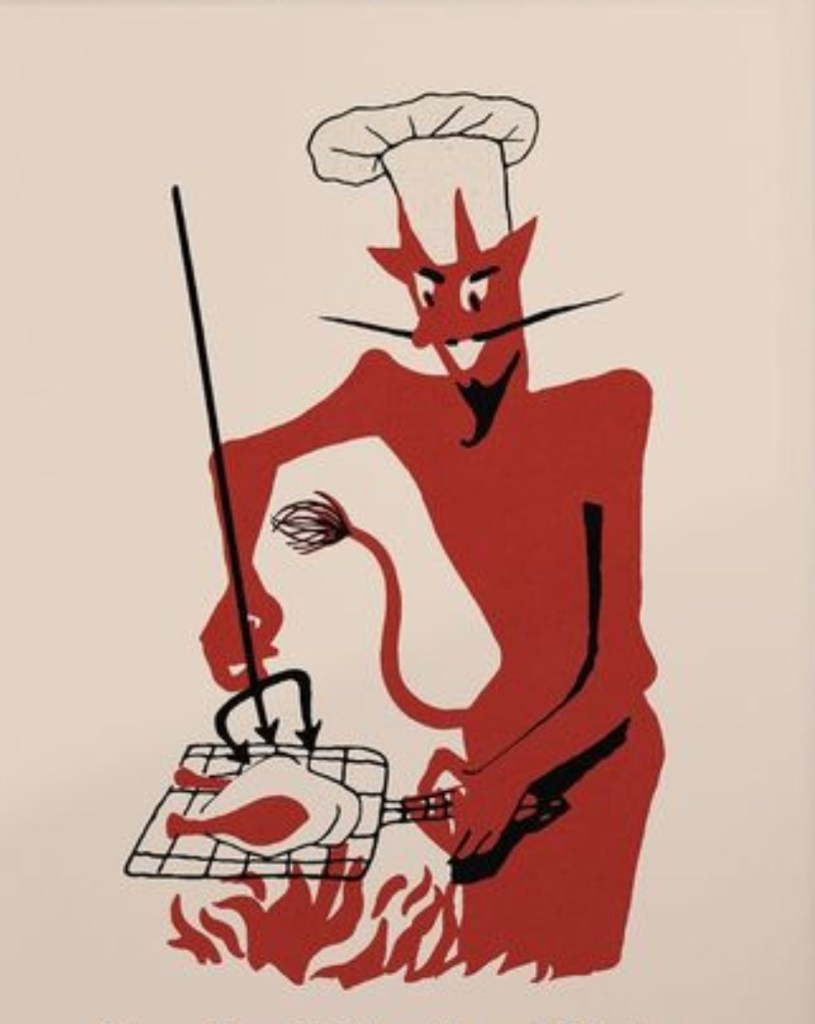
    In the deepest pits of Hell, where the flames crackled and souls wailed in eternal agony, there was one place where the heat wasn’t just metaphorical. The kitchen of the Trattoria Inferno, a bustling fire-pit of gastronomic torment, was where the real action happened. And it wasn’t pretty.

    “Alright, you worthless scum, let’s get this over with,” bellowed Chef Malebranche, a corpulent devil with an apron that read Trattoria Inferno: Too Hot for You. He stood over a giant cauldron of bubbling lava stew, his tail twitching impatiently. His assistants, a motley crew of lower-tier devils, all dressed in stained chef coats, scrambled to meet his impossible demands.“Chop faster, Grelt! That soul soufflé isn’t going to make itself,” Malebranche yelled at one particularly nervous devil, whose hands were trembling while trying to slice a screaming, squirming soul in half. “And you!” he barked at another, “Quit adding sulfur to the gravy, Mordekai. That’s the fourth batch you’ve ruined today.”

    “Sorry, Chef,” Mordekai mumbled, wiping the sweat—or was it brimstone?—from his brow. “I thought it needed more kick.”

    “More kick?” Malebranche’s voice grew dangerously low. “The souls in this soup are literally on fire. How much more ‘kick’ do you want?”

    In the kitchen of Trattoria Inferno, the devils didn’t exactly have the luxury of fine dining. The ingredients were… unconventional, to say the least. The best-selling dish on the menu was Sizzling Souls au Gratin, a dish that involved fresh souls, still screaming, served with a side of magma-baked bone marrow. And for dessert? Infernal Lava Cake, a dish that came with a guarantee: you either burned your tongue off or you had no taste buds left. Literally.

    But the kitchen wasn’t all about the food. It was about the entertainment, too. The souls they were preparing meals from weren’t just ingredients; they were performers. Some were lucky enough to have been chefs in their mortal lives, others were failed actors or used car salesmen, their screams and grunts adding just the right touch to the ambiance.

    And then there was the constant pressure of the reviews. “Yes, I’ve seen it, I’ve seen it,” muttered Grelt, the timid kitchen devil, as he tried to get a soufflé to rise, which was an exercise in cruelty in itself. “The Supreme Infernal Critic said the last batch of mashed souls was ‘too bland.’ Too bland! I mean, they were literally being boiled in sulfur!”Malebranche growled, running his forked tongue across his sharp teeth. “That critic wouldn’t know flavor if it danced a flaming waltz right in front of him.”

    Just then, the kitchen doors slammed open, and in strutted a high-ranking demon, arms crossed and a clipboard in hand.

    “Ugh, don’t tell me we have another inspection,” Mordekai groaned.“Not just any inspection,” said the demon, eyeing the crew with a sneer. “The Eternal Food Critic™ is coming. You know what that means, right? If he doesn’t like the food, you get sent to the Department of Soul Scrubbing for the next millennium.”

    “Oh, joy,” Malebranche muttered. “It’s not bad enough we have to deal with Chef Beppo from the Eighth Circle, now we have to impress the biggest pain in the ass since the beginning of time.”

    The demon sniffed the air with exaggerated disgust. “Is that… Is that… soul essence I smell? You’re supposed to marinate it, not burn it to ash! You devils couldn’t cook a soul properly if it came with a recipe book and a GPS.”

    The kitchen crew, well-trained in the art of Hellish sarcasm, exchanged eye rolls.

    “We were busy, alright? Souls were backing up in the afterlife, and the magma supply was running low,” Grelt muttered under his breath.

    “Excuses!” the demon snapped. “Get the soufflés right or I’ll personally make sure you’re assigned to the Lobster Hell for the next eon. And trust me, you don’t want that job. Do you?”

    The devils froze. The Lobster Hell was worse than the worst of the worst. It was a dimension where you boiled for eternity, but in giant pots of butter. Your skin became the crust of a shell, and you were served as appetizers to hungry demons. Who would Snapchat their dishes. No one ever came back from the Lobster Hell. It was a myth. A dreadful myth.”

    Alright, everyone!” Malebranche roared, rallying the troops. “No more messing around! I want perfection on this plate, or else we’re all doing the crab-shucking shift.”

    The devils scrambled into action, their movements frantic but practiced. The sound of sizzling lava and squirming souls filled the air, and the heat became unbearable. Yet, for all the chaos, there was something oddly comforting about the routine. They had a job to do, and that job was awful—but in Hell, it was the closest thing to purpose they were ever going to get.

    As the critic sat down to sample the latest dish, he eyed the plate with disdain. “Hmm. This could be better. The souls are charred, and the lava reduction needs more zest.” He took another bite. “You know what? This might actually be the worst thing I’ve ever eaten in my entire existence.”

    Malebranche’s tail lashed with frustration. “Really? You don’t say? What a shocking revelation!”

    “Yeah, yeah,” the critic muttered. “You devils think you’re so clever with your hellish flavors and novelty ingredients, but you’re just too… predictable. I’ve tasted more interesting flavours in the cafeteria of the Second Circle. At least there’s variety there.” He scribbled something on his clipboard, apparently marking it as a “two-star” dish.

    “Two stars?” Grelt blurted, his eyes wide with disbelief. “Two?! I sacrificed a soul for that soufflé! A good one, too! Not some cheap banker soul—”

    “I don’t want to hear it,” the critic snapped, tossing his napkin on the table. “I’ve been reviewing your stuff for centuries. You’ve peaked, Malebranche. You’ve peaked.”

    The chef devil’s face fell. “What the hell are we supposed to do, then?” he growled, more to himself than anyone. “We cook with what we’ve got!”

    “Well, what you’ve got,” the critic said, giving a mock sympathy pat on the shoulder, “is a hell of a lot of crap. I think it’s time to call it quits, boys. This kitchen’s officially cursed.”

    With that, the critic stood, flinging the devilish crew one last, judgmental glance before strutting out the door.

    Malebranche, who had been growing more and more furious with each word, slammed his fist down on the counter. “That’s it! I’ve had enough of this! We’re going on strike!”

    The other devils looked at him, stunned. “What?”

    “You heard me!” Malebranche shouted. “No more serving bad reviews and endless soufflé failures! We deserve better! We’ll form a union! Trattoria Inferno is about to change!”

    The kitchen went silent for a moment before Mordekai tentatively raised his hand. “Does that mean we get paid in souls again?”

    Malebranche smirked. “No, we get eternal recognition. We’re going to redefine Hell’s culinary legacy!”

    And so, the devils of Trattoria Inferno went on strike, forming a union that, much like everything in Hell, was destined for failure. The Most Important Hellish Judge personally arrived to shut them down, informing them that unionizing was strictly against the Infernal Code.

    In the end, the devils were sent to the Lobster Hell. And as they were boiled in butter, they couldn’t help but think: at least they’d tried to spice things up.

  • Dying to retire

    Apr 1st, 2025

    There’s a reason nobody talks about the retirement plan for the Grim Reaper. And that reason is a four-day long contract that nobody reads until they’re a few centuries into the job and their bones start creaking like a haunted house. No one ever checks the fine print because, well, who expects a lass who snatches souls from the mortal realm to have anything resembling a pension Nest? It’s only after centuries of scything that the harsh truth hits you: You’re stuck, like a fly in amber, except the fly is you, and the amber is eternity.

    The Grim Reaper sat hunched over a sad, cluttered desk in a cubicle that looked like it hadn’t seen a thorough cleaning since the Black Death. In the corner, her scythe was propped up like a forgotten umbrella, gathering dust. The dim, flickering fluorescent lights buzzed overhead like an angry wasp that wouldn’t go away. The place smelled faintly of mildew, stale coffee, and something else—something that could only be described as “existential dread” mixed with the unmistakable stench of being stuck.

    “So,” I said, sliding my mug of coffee across the desk to avoid looking directly at her. “You’ve been doing this for how long?“

    The Reaper didn’t look up from her paperwork. “Oh, since time started making sense. Roughly. Give or take a few eons. I’m not really sure, to be honest. Time’s a bit… fluid when you’re me.”

    I blinked. “So, a few billion years. No big deal. Are you like… a contractor, or is there a boss?”

    The Reaper chuckled, the sound like glass marbles clinking against granite. “Oh, there’s a boss. We all report to a higher… authority. But let’s not get into that, alright? They don’t pay enough for me to discuss their leadership style. Trust me, you don’t want to know what it’s like working for The Upper Management.“

    I nodded solemnly, unsure if I was about to hear something scandalous or terrifying. “Gotcha. So, um… when do you get a break? Like, a real one? You’re probably due for some time off after all these years.”

    The Reaper’s skeletal fingers paused on the form she was filling out, and for the briefest moment, I saw something that could have been despair—except it was so ancient and hollow that it became something I don’t have a name for. “Breaks? You think I get breaks?” Her voice was a rasp, but there was an edge to it. “I don’t get breaks, kid. I get paperwork.”

    “Paperwork?” I echoed, trying not to let out a nervous laugh.”

    Yeah, paperwork.” She leaned back in her chair—a creaky, ancient thing that probably had faded lots of long-dead office workers in its time. “You think this job is just about reaping souls, huh? That’s the fun part. The paperwork? That’s the nightmare.”

    She picked up a stack of forms and tapped them on the desk with a sound that could’ve been mistaken for the rattling of bones if you didn’t know better. “I’ve got a filing cabinet full of complaints. And forms. And surveys. Do you have any idea how much I hate surveys? And don’t even get me started on the soul rating system.”

    I blinked again. “Soul rating system?”

    “Yeah,” she said, rolling her eyes—which, as a skeleton, is a remarkable feat. “After I take a soul, they rate me on a scale of one to five stars. If I don’t get five stars, I have to go back and explain myself. All the way back to the beginning. And if they’re really unhappy, they get to file a complaint. That’s where it gets ugly.”

    “Wait,” I said, holding up my hand. “So, you’re not just collecting souls—you’re also doing customer service?”

    The Reaper stared at me for a long moment, then sighed like an old woman on a porch who had been asked the same question one too many times. “You think this job is glamorous? Let me tell you about the last time a soul rated me poorly. It was an angry guy named Jono who didn’t like the fact that he died in a potato sack race. He gave me a one star review. One star! After all the effort I put in, Jono thought I was too abrupt. That’s the level of entitlement we’re dealing with. Do you know how many forms I had to fill out? Three.”

    “Three? You filled out three forms for a one-star review?” I asked, incredulously.

    “Well, technically four, but one of them was an ‘escalation form.’ You don’t even want to know about that. I had to go all the way up to middle management in the afterlife. Do you know what a nightmare it is dealing with bureaucratic souls? They’ll argue about everything.”

    I took a long, thoughtful sip of my coffee. “And you can’t just… retire? You’ve been at this job for—what—eons, and you can’t clock out?”

    The Reaper paused, then leaned forward, her skull gleaming in the dim light. “I would retire if I could. But the paperwork is… well, it’s not just the filing. It’s the rules.” She gestured vaguely at the ceiling, as though the cosmos itself were watching. “You don’t just walk away from this job. There’s no pension, no retirement fund, and definitely no insurance. And if I retire, someone else has to take over. Someone who might not be as good at it. Someone who might decide to get all compassionate and mess up the whole system.”

    I stared at her. “Wait. So, you’re telling me you don’t get a retirement plan?”

    “Nope. No pension. No sick days. Not even any kind of decent job expenses. I’ve tried. They told me to ‘go to HR,’ and when I did, they handed me a brochure about ‘spiritual wellness,’ then tried to upsell me a 10-step program for feeling at peace with eternal existence.”

    “Wow,” I said, incredulously. “That’s… terrible.”

    The Reaper sighed deeply. The kind of sigh you make when you’ve just realized there’s no way out, and it’s fine because you’re used to it. Or it’s not fine, but you gave up. “Yeah. I tried taking a personal day once. Just one. I was feeling kind of down, you know? It happens. So, I filled out the proper forms and— bam —they denied it. ‘You must attend mandatory transcendence training first,’ they told me. So I sat through six hours of a cosmic wellness seminar where they handed out pamphlets about ‘letting go’ and ‘embracing the void,’ while I was expected to meditate in the presence of 500 other souls who were also dead but in varying stages of denial about it.”

    “That sounds… horrible,” I said, cringing.

    “Tell me about it. Do you know how hard it is to meditate while holding a scythe?” The Reaper shook her head. “And the worst part? When I got back, they made me fill out a post-wellness survey.”

    I choked on my coffee. “A survey?”

    “Oh yeah. They made me fill out a satisfaction survey to gauge how ‘centered’ I felt after the experience. Then they asked if I’d recommend the ‘transcendental meditation for soul-harvesters’ program to a friend. I said no, and they made me write a comment explaining why. Do you know how long it took me to type that comment on this keyboard with these skeletal fingers? Two hours.”

    I couldn’t help it. I burst out laughing. “Two hours? To fill out a comment about why you hated transcendental meditation? For a mandatory wellness program?”

    “Exactly,” the Reaper grumbled, shifting in her chair with a clink. “And after all that, what did I get? Nothing. No vacation. No relaxation. Just more forms. No one ever told me about this side of the job. When I signed up for the gig, I thought I’d be, you know, snatching souls and delivering justice. Instead, I’m stuck here in a cubicle, collecting complaints and explaining to souls why they can’t have another chance at life. It’s like I’m the customer service representative for the afterlife, only I don’t get any of the perks.”

    I stared at her. “So… why don’t you just quit?”

    “Quit?” The Reaper gave a humorless laugh, her skeletal face creaking. “Quit? If I quit, the system falls apart. That’s why I can’t retire. There’s no one else who can handle the soul-collection business with my level of efficiency. And do you think anyone else could deal with the sheer whining from the newly deceased? No. I’m the only one who can keep things running smoothly. I’m too good at it.”

    Talking about being a victim of your own success.

    “But you hate it.”

    “Of course I hate it! Who wouldn’t? You think I want to spend eternity managing paperwork and listening to souls gripe about their afterlife experiences? All I wanted was a little peace and quiet! A beach vacation with a cocktail, maybe, while I read The hitchhiker’s guide to the galaxy for the hundrenth time. Just a day off where I don’t have to face an angry ghost or deal with… well, whatever you call this situation.” She gestured at the chaotic clutter of forms and file folders.

    I leaned back in my chair, finally putting my coffee down. “I think you need therapy.”

    The Reaper chuckled dryly. “I’d go, but… you guessed it: paperwork.”

    And with that, she grabbed her scythe, adjusted her robe with a sigh, and turned to leave. “Duty calls. I’ve got another soul to ‘gently escort’ to the afterlife. Wish me luck with the ‘customer satisfaction’ form afterward.”

    As she shuffled toward the door, I called after her, “Hey, next time you’re filling out a form, please remember to rate your experience with me. I’m aiming for five stars.”

    Without turning, the Reaper gave a mock salute. “Yeah, yeah. If I survive the paperwork, I’ll make sure to give you a glowing review.”

    And with that, she disappeared into the abyss of her eternal, paperwork-filled existence.

  • The cactus ballad

    Mar 25th, 2025

    I never understood people who put mini-cacti in their home. Because cacti are covered in thorns.

    What does a plant have to do, exactly, for you to understand that you need to mind your own business? Slap your gran around? What a plant has to do? They’re covered in stings, they’re like knives.

    They’re the West Ham football hooligans of the floral world. You don’t put a football hooligan – but mini – on top of your fridge, above a Majorca magnet and one of your daughter’s shitty drawings, because it wants to kill you. What the fuck are you doing?

    When God made the cactus, most probably, this is the conversation that has happened:

    “So, cactus, I can see from your file that you love people. You really love people.”

    “Well, I’d love to be as precise as possible on this point, because I believe that there must be a typo, seeing how heavily people get on my tits.”

    “Well, they’re made in my image, so it’s a bit insulting, but still, no problem! No problem! Last night I was shitfaced, and I invented this thing: it’s called thorns, or quills, okay? And I put them all on a massive mouse, and I called it – listen here – porcupine. Not mouseupine. No, no. Porcupine, because I’m an artist, out of control.”

    And the cactus said:

    “I like this thorns thingy, I like it. If at all possible, I’d also love to have a kalashnikov.”

    “No, bro, no… no need. No. Listen here, listen: you’re green, and covered in thorns. And they are made in my image. They’ll understand. They will.”

    Every cactus on top of a fridge right now is:

    “PISSIN’ HEEEEELL! THEY GIFT ME INSIDE A WEDDING FAVOUR! FUUUUUUUCK!”

    Don’t ever place a firearm next to a cactus. Don’t tempt fate like that.

  • Cooking and being cooked

    Mar 18th, 2025

    Ah, cooking. The ancient, noble tradition that’s somehow evolved from “slaughter your own food over an open flame” to “grill pre-marinated chicken breasts in a vacuum-sealed plastic bag for three hours.” The once-primal art of preparing meals has managed to transform into a tedious, soul-crushing process where you follow five-minute recipe videos that promise to make you feel like a culinary god, but instead leave you questioning every decision you’ve ever made in your life.

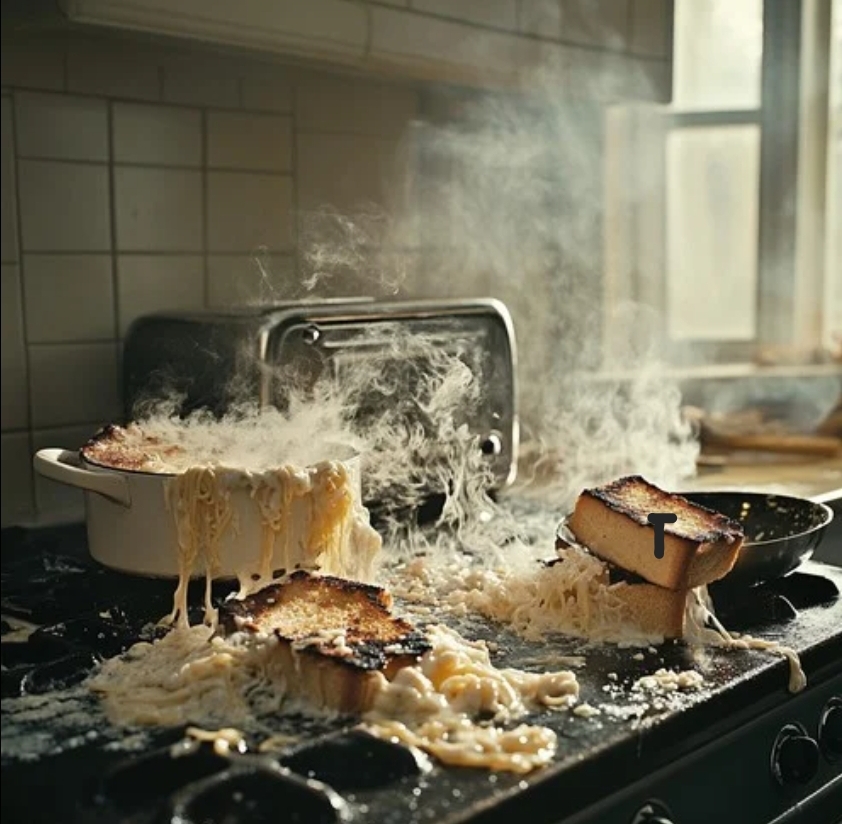
    Let’s be real here. Cooking is a war zone. It’s you against a flaming stove, an army of blades that refuse to chop correctly, and a kitchen that smells like the aftermath of an industrial accident. You think you’re ready to make a simple dinner—maybe something elegant like a stir-fry—and next thing you know, you’re crouched on the floor, staring at a charred onion, wondering if you’ve just pissed two hours away for a handful of soggy, overcooked vegetables.

    It starts with the recipe. You find some “easy” recipe online that’s supposed to take 20 minutes but turns into a three-hour battle. The first ingredient is something you can’t pronounce. “Where do I get kohlrabi? Can I substitute with a potato?” you Google. Reddit gives answers contradictory at best, people fighting in the comments and insulting each other’s mums. But there’s no time to think about that. You don’t have time for a faida over an ingredient. You just need to get this shit done.

    And so, as we were saying: the recipe. What an insult to anyone who dares to think they can follow instructions. You start reading, full of optimism, trying to skip the personal bits that authors for some reason insist on sharing on a cooking website, convinced that it’s simply a matter of “throwing in a bit of this, a pinch of that, and voilà!” But by the time you reach instructions like “fold the egg whites gently into the mixture,” your mind has already entered a state of collapse. What does it mean to “fold”? What exactly is the criteria for “gently”? The recipe authors are probably sat in a Michelin-starred restaurant, laughing into their fine wine while you, in your humble kitchen, frantically Google “How to fold egg whites without causing an outbreak of salmonella.”

    So you continue, forcing yourself to follow the instructions like some kind of culinary slave. Chop the carrots into matchsticks — but no matter how hard you try, they’re either too thick or too thin, or they look like a toddler’s first attempt at finger painting. The knife you thought was sharp enough is now just a blunt reminder of your shortcomings in life. It doesn’t slice. It tears. It’s not even cutting. It’s just mangling the carrots. You might as well be using a spoon. But you press on, because you’re determined to finish this.

    Next, you’ve got to sweat the onions. After five minutes, they’re burnt. Now you’re the one sweating. The air is thick with the smell of regret, which coincidentally smells like the burnt end of a pot that’s going to be a bitch to scrub clean, later. But right now, the oil’s too hot, and now your kitchen looks like the aftermath of a grease fire. Charred bitterness adds depth. You throw the onions in a bowl, pretending you meant to do that. Who’s going to notice, anyway? Who’s even going to care?

    Then, it’s time for the protein. Ah, the protein. Everyone’s always talking about protein. But what no one tells you is that chicken is the ultimate test of human willpower. Because you’ve got to cook it just right. Not too dry, but not undercooked. Not something that turns your mouth into a sand-pit, but not something potentially lethal, either. You’ve read a hundred recipes, all telling you different temperatures, in Celsius, Fahrenheit, in Kelvin, in Rankine. Different times. You don’t know if you’re supposed to pan-sear it, grill it, or just throw it in a pot of boiling water and close the lid on it like you just disposed of a live grenade at the last second, until it turns into something that vaguely resembles meat.

    You stab it with a thermometer, but you have no idea what temperature is safe. What does 75°C even feel like in your soul? You’re trying to figure it out, but you’re second-guessing yourself. If you undercook it, you’ll get shigella and probably die. If you overcook it, you’ll end up with a piece of cardboard that even the dog wouldn’t touch. And the clock’s ticking—everyone’s starving, everyone’s watching. The pressure’s mounting. You just want to get this over with.

    You throw the chicken onto the plate, hoping to salvage some dignity. The vegetables are mush. The rice is glutinous and clumped together like a sad, starchy lump of shame. Your side salad has wilted in the fridge, and the dressing you thought was “gourmet” just tastes like a vinegary nightmare. But God forbid you just order takeout. No. You cooked this. And – admitedly – you also cocked this. But the point is: you put in the effort. Your evening is down the toilet. You have to pretend it’s good.

    They sit down at the table. You present it with the enthusiasm of someone who’s trying to cover up the fact they’ve committed a crime. The fork clinks against the plate as they take their first bite. It’s dry. The chicken’s dry. So dry. So dry it could be used as kindling for a fire. But you have to pretend. You have to keep it together. It’s too late now. They take another bite, eyes wide, as if they’re questioning everything in life. “I… I think I need more sauce,” they say, like they’re walking on thin ice. They know. They know it’s awful. You know it’s awful. The dog knows it’s awful. But you all sit there, pretending this is a moment of triumph, as if your failed experiment wasn’t a cry for help. The worst part is you do it again. A week later, you’re back in the kitchen, staring at the same ingredients, convinced that this time, you’ll get it right. The cycle continues. You’ll read more recipes, buy more tools, rack up more takeout bills to “balance out” your attempts at culinary greatness. And you’ll fail. You’ll burn the garlic. You’ll over-salt the soup. You’ll carbonise the bottom of the pot. You’ll accidentally make the mashed potatoes into a slurry of despair. The fire alarm will work overtime. But there’s always next time. Always next time to conquer the stove, to break free from the prison of microwave dinners and takeout boxes. One day, you tell yourself, you’ll create a meal that doesn’t leave you questioning your entire existence. One day, you’ll chop vegetables with the precision of a samurai. One day, you’ll find the perfect chicken recipe that doesn’t taste like a FIAT Uno’s tyre. But today is not that day.

    Today, you’ll clean up the kitchen, scrape the burnt bits off the pan, and wonder why you ever thought cooking was anything more than a cruel, pointless charade.

  • Hard-faced mornings: the horror of leaving your bed

    Mar 11th, 2025

    There are few experiences in life as universally terrifying, as deeply existentially unsettling, as the sheer, soul-sucking horror of attempting to leave the sanctity of your bed. The kind of experience that takes you to the very edge of sanity, where you teeter on the precipice of defeat, staring into the yawning chasm of another day, wondering whether it might just be easier to remain motionless for the next 12 hours. Because, let’s face it, the bed has everything: warmth, comfort, a lack of judgement – a sanctuary for the hopelessly lazy. But alas, society insists that you must leave it, to do things like work, eat, or, dare I say, “live”. And so it begins: the battle of wills.

    Phase 1: The Negotiation (aka The Denial)

    As the alarm blares – an affront to your very existence – you make the decision to cling to the warm cocoon of your duvet as if it were your last shred of human dignity. You know you should get up, but the brain, that feeble organ, insists that a few more minutes of unconsciousness is all it really needs. And so, you lie there, eyes half-open, staring at the ceiling as if you were contemplating the meaning of life. “Just five more minutes,” you whisper to yourself, making a mental note to ignore the fact that the ‘five more minutes’ you asked for twenty minutes ago turned into a full-on siesta.

    At this stage, there’s an internal struggle. Your body is telling you that staying in bed is a victory, a triumph against the absurdity of modern life. “Who cares about work?” your body asks, a question that echoes the despair of the human condition. “You could just lie here forever, where it’s warm, where it’s safe, where you don’t have to do anything except exist.” It’s tempting, truly. But then your rational mind kicks in – mostly because it’s been subjected to the alarm’s relentless shrieking. “You’re an adult. You must contribute to society,” it says. Or perhaps it’s more like a cry of desperation: “PLEASE, get up, or we will be unemployed and living in a cave by noon.”

    Phase 2: The Physical Assault (aka The Banishment)

    And yet, the war is not yet won. Because as much as you attempt to rationalise your situation, your limbs refuse to cooperate. They are heavy, unyielding sacks of inertia, designed by some cruel deity to thwart your every attempt to get out of bed. You try to push yourself up, and immediately your back protests, as though your body is saying, “No, no, no. We had an agreement. You stay here. We lie down forever. This is our destiny.” Your muscles, apparently bereft of any memory of how to stand, groan and screech in rebellion.

    You manage to roll over – an impressive feat, really – only to find that gravity is conspiring against you, dragging your body back toward the mattress as if it has its own agenda. At this point, you’re aware of just how humiliating it would be if anyone were to walk in and witness your pathetic, half-formed attempts at rising. The act of getting out of bed is no longer just a simple physical motion – it has become an art form, a tragic comedy unfolding in slow motion.

    Phase 3: The Moment of Victory (aka The Reluctant Realisation)

    Eventually, you do it. You move. You swing your legs over the side of the bed, feeling the cold air of the room hit your skin like a slap in the face. You stagger to your feet, disoriented, convinced that you are now an entirely different, less functional being. There is no elation at this point – no sense of accomplishment. Just a deep, existential weariness that sinks into your bones, and a nagging thought that perhaps you should’ve just called in sick and become one with the duvet forever.

    And as you shuffle towards the bathroom, still blinking against the harsh light of the world, a sobering thought strikes you: you’ve only just started. There’s a whole day ahead of you, filled with things to do, none of which you will truly enjoy. And the thought of crawling back into bed later, where your body and mind can cease pretending to be functional for a few blissful hours, is the only thing that keeps you from contemplating the futility of existence itself.

    Phase 4: The Deep, Dark Aftermath (aka The Regret)

    Then, just as you’re about to face the grim reality of your day – emails to read, meetings to attend, the long, slow descent into a mundane routine – you feel it. That pang of regret. You were so much happier in the bed. Was this the right choice? Was it worth it? You’ll never know, because by now, it’s too late. You’ve crossed the threshold, and the bed is but a distant memory, mocking you from afar. But tomorrow, oh tomorrow, when the alarm rings, you’ll be ready. You’ll negotiate with it, bargain for another few minutes. And in the end, you’ll lose again.Because let’s be honest – getting out of bed is the hardest thing you’ll do all day.

  • Caffeine addiction

    Mar 4th, 2025

    It’s 6:30 AM. The day stretches ahead of you like a dark, inhospitable road that’s somehow still worth driving down—because you’ve been told that coffee is the fuel that makes that journey not just possible, but potentially productive. You shuffle into the kitchen, eyes bloodshot from the night’s failed attempts at sleep, yet somehow, your body—still operating on the 23rd cup of the previous day’s caffeine intake—has come to the unmistakable conclusion that coffee is the only thing standing between you and your imminent collapse.

    You open the cupboard. There it is. The bag of coffee beans—those tiny, roasted morsels of hope, a symbol of a brighter tomorrow, if only you can make it through the next four hours of email replies and deadlines. You grind them. Not because you enjoy the process, but because society has led you to believe that grinding your own beans somehow signals that you’re a person of taste. The sound is maddening. A high-pitched whirring that mimics your over-stimulated brain trying to process the fact that you’re already behind on everything. The beans are crushed—metaphorically and literally—and now it’s time to brew.

    As the hot water splashes over the ground coffee, you are filled with a false sense of achievement. The smell that wafts through the kitchen is enough to temporarily fool your tired, jaded mind into thinking you are about to experience something magical. But, as with all things in modern life, it’s a cruel joke. For just a fleeting moment, you believe that your productivity is directly linked to the size of your mug. You pour the coffee, half of it spilling over the edge, and your optimism shrinks. It is barely enough to keep your hands warm, let alone propel you into any meaningful work.

    You take the first sip. And for about two seconds, the universe makes sense again. The bitterness washes over you like an existential awakening. This is what life is all about: bitter, futile, and endlessly addictive. Coffee doesn’t just wake you up, it numbs you to the reality of just how hopeless everything feels. For a moment, you feel invincible, but that’s only because your brain is convinced it’s been handed the magic potion that’ll make everything manageable. The rush of caffeine floods your system like the first hit of any drug—it’s short, sharp, and deeply unfulfilling. But it doesn’t matter, because it’s a necessary evil, or, more accurately, a necessary illusion.

    You scroll through your phone while the caffeine does its work. There’s a new email from your boss. “Hope you’re having a productive morning!” it says, as if you haven’t been awake for less than 30 minutes and already have the distinct sense of impending doom. You take another sip. The email is followed by another, and another. There are meetings to be attended, spreadsheets to be filled in, and, of course, more coffee to be consumed, because no one has yet figured out how to build a productivity system that doesn’t rely on liquid motivation. After all, you wouldn’t dream of facing the first Zoom call of the day without at least two double espressos in you. That would be as ridiculous as trying to power a car without fuel. It’s not so much the caffeine you’re addicted to, but the idea that it might, just might, bring you closer to the day where you stop running around like a headless chicken and start feeling genuinely accomplished.You glance at the clock. It’s 9:00 AM now. That’s an hour gone, wasted in a haze of brown liquid and half-baked ambition. Coffee, like most things in life, has presented itself as the solution to a problem it created. Your to-do list grows ever longer, your energy is already starting to dip, and you find yourself wondering: Is this it? Will there be more coffee? Will there ever be enough? The truth is, you’re just chasing the high, the rush of being productive, which is the cruelest joke of all. Because you know that no matter how much you drink, there will never be a point where you can look at your day and say, Yes, I’ve truly accomplished something today.

    As the morning progresses, the coffee becomes an endless cycle. The first cup—an illusion. The second cup—denial. The third cup—desperation. By the time you get to the fourth, you’re no longer drinking to wake up. You’re drinking to stave off the existential dread that has taken root, convinced that you can push the panic button just a little bit longer, if you keep topping up. And so, it continues—another day, another coffee, another set of promises you’ll never keep.And just as the day ends, you’ll be back at it again tomorrow. Because coffee doesn’t let you stop. It simply makes you believe you’ve started. And that’s enough. For now.

  • The “British” Museum

    Feb 25th, 2025

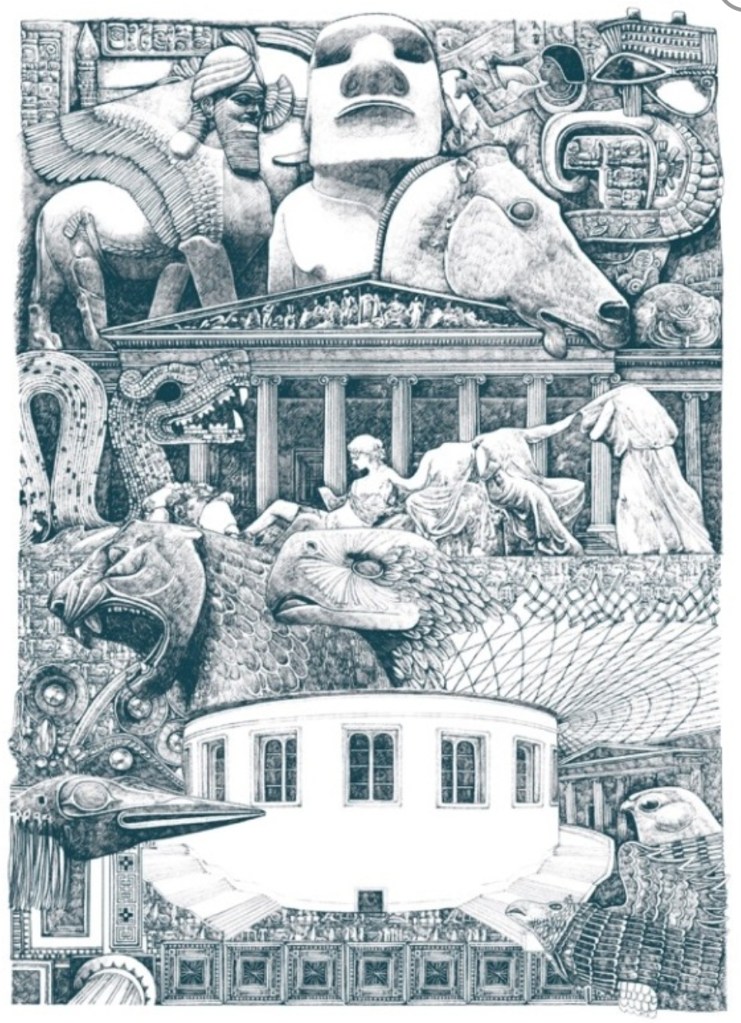
    Ah, the British Museum: a gloriously grandiose institution that has spent centuries telling the world, “Look, we have all your stuff, and we’re going to keep it. Forever. You’re welcome.” The museum, often presented as a bastion of cultural preservation and education, is actually an international hoarder’s paradise. It’s like the world’s largest lost-and-found department, except instead of unclaimed coats, it’s full of the world’s priceless treasures, neatly arranged and guarded behind glass for your viewing pleasure. And by the way, no, you can’t have them back.

    Let’s begin with the Rosetta Stone, arguably the museum’s most famous object. This is the stone that unlocked the secrets of ancient Egyptian writing. You might think it belongs in Egypt. You’d be wrong. You see, the British Museum, in its infinite wisdom, decided that keeping it in London was for the greater good of humanity. You know, in case anyone needs a reminder of the ancient Egyptians’ ability to write in three languages. Of course, Egypt’s been asking for it back for over 200 years, but why would they need it? They’ve already got all those pyramids, tombs, and, I don’t know, actual ancient Egyptian culture to worry about. Not the right place for the stone, obvs. Who needs a stone when you’ve got an entire civilisation? Apparently, the British Museum thinks “No, we need it more. We’re more into ancient Egyptian history than you are.”

    Then, of course, there’s the Elgin Marbles. For those not in the know, these are stunning sculptures that once adorned the Parthenon in Athens. They were “acquired” by Lord Elgin in the early 19th century. And by “acquired,” I mean “stolen while Greece was under Ottoman rule,” as one does. Greece has spent the last two centuries politely requesting their return, but the British Museum, ever the gracious guest, insists they’re keeping them for the “benefit of mankind.” The idea that Greece might actually want the marbles back in the country they were made, or that they might – can you imagine? – have a right to their own heritage, seems entirely beside the point. After all, what’s a few hundred years of cultural heritage between friends?

    Let’s not forget the Egyptian mummies. Ah, yes, the mummies. Those ancient remains, which should probably be lying peacefully in the sands of Egypt, rather than hanging out in a basement in London. It’s almost as if the British Museum thought, “Sure, Egypt’s got all those magnificent tombs, but have they considered how much better it would be for us to have their actual mummies in our collection? I know, I know: these were actual people who went through the whole mummification process because it was strongly embedded in their religious beliefs to be buried in specific spots, but even they will agree that how else will we remind tourists that ancient Egypt existed, other than by parading their dead ancestors around next to a gift shop that sells keychains?” The museum’s justification for keeping them is something along the lines of “preserving them for future generations.” Sure, because how can we trust this task to anybody who’s not English? Can’t trust an Egyptian with a mummy, even a child knows that.

    And yet, the British Museum continues to operate under the completely absurd notion that its endless, unapologetic hoarding is an act of benevolence. One might be tempted to compare it to a kidnapper who, after holding someone for decades, insists they’re doing the victim a favor by making sure they’re well-fed and well-dressed—ignoring the fact that the victim, you know, would rather be not being locked in their shed. But no, the British Museum’s curators assure us that all the plundering, er, “acquiring,” is done in the spirit of “sharing knowledge with the world.” Right, because surely the best way to understand the culture of a country is to experience its artifacts in a building thousands of miles away, where they’re guarded by people who have, at best, a passing interest in their significance. Just don’t ask for them back, because then they’re “not culturally relevant” anymore, apparently.

    The most staggering part of it all is how the museum somehow convinces itself—and, by extension, us—that this is justified. They aren’t thieves, oh no. They’re the “guardians” of history. The fact that they’re holding onto other nations’ treasures like an overzealous dog with a bone seems lost on them. But then, of course, it’s hard to see the problem when you’re the one enjoying the bone, isn’t it?

    When it comes to their colossal collection, the British Museum’s reasoning can be summed up as: “We’ve had it for so long, it’s practically ours now.” This is, of course, exactly how I’d like to approach my mortgage, telling the bank in a few years that the money I “borrowed” for the next 30 years is now legally mine, thanks to the sheer passage of time. If the British Museum’s logic were applied elsewhere, every credit card debt would be an act of “long-term interest accrual,” and every stolen car would be a “historical acquisition.”

    “Have you seen Marc’s new Ferrari? He acquired it with a keyless repeater, a signal amplifier, and by replacing the plate over the weekend. It’s now Tuesday. It’s obviously his, now.”

    But the museum, ever the diplomat, reassures us that they’re not keeping these things indefinitely. No, they’ll happily lend them out if, say, a country were to request their return, but only under the condition that said country is okay with them being looked after by “international curators” and “experts” in the field. Why give the headache to Egyptians, Greeks, or Ethiopians to manage their own heritage when one can just pop on over to London and see it all behind velvet ropes?

    At the end of the day, the British Museum’s vast, unacknowledged collection is a testament to the legacy of the British Empire: one part pillaging, one part whitewashing history, and one part so charmingly oblivious that you almost want to give them the benefit of the doubt. But only almost. Because, as the British Museum so elegantly puts it, “We’ve had it for centuries, and that makes it ours now.” And if you can’t accept that, well, they’ll just leave a note on your door telling you they’re preserving your possessions. Forever. You can’t argue with that, can you? After all, it’s not theft. It’s history. And history, apparently, belongs to the British.

  • Productivity in the times of the algorithm

    Feb 18th, 2025

    It’s a bright Tuesday morning, and you wake up to the relentless sound of your alarm clock—a noise not unlike the collective scream of humanity’s soul. You drag yourself out of bed, wipe the existential dread from your eyes, and get ready for another day in the unrelenting hamster wheel that is modern life.

    First stop: the Office of Self-Improvement. This is a new initiative rolled out by the government to ensure everyone is feeling as productive as they should be. It was introduced in response to the findings of last week’s task force that identified the nation’s overwhelming need for ‘purpose.’ You’ve been assigned the task of completing the “45-Minute Morning Affirmation Routine,” an exercise in telling yourself how wonderful you are before you’ve had your first coffee.

    You sit down at your kitchen table and look at the laminated self-help pamphlet, which reads: “Success is a Choice, and YOU Are the CEO of Your Own Life!”

    You stare at it for a while.

    Then you stare at the phone buzzing next to you with a reminder for the ‘Gratitude Meditation Session,’ which requires you to reflect on three things you’re thankful for. The only thing you’re thankful for right now is the slow, inevitable decline of your mental state, but that’s probably not on-brand.

    You try your best, reciting things like, “I am thankful for my job, even though it erodes every ounce of my soul,” and “I am thankful for my health, though I’m fairly certain I’m just one social media post away from an anxiety attack.” It feels good, in the sense that stabbing yourself in the leg with a spoon might feel “good” for someone with masochistic tendencies.

    At 9 a.m., it’s time for your daily meeting with the Bureau of Happiness. You’ve been assigned to a ‘happiness consultant’ who specializes in helping people who are “functionally dead inside™” (a term they’ve coined and trademarked for obvious reasons). Her name is Cheryl, and she asks you a series of probing questions like, “On a scale from 1 to 10, how would you rate your emotional resilience today?”You wonder if Cheryl herself has ever thought about the abyss of nothingness that lies at the center of our souls, but you’re fairly certain she’s too busy updating her Instagram with motivational quotes from dead philosophers. She smiles at you, showing her ‘empathy,’ which is so authentic it could be sold as a “brand new” concept to billionaires.

    Your meeting ends with Cheryl assigning you the task of ‘reclaiming your energy’ by attending a mandatory ‘Live Your Best Life’ seminar. The seminar, naturally, will take place via Zoom, which will require a full 90 minutes of sitting in a call full of people pretending they care about things like ‘personal growth’ and ‘positive thinking’ as they simultaneously scroll through their emails. The fake background conceals how messy your living room really is.

    By noon, you’ve accumulated enough “positive energy” to tackle the afternoon’s most daunting task: going to the supermarket. You’ve been assigned a ‘time slot’ for your grocery shopping based on your personal efficiency profile, which is created by the ‘Life Optimization App’ you’ve been required to download. The app tracks everything—your mood, your steps, your food intake, and your attempts to bury your personal demons in the existential void. You reach the store, only to find it’s packed to the gills. Inside, the aisles are divided by QR codes and color-coded labels, each one serving as a reminder that you’re not really ‘living’ unless you’re optimizing every second of your existence. As you grab the usual items—milk, eggs, bread, a small amount of despair—an AI assistant over the loudspeaker reminds you to “Maximize Your Time and Energy! You Deserve It!”You glance at the other shoppers, each of them pushing carts filled with ‘wellness’ products that promise to ‘boost energy’ and ‘restore balance.’ You roll your eyes and grab a bottle of vitamin supplements that may or may not have been scientifically proven to do anything.

    Back home, the real fun begins: it’s time to ‘reorganize your life.’ Your calendar is so tightly packed with appointments and activities that even your vacation is booked out six months in advance—ironically, so you can work on ‘self-care’ during your next holiday. But before you do that, you’ve got a two-hour block set aside to declutter your house, because it turns out the true source of happiness is a Pinterest-perfect kitchen.You start by throwing out old shite that’s pinned to the fridge with magnets and that one coffee mug from your ex that you’ve been meaning to get rid of for two years. In the process, wedged in between two recipe books, you rediscover your old journal from high school, which contains angry rants about the meaninglessness of life. It’s a nostalgic moment, like finding an old photograph of yourself before you gave up on ever feeling anything. You look at the journal for a moment, sigh, and toss it into the bin with a grim sense of satisfaction.

    The evening concludes with another round of ‘Positive Reaffirmations,’ followed by a meditation on the futility of modern existence—saying “I’m doing well” disassociating from the face of absolute chaos. You finish the night by watching a TED Talk on ‘How to Live Your Best Death,’ a promising new topic that combines the inevitability of death with the need to make money off it.

    As you drift off to sleep, you wonder what tomorrow’s self-improvement task will be: perhaps ‘How to turn your Dying Inside into redeemable points,’ or ‘How to Maximize Your Grief into interaction.’

    The future is bright.

    And by bright, I mean it’s an unbearable flickering neon glow that keeps you awake at night with the relentless reminder that nothing, absolutely nothing, is ever going to be enough.

←Previous Page
1 2 3 4
Next Page→

Blog at WordPress.com.


Loading Comments...
 

    • Subscribe Subscribed
      • Cantankerous Cockerel
      • Already have a WordPress.com account? Log in now.
      • Cantankerous Cockerel
      • Subscribe Subscribed
      • Sign up
      • Log in
      • Report this content
      • View site in Reader
      • Manage subscriptions
      • Collapse this bar